
Trees
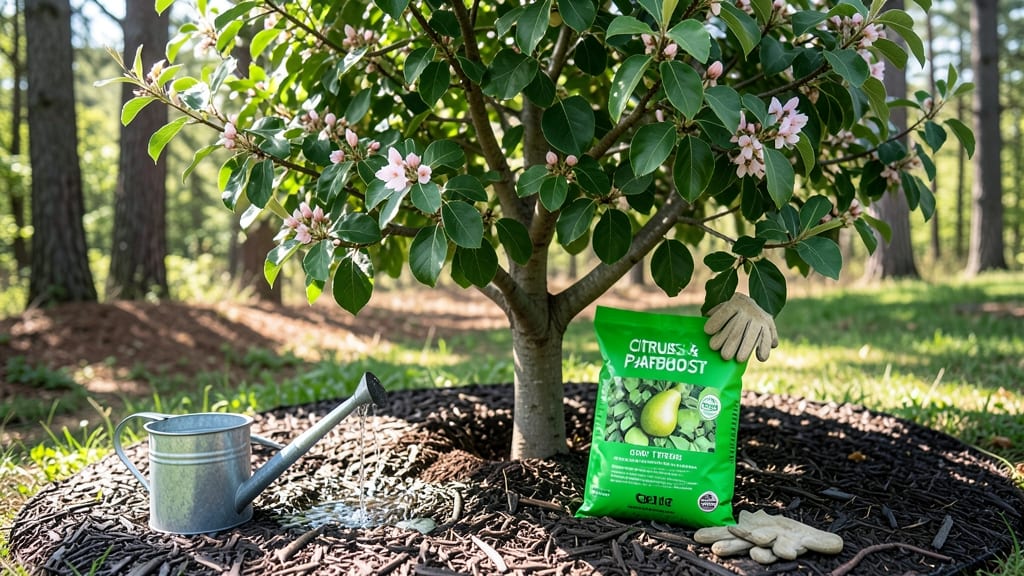
Feeding your Asian pear tree with the right fertilizer is the key to sweet, abundant fruit instead of bitter disappointment.
Picture this: You’ve planted your Asian pear tree in full sun, given it plenty of water, and waited patiently for harvest—only to end up with tiny, hard pears that taste more like cardboard than dessert.
The problem? Most gardeners skip the soil science behind feeding these trees. Without the right fertilizer blend, your tree might be starving for micronutrients like boron or zinc, even if the leaves look green.
In this guide, I’ll break down the exact soil pH and nutrient ratios your Asian pear tree craves—from spring’s root-building phase to summer’s fruit-swelling stage.
You’ll learn when to switch from organic compost to synthetic NPK blends, how to spot over-fertilizing (burned leaves are a dead giveaway), and the one micronutrient deficiency that causes blossoms to drop before they open.
By the end, you’ll have a seasonal fertilizer schedule tailored to Zone 6’s growing season, so your tree goes from struggling to thriving—and your pears go from bland to burstingly sweet.
Optimal soil pH and nutrient ratios for Asian pear trees
Your Asian pear tree thrives when soil conditions mirror its natural habitat—acidic to slightly acidic with balanced nutrients. The key to sweet, plump fruit lies in maintaining a soil pH between 5.5 and 6.5, where roots can efficiently absorb macronutrients and micronutrients critical for growth.
Without this balance, your tree may produce small, bitter pears or struggle to flower at all.
Unlike citrus trees that prefer alkaline soil, Asian pears (Pyrus pyrifolia) demand lower pH levels for optimal nutrient uptake. A simple soil test kit (available at garden centers) can reveal your current pH—if it's above 6.5, amend with elemental sulfur or pine needles; if below 5.5, add lime sparingly.
Remember, sudden pH shifts can stress your tree, so adjust gradually over 2-3 months.
Now, let's talk nutrient ratios. Asian pears respond best to a balanced NPK fertilizer with equal parts nitrogen (N), phosphorus (P), and potassium (K)—think 10-10-10 or 8-8-8. However, this isn't a one-size-fits-all rule.
During spring growth, prioritize nitrogen for leafy vigor; shift to phosphorus-heavy (e.g., 5-10-5) when buds form to encourage flowering. Potassium becomes crucial in summer and fall to strengthen fruit development and disease resistance.
Don't overlook micronutrients—these trace elements act as the unsung heroes of fruit production. Boron and zinc are non-negotiable for Asian pears. Boron deficiency causes blossom end rot (blackened fruit tips), while zinc deficiency leads to stunted growth and yellowing leaves.
A chelated micronutrient spray applied in early spring and again before flowering can prevent these issues. Organic options like seaweed extract or compost tea also provide these essentials naturally.
Timing your fertilizer applications is just as critical as the nutrients themselves. In early spring (March-April), when your tree breaks dormancy, apply a slow-release fertilizer like osmocote or compost to fuel new growth. By late spring, switch to a phosphorus-rich
Best organic vs. synthetic fertilizers for Asian pear trees
Choosing the right fertilizer for your Asian pear tree can mean the difference between small, bitter fruit and juicy, sweet pears. Both organic and synthetic fertilizers have unique benefits, but their application methods and long-term effects on your tree's health vary significantly.
Let's break down the best options tailored to your orchard size and goals.
For small home gardens, organic fertilizers like compost and worm castings offer gradual nutrient release, improving soil structure over time. Meanwhile, synthetic fertilizers provide immediate results with precise NPK ratios, ideal for commercial orchards needing quick growth responses.
Your choice depends on whether you prioritize long-term soil health or immediate fruit production.
Organic Fertilizers for Asian Pear Trees
Pros:
- Improves soil structure
- Releases nutrients gradually
- Boosts microorganisms
- Low burn risk
Cons:
- Slower results
- Requires frequent applications
- Bulkier storage
- Variable nutrient content
Synthetic Fertilizers for Asian Pear Trees
Pros:
- Precise NPK ratios
- Immediate growth response
- Easy storage
- Consistent nutrient delivery
Cons:
- Can burn roots if overused
- No soil structure improvement
- Environmental concerns
- Requires careful dosage monitoring
When using organic fertilizers, I recommend starting with a 5-5-5 compost blend in early spring. Mix 2-3 inches of well-aged compost into the topsoil around your tree's drip line.
For established trees, worm castings provide a gentle nutrient boost without overwhelming the root system. Apply 1-2 pounds per tree annually for best results.
For synthetic options, a 10-10-10 balanced fertilizer works well during active growth phases. Use ½ cup per year of tree age (max 2 cups) in early spring and again after harvest. Slow-release granules are ideal for commercial orchards, providing nutrients over 3-6 months while reducing application frequency.
Always water thoroughly after applying synthetic fertilizers to prevent root burn.
Cost-effectiveness varies by orchard size. Small home gardens benefit more from organic options due to their long-term soil health benefits, while large orchards often prefer synthetic fertilizers for their consistent results and labor savings.
Consider blending both approaches: use organic fertilizers for soil building and synthetic for targeted nutrient boosts during critical growth stages.
Remember, over-fertilizing is a common mistake that can lead to leaf burn or reduced fruit quality. Always follow package instructions and monitor your tree's response. Healthy soil and proper fertilization will reward you with larger, sweeter Asian pears year after year! 🍐🌱