
Pruning
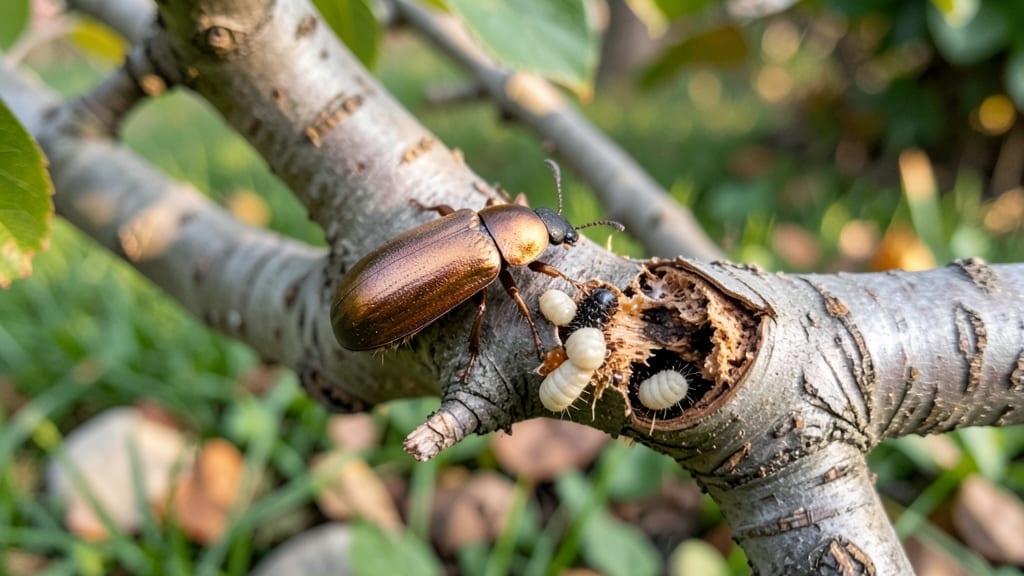
Fruit tree borers turn your backyard orchard into a silent warzone. 🌳 I’ve watched these pests chew through my peach tree’s trunk—sawdust-like frass piled at the base, branches wilting like a dying hand—until I learned the natural tricks to stop them.
The key? Catching them early, before they tunnel deep into the bark and starve your tree from the inside out.
Most people panic and reach for harsh chemicals, but the real solution starts with your hands—not a spray bottle. Inspect bark cracks in spring (that’s when adults emerge) and prune infected branches 6 inches below the damage.
Wrap trunks with sticky tree bands to trap crawling adults, and invite parasitic wasps—their natural predators—to move in. These methods work because they disrupt the borer’s life cycle before it gets a foothold.
By summer, you’ll see new green leaves where there were only bare branches. The tree recovers faster when you combine manual removal (digging out larvae with a screwdriver) with organic sprays like neem oil during peak activity.
Even heavily damaged trees can bounce back with proper watering and a boost of balanced fertilizer to rebuild strength.
This works for apple, cherry, and peach trees alike—just adjust timing for your local borer species. The worst part? Waiting for the first signs. But once you spot that telltale frass, you’re already halfway to saving your tree. Let’s get started with the step-by-step fixes.
The Hidden Triggers Behind Tree Damage
Fruit tree borers—those sneaky pests that tunnel beneath the bark—don’t just appear out of nowhere. Their presence is usually a sign of underlying stress in your tree, creating the perfect conditions for an infestation.
Understanding why these borers target your trees is the first step in stopping them before they cause serious harm. Let’s break down the key factors that turn your healthy trees into buffet tables for these destructive insects.
Borers are opportunistic pests, and a tree under stress is like a neon "Eat Me" sign for them. When trees are weakened—whether by disease, poor nutrition, or environmental factors—they produce less resin, a natural defense that repels borers. Here’s what makes your trees vulnerable:
- Nutritional Deficiencies: Trees lacking essential nutrients (like nitrogen, potassium, or calcium) can’t fight off pests effectively. Yellowing leaves, stunted growth, or sparse foliage are red flags.
- Drought Stress: Prolonged dry spells weaken tree roots, reducing their ability to transport water and nutrients. Borers detect this stress and attack the most compromised areas.
- Root Damage: Compacted soil, construction injuries, or girdling roots (where roots grow around the trunk) disrupt the tree’s ability to thrive, making it an easy target.
- Disease or Fungal Infections: Fungal diseases (like canker or root rot) create entry points for borers. A tree already battling disease has little energy left to resist an infestation.
💡 Pro Tip: Regular soil testing and deep watering (especially during droughts) can strengthen your tree’s defenses. Mulching around the base also helps retain moisture and improve root health.
Borers don’t strike randomly—they follow a predictable life cycle that aligns with seasonal changes. Understanding their timing can help you predict and prevent outbreaks:
- Spring Emergence: Adult borers emerge in spring to lay eggs in fresh wounds, bark cracks, or weak spots. If your tree has any damage from winter frost or pruning cuts, it’s an open invitation.
- Summer Feasting: Larvae hatch and tunnel into the bark, feeding on the cambium layer (the tree’s lifeline for nutrient transport). This is when you’ll see sawdust-like frass (borer droppings) oozing from holes.
- Fall and Winter Hibernation: Larvae pupate and overwinter beneath the bark, emerging as adults the following spring. If left unchecked, one infestation can become a multi-year problem.
⏰ Actionable Insight: Inspect your trees in early spring for fresh egg-laying sites (like pruning wounds or bark cracks) and treat them preemptively with natural repellents like neem oil or beneficial nematodes.
Improper pruning is one of the biggest mistakes gardeners make—it doesn’t just shape your tree; it can also create perfect borer highways. Here’s how bad pruning invites trouble:
- Large, Jagged Cuts: When you remove branches with rough, uneven cuts, you leave exposed wood that’s easy for adult borers to penetrate. Smooth, angled cuts (using the three-cut method) minimize this risk.
- Over-Pruning: Removing too much foliage at once stresses the tree, reducing its ability to produce protective resins. Stick to the 10% rule: never remove more than 10% of the tree’s canopy in a single season.
- Pruning During Wet Conditions: Damp wood is softer and more susceptible to borer attacks. Always prune in dry weather and avoid cutting during rainy seasons.
🔪 Safety First: Sterilize your pruning tools with rubbing alcohol between cuts to prevent spreading fungal diseases, which can further weaken the tree and attract borers.
If your fruit trees are packed too closely together—or if they’re competing with weeds, grass, or other plants—they’ll struggle to access water, sunlight, and nutrients. This stress makes them prime targets for borers. Here’s how overcrowding plays a role:
- Competition for Resources: Trees in tight spaces can’t develop strong root systems or dense canopies, making them easier for borers to penetrate.
- Poor Air Circulation: Humid, stagnant air (common in overcrowded orchards) encourages fungal growth, which weakens the tree’s bark and invites borers.
- Weak Structural Support: Trees leaning or rubbing against each other are more likely to develop wounds, which borers exploit as entry points.
🌳 Spacing Solutions: Follow recommended spacing guidelines for your specific fruit tree species (e.g., apples need 20–30 feet apart, while dwarf varieties can be closer). Thin out competing plants and mulch to improve airflow and reduce stress.
Natural Fixes for Tree Boring Pests
Now that you understand why fruit tree borers invade your trees, it’s time to take action. The good news? You don’t need harsh chemicals to tackle these pests—just a few targeted, eco-friendly strategies. Below, we’ll map common causes to practical solutions, from quick fixes to long-term prevention.
If you spot sawdust-like frass near holes, sap oozing from bark, or weakened branches, act fast. The sooner you intervene, the easier it is to save your tree.
How to check for borers:
- 🔍 Inspect bark crevices with a flashlight—look for tiny holes (about the width of a toothpick).
- 🌡️ Tap branches—if they sound hollow or snap easily, borers may be inside.
- 🌬️ Shake the tree gently—frass (borer waste) may fall like snowflakes.
For small infestations, physical removal is the most effective method. Here’s how:
👨🍳 Step 1: Locate the Entry Holes
- Use a screwdriver or ice pick to gently probe the bark near suspected areas.
- If you hit resistance, you’ve found a tunnel—mark the spot with a pencil.
🔪 Step 2: Kill the Larvae
- 💡 Pro Tip: Insert a wooden toothpick or wire into the hole and wiggle it to dislodge larvae.
- ✨ Alternative: Drip rubbing alcohol or soapy water into the hole—this suffocates the borer without harming the tree.
- ⏰ Best time: Do this in early spring or late fall when borers are least active.
🌿 Step 3: Seal the Wounds
- Once you’ve removed the pests, fill the holes with a wood putty or tree wound dressing to prevent reinfestation.
- 💡 Pro Tip: Avoid over-sealing—let minor wounds heal naturally to reduce future borer targets.
Extreme temperatures can kill borers at all life stages without chemicals.
☀️ Solarization (For Small Trees)
- 🔥 How it works: Wrap the trunk and lower branches in clear plastic wrap (like a giant shrink wrap) for 4–6 weeks in summer.
- ⚠️ Warning: Only use this for small trees—it can stress larger ones.
❄️ Freeze Them Out (Winter Method)
- 🌡️ Best for: Dormant trees in cold climates.
- 💡 Pro Tip: Apply ice packs or frozen water bottles wrapped in cloth to borer holes—leave for 12+ hours to ensure larvae die.
Encourage borer predators to move in and keep populations in check.
🐞 Beneficial Insects to Attract
- 🕷️ Parasitic wasps (like Goniozus legneri) lay eggs inside borer larvae—they’re the ultimate borer hunters!
- 🦋 Ladybugs & lacewings eat borer eggs and young larvae.
- 🐍 Snakes & birds (like woodpeckers) help by feeding on adult borers.
How to invite them:
- 🌿 Plant companion flowers (e.g., dill, fennel, or marigolds) near your trees—they attract beneficial insects.
- 💧 Avoid pesticides—they kill both pests and predators.
- 🌳 Leave some leaf litter—it provides shelter for ground-dwelling borer enemies.
The best way to deal with borers? Stop them before they start.
🌱 Tree Health First
- 💧 Water deeply but infrequently—borers love stressed, drought-prone trees.
- 🍎 Prune properly—remove dead branches (borers love weak wood) and thin the canopy for airflow.
- 🌿 Mulch correctly—keep mulch 3–4 inches away from the trunk to prevent moisture buildup (a borer magnet).
🛡️ Barrier Methods
- 🪵 Wrap trunks with tree banding traps (sticky bands catch crawling adults).
- 🍯 Apply borer baits (like protein-based traps) in spring to lure and trap adults before they lay eggs.
- 🌿 Use neem oil spray (mix 1 tbsp neem oil + 1 tsp dish soap per gallon of water)—it repels adults and disrupts their life cycle.
📅 Year-Round Maintenance Schedule
| Season | Action | Why It Works |
|---|---|---|
| Spring | Inspect for egg masses & frass | Catches borers before they tunnel in. |
| Summer | Apply neem oil or kaolin clay | Creates a slippery barrier adults avoid. |
| Fall | Prune dead wood & seal wounds | Removes hiding spots for overwintering borers. |
| Winter | Check for exit holes (adults emerge) | Helps you spot new infestations early. |
If your tree is severely damaged (e.g., large sections of bark missing, oozing sap, or wilting leaves), it may need professional help.
An arborist can: - 🪓 Perform controlled pruning to remove borer-heavy branches. - 💉 Inject systemic treatments (like beneficial nematodes) deep into the tree. - 🌳 Assess if the tree is beyond saving—sometimes removal is the kindest option.
Final Thought: With consistent monitoring and these natural methods, you can keep your fruit trees borer-free for years. The key? Act fast, stay vigilant, and let nature help you out! 🌳💪
Frequently asked questions
What do fruit tree borer holes look like?
Look for small, round holes about the size of a toothpick (1/16 inch wide) in the bark. These often ooze sap or have tiny piles of sawdust-like frass (borer droppings) beneath them. Check branch junctions and trunk cracks—these are favorite entry points.
Can I use vinegar to kill fruit tree borers?
Vinegar won't kill borers effectively because it can't penetrate their tunnels. Instead, use rubbing alcohol or soapy water to suffocate larvae after removing them with a wire. For prevention, apply neem oil spray—it disrupts their life cycle without harming the tree.
How often should I check my trees for borers?
Inspect your trees every 4-6 weeks during growing season (spring-fall). Focus on early spring (adult emergence) and late summer (larval feeding peak). Use a flashlight to spot tiny holes or frass—catching them early prevents major damage.
Will my tree recover if I remove all the borers?
Yes, but recovery depends on how much damage occurred. If caught early, trees often rebound with proper care: deep watering, balanced fertilizer, and avoiding stress. For severely damaged trees, consult an arborist—they may need pruning to remove dead wood and systemic treatments.
Are there any borer-resistant fruit tree varieties?
No varieties are completely resistant, but some species like peach and plum trees are less susceptible than others. The best defense is maintaining tree health—proper pruning, watering, and nutrition make trees less appealing targets for borers.