
Trees
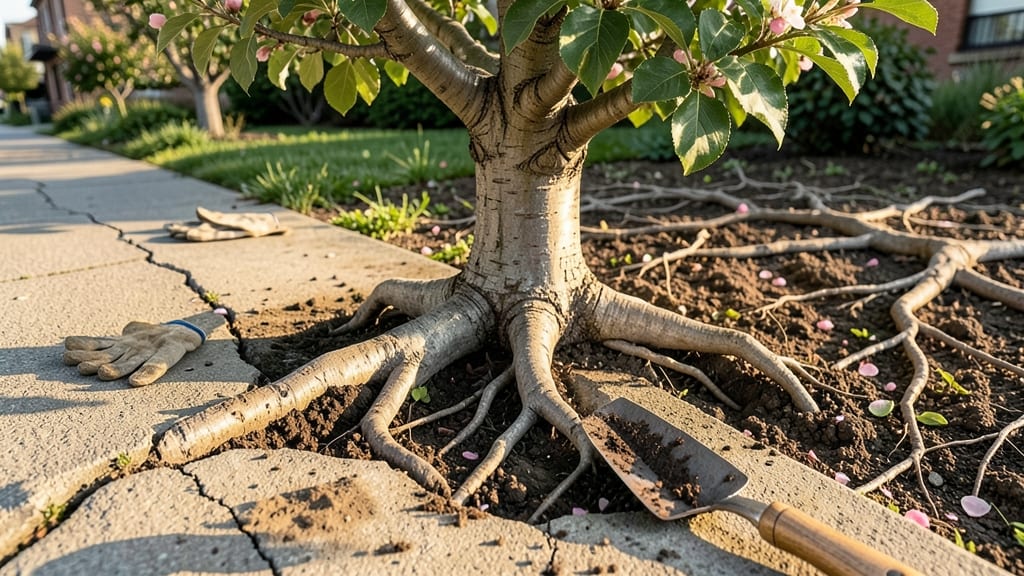
Yes, apple tree roots can cause damage by spreading aggressively—often 2 to 3 times the tree’s canopy width—and disrupting nearby structures, driveways, or plumbing. Dwarf varieties grow less invasively, but mature roots may still lift sidewalks or crack foundations over time.
Apple tree roots are notorious for their expansive reach, extending far beyond the tree's visible branches. 🌳 The primary concern comes from lateral roots—those spreading horizontally—that can penetrate sidewalks, sewer lines, or even building foundations if planted too close.
While dwarf varieties stay more contained, their roots still grow aggressively once established, often requiring careful planning when adding them to your landscape. The key is understanding your soil type and tree variety, as sandy soils allow roots to spread faster than clay-heavy ground.
What many homeowners don't realize is how seasonal growth affects damage potential. Roots expand most aggressively in spring and early summer when water and nutrients are abundant. This is why you might notice pavement cracks appearing suddenly—those roots have been quietly growing for months before making their presence known.
The good news? Strategic planting at least 20-30 feet from structures and using root barriers can significantly reduce risks.
💡 In This Article
- How Apple Tree Roots Spread and Their Growth Patterns
- Preventing Apple Tree Root Damage to Landscaping and Structures
How apple tree roots spread and their growth patterns
Apple tree roots grow in two distinct ways: the primary taproot (vertical) and extensive lateral roots (horizontal). While the taproot anchors the tree, lateral roots spread outward aggressively—often reaching 2 to 3 times the tree's canopy width.
For a mature apple tree with a 20-foot canopy, that means roots can extend up to 60 feet horizontally, seeking water and nutrients in the upper soil layers (12-18 inches deep). This shallow spread makes them particularly prone to disrupting surface structures.
The soil type dramatically affects root behavior. In sandy soils, roots spread faster but stay shallower, while clay-heavy soils force roots to grow deeper in search of oxygen.
A study by the University of California found that apple tree roots in sandy loam spread 30% faster than in clay during the first 5 years of growth.
Seasonal growth peaks occur in spring and early summer when soil moisture is high, causing roots to expand rapidly—this is why pavement cracks often appear suddenly after heavy rains.
Pruning above-ground branches doesn't significantly slow root spread, but crown thinning (removing dense inner branches) can reduce the tree's overall nutrient demand, indirectly slowing lateral root expansion. Dwarf varieties like 'Gala' or 'Honeycrisp' develop more compact root systems, but their roots still reach 1.5 to 2 times their canopy width.
The key difference is their shallower depth—typically 12-15 inches—making them more likely to lift sidewalks than damage deep foundations.
Root growth follows a predictable pattern: 1-2 years for initial spread, 5-10 years for full maturity, and ongoing expansion as long as the tree lives. This means even young trees should be planted with future growth in mind.
The most invasive roots form within 6-12 inches of the soil surface, where they're most likely to encounter driveways, irrigation lines, or foundation footings. 🌱
Comparing varieties, 'Fuji' and 'Granny Smith' apple trees develop particularly aggressive lateral roots due to their vigorous growth habits. In contrast, 'Columnar' varieties (like 'Northpole') grow roots in a narrow vertical pattern, reducing surface disruption.
However, no apple tree is completely root-free—even the most compact varieties will eventually spread enough to require careful landscaping planning.