
Diseases
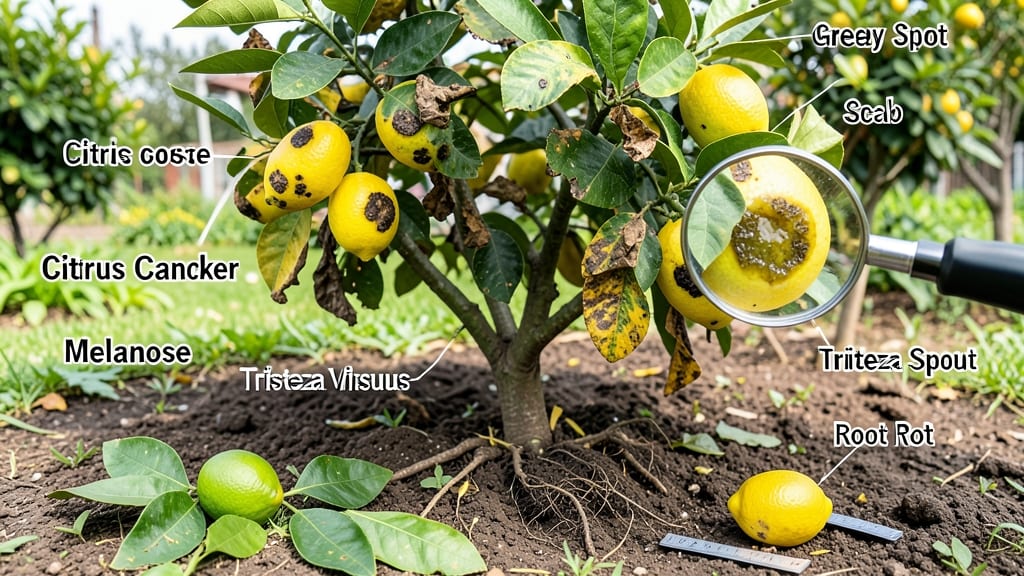
Citrus tree diseases pictures can turn your backyard lemon tree into a shadow of its former self—unless you catch the signs early. 🌿 I’ve seen healthy trees wither in months from diseases that start with tiny leaf spots or a single blemish on the fruit.
This guide shows you exactly what to watch for, so you can act before it’s too late.
Most citrus diseases begin with subtle clues: yellowing leaves, strange bumps, or sticky sap. The key is recognizing these symptoms fast—before they spread.
We’ll cover the 12 most common foes, from citrus scab (those ugly black spots) to melanose (the dark streaks on fruit), with clear descriptions and prevention tips that actually work.
By the end, you’ll know how to save your tree with simple fixes like pruning, fungicides, or even a quick spray of neem oil. The goal? A thriving citrus tree that produces fruit year after year, not a sad, diseased skeleton. Let’s get started.
Whether you’re a beginner or a seasoned grower, this guide keeps it simple—no confusing jargon, just what you need to spot and stop these diseases before they ruin your harvest. Your tree’s health starts with knowing the enemy.
Root Causes Of Citrus Tree Ailments
Citrus trees may seem resilient, but they’re vulnerable to a variety of diseases caused by environmental stressors, pathogens, and poor care practices. Understanding the why behind these issues is the first step to prevention and treatment.
Below, we break down the most common culprits—from fungal invaders to nutrient deficiencies—so you can protect your grove or backyard tree.
Fungi thrive in warm, humid conditions and are the primary cause of citrus tree diseases like citrus greening (HLB), anthracnose, and melanose. Here’s how they strike:
- Overhead Irrigation 💦: Water splashing onto leaves creates a damp environment, perfect for fungal spores to land and germinate. Unlike drip irrigation, which delivers water at the base, overhead systems (like sprinklers) spread moisture across foliage, inviting fungal growth.
- Poor Air Circulation 🌬️: Dense foliage or crowded trees block airflow, trapping humidity near leaves. Fungi like Colletotrichum (anthracnose) exploit this stagnant, moist air to infect wounds or healthy tissue.
- Warm, Wet Climates 🌡️: Temperatures between 75–85°F (24–29°C) with high humidity (above 80%) accelerate fungal reproduction. Regions like Florida and California’s coastal areas are hotspots for outbreaks.
- Weakened Trees 🌿: Stress from drought, poor soil, or pest damage weakens a tree’s defenses, making it an easy target. Fungi exploit these vulnerabilities, often entering through leaf scars or pruning wounds.
💡 Pro Tip: Prune trees in dry weather and avoid wounding bark. Use copper fungicides as a preventive spray during rainy seasons.
Bacteria like Xylella fastidiosa (citrus variegated chlorosis) and Pseudomonas syringae cause irreversible damage by clogging a tree’s vascular system. Here’s how they take hold:
- Vector Transmission 🐞: Leafhoppers and psyllids feed on infected trees, then spread bacteria to healthy ones. Xylella, for example, moves through the plant’s xylem (water-conducting vessels), disrupting nutrient flow.
- Pruning Tools 🪒: Unsterilized tools carry bacterial cells from infected to healthy trees. Even a small cut can introduce pathogens into the tree’s system.
- Environmental Stress 🌞: Drought or extreme heat weakens citrus trees, making them more susceptible to bacterial infections. Once established, bacteria multiply rapidly in the tree’s sap.
⚠️ Warning: There’s no cure for bacterial diseases like HLB. Prevention—such as removing infected trees and using systemic antibiotics (where legal)—is critical.
Citrus trees require a balanced diet of nitrogen (N), phosphorus (P), potassium (K), magnesium (Mg), and zinc (Zn). Deficiencies weaken immunity and make trees prone to secondary infections:
| Deficiency | Symptoms | Cause |
|---|---|---|
| Zinc (Zn) | Small, yellow leaves with brown spots ("little leaf" syndrome) | Poor soil drainage or high pH (alkaline soil locks out Zn) |
| Magnesium (Mg) | Yellowing between leaf veins (interveinal chlorosis) | Over-fertilization with nitrogen or potassium, which competes with Mg uptake |
| Iron (Fe) | Yellow leaves with green veins ("lime-induced chlorosis") | Alkaline soil (pH > 7.0) makes iron unavailable |
💡 Pro Tip: Test your soil every 2–3 years. If pH is too high, add chelated micronutrients or elemental sulfur to lower it. For Zn deficiency, apply zinc sulfate as a foliar spray.
Pests like aphids, scale insects, and citrus leaf miners don’t just sap nutrients—they also create entry points for diseases. Here’s how:
- Honeydew & Sooty Mold 🍯: Aphids and scale excrete sticky honeydew, which attracts sooty mold fungi. The mold coats leaves, blocking sunlight and weakening the tree.
- Wound Infections 🔪: Citrus leaf miners burrow into leaves, creating wounds that bacteria and fungi exploit. Their frass (waste) also spreads pathogens.
- Root Damage 🌱: Grubs or nematodes attack roots, reducing water and nutrient uptake. A stressed tree is more susceptible to fungal root rot (Phytophthora).
🛡️ Prevention: Introduce beneficial insects (like ladybugs) or use neem oil to control pests. Keep grass trimmed around the tree base to deter burrowing pests.
By addressing these root causes—whether through proper irrigation, soil testing, or pest control—you can drastically reduce the risk of citrus tree diseases. The key is early action before symptoms take hold!
Step-by-Step Fixes for Citrus Tree Ailments
Citrus trees are resilient, but when diseases strike, swift action can mean the difference between a thriving grove and a sad, withering plant. Below, we’ve mapped out practical solutions for each common citrus disease, from quick fixes to long-term prevention.
Follow these steps to nurse your tree back to health—and keep it that way!
Cause: Overwatering or poor soil drainage creates waterlogged roots, inviting Phytophthora fungi. How to Fix It:
- 🔥 Step 1: Stop Watering Immediately Let the soil dry out completely. Water only when the top 2–3 inches of soil are bone-dry (stick your finger in to test!).
- 👨🍳 Step 2: Improve Drainage Dig a trench around the tree (6–12 inches deep) to redirect excess water. Mix sand or perlite into the soil (20–30%) to aerate it.
- 🌡️ Step 3: Apply Fungicide Use a copper-based fungicide (like Bonide Copper Fungicide) or phosphite-based (e.g., Phostrol) every 2–4 weeks until new growth appears.
- 💡 Prevention Tip: Plant citrus in well-draining soil (avoid clay-heavy areas) and use drip irrigation to control moisture.
Cause: Bacterial infection (Xanthomonas axonopodis) spreads via wind, tools, or splashing water, creating oozing sores. How to Fix It:
- 🔪 Step 1: Prune Infected Branches Cut out all infected limbs (12+ inches below the canker) with sterilized pruners (soak in 10% bleach solution between cuts).
- 🧴 Step 2: Clean the Wounds Scrub pruning cuts with a 10% bleach solution or copper sulfate to kill bacteria.
- 🛡️ Step 3: Spray Copper Bactericide Apply copper hydroxide (e.g., Kocide) every 10–14 days during wet seasons. Avoid overhead watering to reduce spread.
- ✨ Prevention Tip: Sterilize tools after each use, remove fallen leaves promptly, and plant resistant varieties like ‘Meyer’ lemon or ‘Satsuma’ mandarin.
Cause: Bacteria (Candidatus Liberibacter) spread by Asian citrus psyllids; fatal but manageable. How to Fix It:
- 🌿 Step 1: Control Psyllids Aggressively
- Spray neem oil or horticultural oil weekly during outbreaks.
- Use systemic insecticides (e.g., dinotefuran) as a last resort (follow label rates).
- 💪 Step 2: Boost Tree Health
- Fertilize with low-nitrogen, high-potassium (e.g., 6-6-6) to reduce stress.
- Deep-water during droughts (1–2 inches per week).
- 🚫 Step 3: Remove Severely Infected Trees If >50% of leaves show symptoms, dig up and destroy the tree to prevent psyllid spread.
- 🎯 Prevention Tip: Inspect new plants for psyllids before bringing them home. Quarantine any suspicious citrus for 30 days.
Cause: Fungal infections (Elsinoë spp.) thrive in humid, rainy conditions, causing dark spots on leaves/fruit. How to Fix It:
- 🍳 Step 1: Prune for Airflow Thin out dense foliage to reduce humidity near the canopy.
- 🧴 Step 2: Apply Preventative Fungicides
- Copper fungicide (e.g., Champ) or sulfur-based (e.g., Liqui-Cop) every 7–14 days during rainy seasons.
- Biofungicides (e.g., Serenade ASO) are organic options.
- 🌡️ Step 3: Sanitize Tools & Garden Debris Clean pruners with rubbing alcohol and remove all fallen leaves to starve the fungus.
- 💡 Prevention Tip: Water in the morning so leaves dry quickly. Avoid overhead sprinklers.
Cause: A viral disease spread by grafting infected scions or aphids; weakens roots and stunts growth. How to Fix It:
- 🌱 Step 1: Test & Remove Infected Trees
- Send samples to a plant diagnostic lab for confirmation.
- Dig up and destroy infected trees immediately—there’s no cure.
- 🔄 Step 2: Replace with Resistant Rootstock Graft onto tristeza-resistant rootstock like Swingle citrumelo or Carrizo citrange.
- 🛡️ Step 3: Control Aphids
- Spray soapy water or pirimicarb to reduce aphid populations.
- 🚫 Prevention Tip: Buy certified disease-free nursery stock and avoid grafting from unknown sources.
- 🌿 Soil Health: Test soil pH (ideal: 6.0–7.0) and amend with compost for nutrients.
- 💦 Watering: Deep and infrequent (1–2 inches per week) > frequent shallow watering.
- 🍃 Mulch: Use wood chips (3–4 inches) to retain moisture and suppress weeds.
- 🔍 Monitor: Inspect leaves weekly for early signs (yellowing, spots, psyllids).
Pro Tip: 🌡️ Act fast! Early intervention (within 2 weeks of symptoms) gives your citrus tree the best shot at recovery. When in doubt, consult your local extension office for localized advice.
Frequently asked questions
How can I tell if my citrus tree has a fungal disease just by looking?
Look for dark, raised spots on leaves or fruit—common signs of fungal diseases like melanose or scab. Check for powdery white coatings (powdery mildew) or yellowing leaves with dark edges (root rot). Fungal issues often appear as irregular, discolored patches rather than uniform color changes.
What’s the difference between bacterial and fungal citrus diseases?
Bacterial diseases (like citrus canker) create oozing, water-soaked lesions that crust over, while fungal diseases (like anthracnose) produce dry, dark spots or powdery growths. Bacteria often spread through wounds, while fungi thrive in damp conditions—so pruning tools and watering habits play key roles in prevention.
Can I save a citrus tree already showing symptoms of greening disease (HLB)?
Unfortunately, there’s no cure for HLB—once infected, the tree will decline over time. Remove severely affected trees immediately to prevent psyllid spread. For early-stage cases, aggressive psyllid control (neem oil sprays) and stress reduction (proper watering/fertilizing) may slow progression.
How often should I inspect my citrus trees for diseases?
Check your trees every 2 weeks during growing seasons (spring-fall) and monthly in winter. Focus on new growth, undersides of leaves, and fruit—these areas often show early symptoms. Morning inspections work best when leaves are dry.
Are there any organic treatments for citrus diseases?
Yes! For fungal issues, try copper fungicides (like copper soap) or neem oil sprays. Bacterial problems require copper hydroxide (organic-approved) or baking soda mixes (1 tsp baking soda + 1 quart water + drop of dish soap). Always test small areas first.