
Pruning
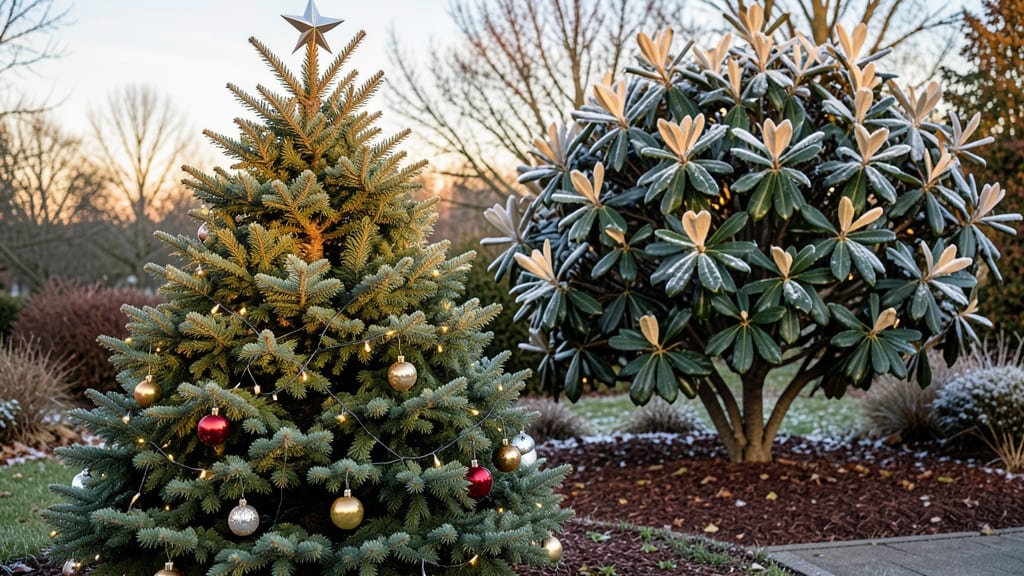
A Christmas tree with magnolias isn't just a holiday statement—it's a year-round masterpiece that transforms your yard into a living postcard. ✨ The secret lies in pairing evergreen pines with blooming magnolias, where their silvery needles and glossy leaves create a lush backdrop for spring blossoms that steal the show.
My own yard went from seasonal to stunning after I learned how to prune both plants to highlight their strengths at every turn.
Start with spacing: plant magnolias 10-15 feet from your Christmas tree, depending on the tree's mature width. Smaller varieties like Magnolia stellata work beautifully near dwarf pines, while larger species need room to shine alongside towering evergreens.
The key is balancing their growth habits—magnolias need occasional pruning to maintain shape, while evergreens benefit from airy, open forms to let light filter through.
What you end up with is a garden that feels magical in every season: fragrant magnolia blooms in spring, rich evergreen texture in winter, and a layered canopy that casts dappled shade in summer.
The contrast between the tree's dark green needles and magnolia's velvety foliage creates depth that no single plant could achieve alone.
This design works for both formal and natural landscapes—whether you're framing a front entrance or creating a woodland-style retreat. The best part? With the right pruning timing, you'll have a showstopper that starts with holiday cheer and evolves into a springtime spectacle.
Ready to make your yard the envy of the neighborhood all year?
📚 In This Guide
- What you need
- Instructions
- Tips and common mistakes
- Wrapping up and next steps
What you need
- ● Magnolia tree (preferably a semi-dwarf variety like Magnolia grandiflora or Magnolia stellata for manageable pruning; ensure it’s at least 3–5 years old for best results).
- ● Pruning shears (bypass pruners, sharp and clean, with a 10–12-inch blade for precision cuts).
- ● Loppers (for thicker branches, 16–20-inch reach).
- ● Hand pruners (for delicate trimming, 6–8-inch blade).
- ● Pruning saw (if dealing with stubborn, thick branches, 8–10-inch curved blade).
- ● Disinfectant (70% isopropyl alcohol or rubbing alcohol to sterilize tools between cuts).
- ○ Pruning sealant (optional but recommended for large cuts, latex-based or tree wound paint).
- ● Gloves (heavy-duty gardening gloves for protection, nitrile-coated for grip).
- ● Ladder or step stool (if magnolia is tall, stable, 6–8-foot height).
- ● Heavy-duty trash bags (for collecting pruned branches, 10–15 gallon size).
- ● Marking twine or tape (to outline desired shapes, natural-colored or biodegradable).
- ● Christmas lights (waterproof, LED string lights, 16–20 feet for year-round ambiance).
- ● Ornaments (lightweight, wooden or ceramic beads to avoid branch stress).
- ● Mulch or pine straw (to protect the base after pruning, 3–4 inches deep).
- ● Camera or sketchpad (to plan your design before cutting).
- ● Friend or helper (for safety and extra hands during pruning!).
How to shape a Christmas tree with magnolias for year-round beauty
This isn't just a holiday display—it's a living sculpture that thrives beyond December.
🌿 Step 1: Select and Prepare Your Magnolia Specimens
Choose 4-6 mature magnolia trees with similar growth habits and trunk diameters between 3-5 inches at the base. Look for varieties like Magnolia grandiflora or Magnolia stellata—their glossy foliage and fragrant blooms create the perfect Christmas tree silhouette. Prune any dead or crossing branches first using clean, sharp pruners to avoid tearing the bark.
Space the selected trees 8-10 feet apart in a semi-circle, with the tallest specimen positioned at the back. This creates a natural focal point while allowing room for future growth. Here's the thing—magnolias grow slowly, so patience is key. You won't see dramatic changes in the first year, but the framework will be set for a stunning, permanent display.
✂️ Step 2: Prune for the Classic Tree Shape
Start shaping in late winter or early spring before new growth begins. Remove any lower branches that grow below 4 feet from the ground to create a clean trunk. Use hand pruners to make clean cuts just above a leaf bud or lateral branch—never leave stubs. For the upper canopy, step back frequently to visualize the tree's silhouette against the sky.
Focus on creating a pyramidal shape by selectively pruning branches that grow outward too aggressively. Aim for a 6-8 foot height at maturity, with the widest point about halfway up the trunk. The goal is to mimic the natural taper of a Christmas tree while maintaining the magnolia's organic beauty. You'll know you're on track when the branches form a gradual, symmetrical cone.
🌱 Step 3: Train New Growth for Holiday Density
In summer, when new growth is about 6 inches long, pinch back the tips of selected branches to encourage bushier growth. This is where the magic happens—you're not just pruning, you're directing the tree's energy toward creating a fuller, denser canopy. Focus on the middle and lower thirds of the tree, as these areas will fill in over time.
Here's what I do: I mark the branches I want to encourage with a small piece of twine so I don't accidentally prune them later. By next spring, you'll see new shoots emerging from these pinched areas, creating the lush, layered look of a traditional Christmas tree. Don't worry if it doesn't look perfect immediately—magnolias respond well to gradual shaping.
☀️ Step 4: Maintain Year-Round Structure and Health
After the initial shaping, perform light maintenance pruning in early spring to remove any branches that disrupt the tree's form. The key is to never remove more than 25% of the foliage in a single year—this ensures the tree stays healthy and continues to produce those stunning blooms. Water deeply once a week during dry spells, focusing on the root zone to encourage strong growth.
In fall, apply a 2-3 inch layer of mulch around the base of each tree to protect roots from winter temperature swings. This is also the time to add balanced, slow-release fertilizer to support next year's growth. The result? A tree that looks like a Christmas tree in December but thrives—and blooms—throughout the year.
⏰ Step 5: Seasonal Adjustments for Continuous Elegance
Every December, give the tree a final trim to remove any sparse or overgrown branches that might detract from its holiday appearance. Add string lights or ornaments sparingly—magnolias are naturally beautiful, and the goal is to enhance, not overwhelm. In late winter, prune any branches that grew too long during the previous season to maintain that perfect conical shape.
This is the moment that matters: When spring blooms arrive, you'll see why this approach works. The tree will burst with white or pink flowers against a backdrop of glossy evergreen-like foliage, creating a display that's as stunning in May as it is in December. Real talk: It takes about 3-4 years to achieve the full Christmas tree effect, but once there, it's a low-maintenance masterpiece.
Tips & tricks for perfect magnolia Christmas tree shaping
Here's what nobody tells you about transforming magnolias into a living Christmas tree—these are the secrets that make all the difference.
Selection Matters: When choosing your 4-6 magnolia trees in Step 1, prioritize specimens with a naturally conical growth habit. Look for trees where the lower branches grow closer to the trunk and upper branches spread wider—this natural taper will require less aggressive pruning later. I learned this the hard way after selecting trees with wide, flat canopies that fought against the Christmas tree shape no matter how much I pruned.
Pruning Precision: In Step 2, when creating your clean trunk by removing branches below 4 feet, make your cuts just above a leaf bud or lateral branch. This ensures new growth will emerge from the right spot, maintaining the tree's health. I always use a sharp pruner and make clean cuts at a 45-degree angle—this prevents tearing and reduces the risk of disease entering the wound. The goal is to create a smooth transition where new growth can take over naturally.
Seasonal Timing is Everything: The late winter or early spring pruning window in Step 2 is non-negotiable. This timing ensures you're pruning dormant wood, which means less bleeding from the cuts and better healing. I've found that pruning too early in winter can expose the tree to cold damage, while pruning too late in spring risks removing buds that would have become new growth. Mark your calendar now—this is when the foundation for your Christmas tree shape gets set.
Growth Training Strategy: For Step 3's summer pinching, focus on the middle and lower thirds of the tree first. These areas need the most encouragement to fill in and create that lush, layered look. I use small pieces of twine to mark branches I want to encourage—this simple visual cue prevents me from accidentally pruning them later. Remember, magnolias respond best to gradual shaping, so don't try to force rapid changes in a single season.
Pro Tips for Christmas Tree With Magnolias
- Here's what nobody tells you about transforming magnolias into a living Christmas tree—these are the secrets that make all the difference.
- Selection Matters: When choosing your 4-6 magnolia trees in Step 1, prioritize specimens with a naturally conical growth habit.
- Pruning Precision: In Step 2, when creating your clean trunk by removing branches below 4 feet, make your cuts just above a leaf bud or lateral branch.
Frequently asked questions
Got questions about creating a stunning Christmas tree with magnolias? Here are some common ones—and their answers—to help you bring this elegant vision to life:
Can I prune a magnolia tree into a Christmas tree shape year-round, or only at certain times?
Avoid heavy pruning during late spring or early summer when magnolias are blooming or setting buds for next year. The best time to shape your magnolia into a Christmas tree form is late winter or early spring (before buds swell) or fall (after leaves drop). Light trimming for maintenance can happen anytime, but major structural cuts should wait for dormant seasons.
How do I keep my magnolia’s branches from looking too sparse after pruning?
Magnolias respond well to strategic thinning rather than aggressive cutting. Focus on removing dead, crossing, or overcrowded branches first, then shape the outer layers to create a fuller silhouette. Use hand pruners for small branches and a three-cut method for larger ones to avoid tearing the bark. Water deeply after pruning to help the tree recover.
Will pruning a magnolia into a Christmas tree shape affect its flowers?
Pruning too much can reduce flowering, but moderate shaping won’t. If your magnolia blooms on old wood (like southern magnolias), avoid heavy cuts on branches that flowered the previous year. For new wood bloomers (like saucer magnolias), pruning in late winter is safer. Always leave at least 1/3 of the branch intact to preserve flower production.
What’s the best tool for pruning a magnolia into a Christmas tree form?
Use sharp, clean tools to make precise cuts and minimize stress on the tree:
- Hand pruners (for branches <1 inch thick)
- Loppers (for branches 1–2 inches thick)
- Pruning saw (for thicker branches, 2+ inches)
Can I turn any magnolia into a Christmas tree, or do some types work better?
Not all magnolias thrive as Christmas trees, but these varieties are great choices:
- Southern Magnolia (Magnolia grandiflora) – Dense, evergreen foliage; ideal for year-round structure.
- Little Gem® Magnolia – Compact and columnar, perfect for small spaces.
- Saucer Magnolia (Magnolia × soulangeana) – Deciduous but fast-growing; prune after blooming.
Wrapping up and next steps
Transforming your magnolia into a stunning Christmas tree with magnolias isn’t just about holiday charm—it’s a year-round celebration of nature’s elegance! With the right tools, timing, and techniques, you can shape your tree into a festive masterpiece while keeping it healthy and vibrant.
Whether you’re a pruning pro or a beginner, this guide gives you the confidence to own your green thumb and create a showstopping centerpiece.
Ready to take the next step? Grab your shears, sketch your vision, and start pruning with intention—your magnolia (and your holiday spirit!) will thank you. 🌿✨