
Trees
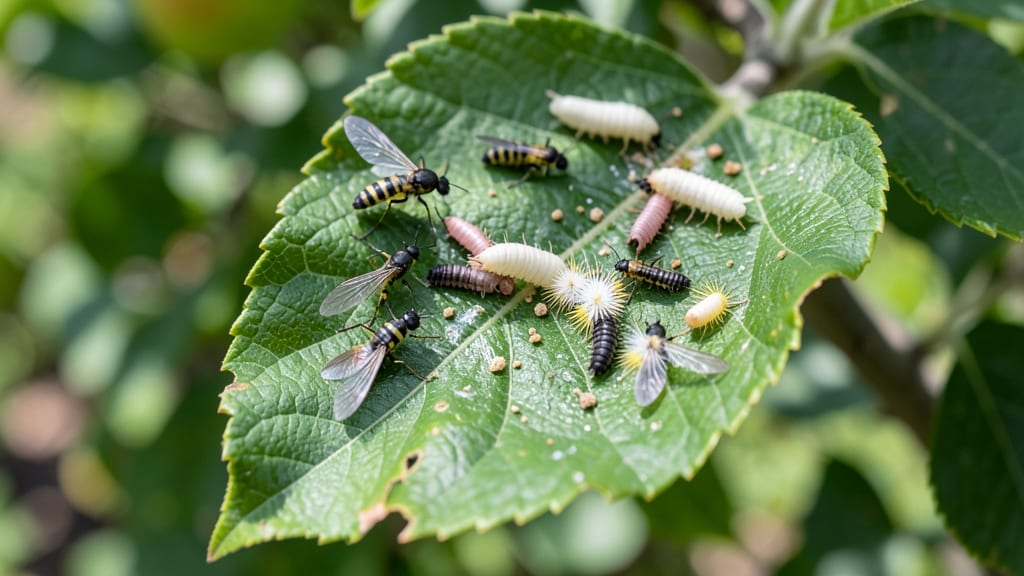
Your apple tree’s leaves are being eaten by those ravenous bugs, and they won’t quit. 🌿 The good news? Most common pests—aphids, tent caterpillars, and leaf rollers—respond to organic fixes before they wreck your harvest.
I’ve battled all three in my orchard, and these are the exact methods that saved my fruit.
First, identify the culprit: aphids cluster on new growth, tent caterpillars spin silky webs, and leaf rollers tuck themselves inside folded leaves. Once you spot them, act fast—early intervention means fewer chemicals.
Prune heavily infested branches in early spring, then introduce beneficial insects like ladybugs or lacewings, which eat pests by the hundreds.
For severe cases, neem oil or insecticidal soap (sprayed in the evening) knocks out the worst offenders without harming bees. The key is consistency—check for pests weekly during bloom and fruit set.
By summer, your tree should be thriving, and those leaves will stay intact long enough to feed your apples.
Pro tip: Plant garlic or chives nearby—their scent repels many leaf-eaters naturally. And if the infestation spreads beyond your control, call a local arborist for targeted help. Your harvest is worth the effort!
The Real Culprits Behind Leaf Loss
Apple trees are a feast for many hungry pests, and understanding why they’re being devoured is the first step to stopping the damage. Leaf-eating insects don’t just munch out of boredom—they’re driven by survival instincts, environmental triggers, and even your tree’s health.
Let’s break down the key reasons these critters turn your apple tree into an all-you-can-eat buffet.
When pest populations explode, they outgrow their natural food sources. Here’s how it happens: - Rapid Reproduction: Many leaf-chewers, like tent caterpillars or gypsy moth larvae, lay hundreds of eggs in a single season.
Without predators (like birds or parasitic wasps) to keep them in check, their numbers skyrocket. - Weakened Trees Attract More Pests: Stressed apple trees—from drought, poor soil, or disease—produce lower-quality leaves, making them easier targets.
Pests zero in on trees that are already struggling, accelerating the damage. - Monoculture Plantings: If your neighborhood is packed with apple orchards (or even just a few trees), pests have a smorgasbord with little competition. Diverse landscapes disrupt their feeding patterns.
💡 Pro Tip: Introduce native pollinator plants (like dill or milkweed) near your tree to support predator insects, which naturally curb pest populations.
Pests don’t attack randomly—they’re cued by temperature, moisture, and even lunar cycles. Here’s what sparks their appetite: - Warm Springs Jumpstart Hatching: Many pests (like apple sawfly larvae) time their egg-laying to hatch when nights stay above 50°F (10°C).
A warm early spring = early infestations. - High Humidity = Pest Paradise: Soft-bodied insects (such as leafrollers) thrive in damp conditions.
Excess moisture weakens leaves, making them easier to digest and more appealing. - Drought Stress Signals: When apple trees can’t access water, they produce thinner, more tender leaves—a red flag for pests like apple leafcurling midges.
These bugs detect stress chemicals (like volatile organic compounds) and flock to affected trees.
🌡️ Watch For: If your tree’s leaves are yellowing at the edges or curling prematurely, pests may be homing in faster than usual.
A healthy tree is less appealing to pests, but nutrient imbalances can make your apple tree a magnet.
Here’s how: - Nitrogen Deficiency: Leaves high in carbon (low nitrogen) become thicker and tougher, but pests like apple maggots target trees with soft, fast-growing new growth—a sign of over-fertilization with nitrogen. - Potassium Shortages: Weak cell walls (from low potassium) make leaves easier to chew.
Pests like apple leaf miners exploit this, tunneling into leaves with minimal resistance. - Boron or Calcium Deficits: These minerals strengthen cell walls. Without them, leaves become spongy and vulnerable to sawfly larvae and cankerworms.
📊 Soil Test First: Before blaming pests, check your tree’s nutrient levels with a soil test kit. Correcting deficiencies often reduces pest interest by 30–50%.
Sometimes, we accidentally create the perfect pest party.
Here’s how: - Overwatering: Soggy soil attracts slugs and snails, while fungal diseases (like apple scab) weaken leaves, making them more palatable to insects. - Pesticide Overuse: Harsh chemicals kill beneficial insects (like ladybugs and lacewings), leaving pests unchecked. Neonicotinoids, for example, can repel natural predators while failing to stop chewers like tent caterpillars. - Firewood or Nursery Plants: Gypsy moths and spotted lanternfly eggs often hitchhike on untreated wood or new plants.
Inspect anything you bring near your tree.
✨ Prevention Hack: Wrap tree trunks with sticky bands in early spring to trap crawling pests before they reach the leaves.
Warmer winters and longer growing seasons are expanding pest territories.
For example: - Spotted lanternflies (native to Asia) are now thriving in Pennsylvania and New York, devouring apple leaves at alarming rates. - Brown marmorated stink bugs migrate northward each year, seeking tender apple foliage in summer. - Early blooms + Longer Seasons: Apple trees flowering weeks earlier due to climate change mean pests like codling moths get a head start on laying eggs.
🎯 Future-Proof Tip: Plant windbreaks (like hazelnut or serviceberry shrubs) to disrupt pest migration paths and create microclimates that deter invasive species.
Quick Fixes for Leaf Munchers
When your apple tree’s leaves start disappearing faster than a picnic snack, it’s time to act—but don’t panic! The right approach depends on the culprit. Below, we’ve matched common pests to easy, organic solutions that protect your tree and your harvest.
From DIY sprays to long-term prevention, these fixes are designed to work without harsh chemicals.
Signs: Curled leaves, sticky residue (honeydew), or clusters of tiny green/black bugs on new growth.
How to Treat Them
🔥 Blast Them Away
- Method: Use a strong stream of water (from a hose) to knock aphids off leaves. Do this in the early morning when they’re sluggish.
- Frequency: Repeat every 3–4 days until gone.
🍳 Soapy Water Spray
- Recipe: Mix 1 tsp mild liquid soap (like Castile) + 1 quart water in a spray bottle.
- How to Apply: Spray directly on aphids (undersides of leaves too!) on a calm day (wind can spread them).
- Bonus: Add 1 tsp neem oil to deter future infestations.
🌿 Attract Predators
- Solution: Plant dill, fennel, or yarrow near your tree to lure ladybugs and lacewings, which eat aphids.
- Pro Tip: 💡 Avoid broad-spectrum pesticides—they kill the good bugs too!
Signs: Ragged leaves, frass (tiny black droppings), or tent-like webs on branches.
How to Treat Them
👨🍳 Handpick & Drop
- Method: Wear gloves and pick off large caterpillars (like tent caterpillars or loopers) by hand.
- Dispose: Drop them into soapy water (not compost—they’ll hatch!).
🥘 Bacillus Thuringiensis (Bt) Spray
- What It Is: A natural bacteria (safe for humans/pets) that kills caterpillars when they eat it.
- How to Use: Spray early evening (avoid sunlight—it degrades quickly). Reapply after rain.
- Best For: Tent caterpillars, gypsy moths, or codling moth larvae.
🔪 Prune & Burn
- When: Remove heavily infested branches in late winter/early spring before eggs hatch.
- Burn or Bag: Destroy pruned material off-site (don’t compost—eggs survive!).
⏰ Prevent Future Outbreaks
- Timing: Apply Bt spray every 7–10 days during egg-hatching season (check local pest guides).
- Traps: Hang pheromone traps for codling moths (common in apples) before bloom.
Signs: Skeletonized leaves, chewed flowers, and iridescent green beetles feeding in groups.
How to Treat Them
🌡️ Neem Oil Barrier
- Recipe: Mix 1 tbsp neem oil + 1 tsp soap + 1 quart water.
- Apply: Spray leaves and soil (beetles hide underground). Reapply after rain.
- Why It Works: Disrupts their feeding and breeding cycles.
🎯 Handpick & Drown
- Best Time: Early morning (beetles are sluggish).
- How: Shake them into a bucket of soapy water.
- Pro Tip: 💡 Use a white sheet beneath the tree—shaking branches onto it makes collection easier!
🌿 Milky Spore or Beneficial Nematodes
- For Lawns: If beetles are coming from your grass, apply milky spore powder (takes 2–3 years to establish).
- For Soil: Use beneficial nematodes (microscopic worms) to kill grubs before they emerge.
Signs: Speckled leaves, fine webbing, or yellow stippling (like pepper sprinkled on foliage).
How to Treat Them
💪 Horticultural Oil Spray
- When: Apply in early spring (before buds open) or fall when temps are below 85°F.
- Recipe: Use refined horticultural oil (follow label rates).
- Caution: Avoid spraying blooming trees—it can damage flowers.
🥗 Encourage Predatory Mites
- Solution: Release persimmon or six-spotted spider mites (sold online)—they eat harmful mites.
- Prevention: Keep trees well-watered (stress attracts mites).
🌡️ Water Stress Control
- Fix: Deep water trees 1–2 times per week during dry spells.
- Why? Mites thrive in drought-stressed trees.
To keep your apple tree leafy and pest-free, adopt these habits:
✨ Mulch Like a Pro
- How: Apply 3–4 inches of organic mulch (wood chips, straw) around the base of the tree (keep it 6 inches from the trunk).
- Why? Retains moisture, smothers weeds (which attract pests), and regulates soil temp.
🌱 Plant Companion Plants
- Best Pairings:
- Chives, garlic, or marigolds (repel many pests).
- Clover or alfalfa (attracts parasitic wasps that kill caterpillars).
🔄 Rotate Organic Sprays
- Example Schedule:
- Spring: Neem oil (for mites/aphids).
- Summer: Bt spray (for caterpillars).
- Fall: Horticultural oil (for overwintering eggs).
📅 Monitor & Act Early
- Tool: Use a 10x magnifying lens to check new growth weekly.
- Red Flag: 10–20% leaf damage = time to act before it spreads!
Final Reminder: 🌟 Patience is key—some fixes take weeks to show results. Combine immediate action (like handpicking) with long-term strategies (like mulching and companion plants) for a healthy, bug-free apple tree!
Frequently asked questions
How can I tell if my apple tree leaves are being eaten by insects vs. disease?
Look for physical damage patterns: insect damage leaves ragged edges or holes, while diseases cause yellow spots, curling, or powdery coatings. Check leaf undersides for pests or eggs—if you see tiny bugs or webbing, it’s insects. Diseases often appear as discolored patches without visible pests.
When is the best time to treat my apple tree for leaf-eating pests?
Act early spring (before buds open) or late fall to target overwintering eggs. For active infestations, treat in the evening when pests are less active. Avoid spraying during bloom time—it harms pollinators. Most pests emerge after 50°F (10°C) nights, so monitor weekly.
Will neem oil harm my apple tree if I use it too often?
Neem oil is safe when used correctly, but apply it no more than every 2 weeks during growing season. Avoid spraying directly on flowers or fruit—it can cause minor discoloration. Always mix with 1 tsp soap per quart to help it stick to leaves. Overuse isn’t toxic, but it may reduce effectiveness.
Can I still save my apple harvest if the leaves are already heavily damaged?
Yes, but act fast! Prune heavily infested branches immediately and apply Bt spray (for caterpillars) or horticultural oil (for mites). Young trees can recover faster than mature ones. If damage is severe, focus on protecting remaining leaves—they’ll still photosynthesize enough for small fruit to develop.
Why do some apple trees get pests while others nearby stay pest-free?
Healthy trees with strong roots and balanced nutrients resist pests better. Factors like soil quality, watering habits, and companion plants play huge roles. Trees in diverse ecosystems (with native pollinators) also attract natural predators that keep pests in check.