
Trees
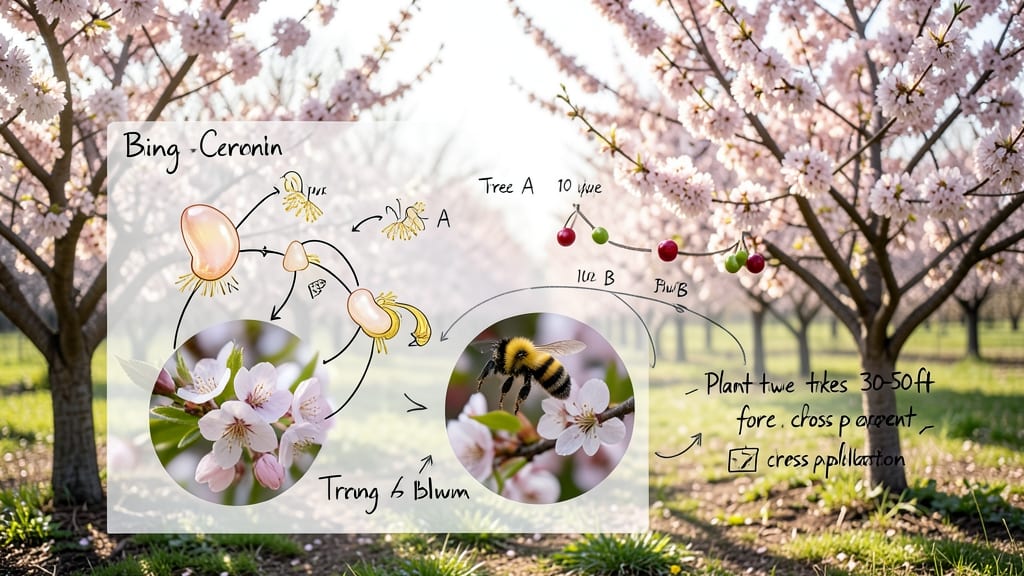
A bing cherry tree pollination chart shows Bing cherries need compatible varieties like Stella, Lapins, or Rainier for fruit production, as they produce almost no fruit alone. Planting two different types within 50 feet creates ideal conditions for pollination and maximizes harvests.
A bing cherry tree pollination chart helps gardeners visualize which varieties work best together. 🌸 Unlike self-pollinating fruits, Bing cherries rely on bees transferring pollen between different trees—Stella and Lapins are top pairings because their blooming cycles align.
The 50-foot spacing rule ensures bees can efficiently travel between compatible trees, while warmer spring days boost pollination success. I always recommend checking local climate zones, as colder regions may need early-blooming varieties to sync with bee activity.
This system isn't just about quantity—proper pollination also affects fruit quality. Trees with compatible neighbors produce larger, sweeter cherries with fewer misshapen ones. For best results, I suggest planting three varieties in a small orchard: one Bing, one Stella, and one Rainier.
This creates redundancy if one variety blooms late or encounters poor weather.
💡 In This Article
- How Bing Cherry Pollination Works: Cross-Pollination Science
- Best Bing Cherry Tree Pairings for High-Yield Orchards
How Bing cherry pollination works: cross-pollination science
Bing cherry trees are self-sterile, meaning their pollen won't fertilize their own flowers. This biological quirk forces them to rely on external pollinators—primarily bees—to transfer pollen between genetically compatible varieties. The process begins when bees collect nectar and inadvertently brush against a flower's anthers, picking up pollen grains.
As they move to another tree, some pollen lands on the stigma of a compatible flower, triggering fertilization. 🌸 This cross-pollination is why planting a single Bing tree yields almost no fruit.
The efficiency of this transfer depends heavily on environmental factors. Ideal pollination occurs when temperatures hover between 55°F and 85°F during bloom season (typically late spring). Cooler weather slows bee activity, while extreme heat can reduce pollen viability.
Humidity also plays a role—dry conditions make pollen grains lighter, aiding wind dispersal, while high humidity can cause pollen to clump together. For example, in USDA Zone 5**, where winters are harsh, early-blooming varieties like Stella pair well with Bing because they sync better with emerging bee populations.
Genetic compatibility is the final piece of the puzzle. Bing cherries belong to the Prunus avium species, but only certain cultivars share the same S-genotype (a genetic marker for compatibility). Stella and Lapins, for instance, have different S-genotypes than Bing, making them perfect partners.
This is why a bing cherry tree pollination chart often groups varieties by their genetic profiles—each group requires at least one other member to ensure successful fruit set. Without this genetic diversity, the flowers simply won't produce viable seeds.
What most gardeners overlook is the 3-5 day window when Bing trees are most receptive to pollination. During peak bloom, you'll notice bees buzzing aggressively between trees, while later in the season, fewer pollinators mean reduced fruit development.
This is why planting multiple compatible varieties—like Bing, Stella, and Rainier—creates redundancy. If one variety blooms late due to weather, another may still be in peak season, ensuring consistent pollination across the orchard. 🐝
Pollen viability is another critical factor. Fresh pollen remains active for just 24-48 hours after release, which is why bees must travel frequently between trees.
Wind can help, but it's far less efficient than bees—only about 10% of pollen transferred by wind reaches compatible flowers compared to 80%+ with bee activity. This is why orchards with high bee populations see 30-50% more fruit set than those relying solely on wind.
For those in urban areas, consider planting bee-friendly flowers like lavender or clover near your cherry trees. These provide early-season nectar, giving bees the energy they need to pollinate your cherries effectively.
The key takeaway? Cross-pollination isn't just about planting two trees—it's about creating an ecosystem that supports the entire process, from genetic compatibility to environmental conditions.