
Pruning
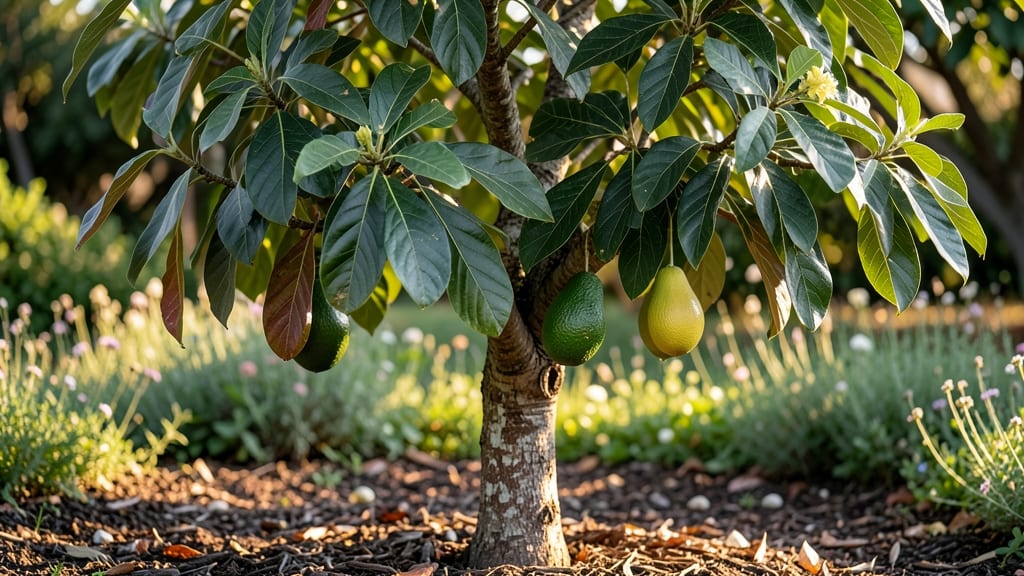
Your avocado tree's fruit production depends entirely on sun exposure—too little and it flowers but never bears, too much and the leaves burn. ✨ I learned this the hard way when my first tree produced blossoms for three years before I finally adjusted its position and saw fruit.
The ideal spot gets 6-8 hours of direct sun daily, but avocados hate harsh afternoon heat. In hot climates, dappled shade after noon prevents leaf scorch while still allowing enough light for photosynthesis. Coastal areas with mild summers can handle full sun, while inland regions need afternoon shade protection.
You'll notice the difference within weeks: glossy dark-green leaves, new growth at the tips, and—eventually—those coveted fruit clusters. The key is watching the tree's response and adjusting gradually rather than shocking it with sudden changes. Works for container-grown trees too—just rotate pots seasonally to balance light exposure.
Here's how to get it right for your climate.
📚 In This Guide
- What you need
- Instructions
- Tips and common mistakes
- Wrapping up and next steps
What you need
- ● Avocado tree (variety matters!) – Choose a sun-loving variety like Hass, Fuerte, or Bacon. Ensure it’s healthy and disease-free.
- ● Pruning shears – Sharp, bypass-style shears (3–5 inch blades) for clean cuts on branches up to ½ inch thick.
- ● Loppers – For thicker branches (½–1½ inches), with a longer reach (20–24 inches) for hard-to-access spots.
- ● Pruning saw – A curved-tooth saw for branches over 1½ inches in diameter.
- ● Disinfectant (70% isopropyl alcohol or bleach solution) – 1 part bleach to 9 parts water to sterilize tools between cuts and prevent disease.
- ● Rubbing alcohol or hand sanitizer – For cleaning hands before and after pruning.
- ● Gloves (cut-resistant) – Protect your hands from thorns and rough bark.
- ● Tarp or drop cloth – To collect fallen leaves and debris (10x10 feet or larger).
- ● Garden twine or zip ties – For securing branches temporarily during pruning (50 feet roll).
- ○ Potting soil or mulch (optional but helpful) – For replenishing the root zone post-pruning (2–3 cubic feet).
- ● Sun meter or light sensor app – To measure light intensity (e.g., Grow Lights Pro app) and track sun exposure changes.
- ● Reflective mulch or white plastic sheets – To redirect sunlight to shaded areas (e.g., Reflectix or aluminum foil sheets).
- ● Tree growth regulator (e.g., Paclobutrazol) – Helps control excessive growth if your tree is overly vigorous.
- ○ Pruning sealant (optional) – For large cuts (over 1 inch), though avocado trees heal well without it.
- ● Notebook or pruning journal – To log sun exposure adjustments, pruning dates, and tree responses.
How to position your avocado tree for optimal sun and fruit production
Sunlight is the secret weapon for a fruitful avocado tree—here's how to give yours exactly what it needs.
☀️ Step 1: Identify Your Climate's Sunlight Zones
Avocados thrive in full sun (6-8 hours daily), but your location dictates how you achieve it. In warm climates like zones 9-11, morning sun with afternoon shade prevents leaf scorch. In cooler zones (8 or below), south-facing exposure delivers the most consistent light. I always check my tree's shadow pattern for 2 full weeks—mark where shade falls at noon and 4 PM.
Young trees need gentle introduction to full sun. Start with 3-4 hours daily and increase by 1 hour weekly until they reach their mature light needs. Watch for yellowing leaves—this signals too much direct sun, especially in hot afternoons. Mature trees handle 9+ hours of sun, but fruit production peaks at 6-8 hours with afternoon shade.
🌿 Step 2: Prune for Strategic Light Penetration
Thin the canopy to let sunlight reach the inner branches—this is where most fruit develops. I target 3-4 main branches spaced evenly around the trunk, removing any that grow inward. Use clean, sharp pruners to make cuts just above outward-facing buds. Never remove more than 25% of the canopy at once—this stresses the tree and reduces flowering.
Focus pruning on the lower third of the tree first. This opens up space for new growth that will fill in gaps. After pruning, step back and check for even light distribution. You should see dappled sunlight reaching the center by mid-morning. Avoid "lollipop" shapes where dense foliage blocks light from the trunk outward.
✂️ Step 3: Adjust for Seasonal Sun Shifts
Summer sun is intense—protect your tree by installing 30-50% shade cloth on the west side during peak heat (12-4 PM). I use a lightweight mesh that lets air flow through while blocking 50% of UV rays. Remove it by early fall when temperatures drop below 85°F. Winter brings weaker sunlight, so supplement with a 250-watt LED grow light for 4-6 hours daily if natural light drops below 4 hours.
Watch for sunburned leaves (brown patches with crisp edges) in spring. This happens when cold nights followed by sudden warm days shock the tree. A light application of anti-transpirant spray
Avocado flowers need direct sunlight for pollination—this is where most fruit drop occurs if light is insufficient. I check for new flower clusters in late winter and ensure they receive minimum 6 hours of direct sun daily. If flowers appear but don't set fruit, your tree may need hand pollination with a small brush to transfer pollen between flowers. Once fruit forms, it needs consistent light to develop properly. Look for uneven ripening or small, misshapen fruit—this signals inconsistent light exposure. Rotate the tree quarter-turn weekly to ensure even growth. In containers, move the pot to different sun exposures daily to prevent lopsided development. The first 2 hours after sunrise provide the most beneficial light for photosynthesis. Position your tree to catch these morning rays without competition from taller plants. In urban areas, I've seen avocado trees near buildings get only 3 hours of sun—this limits fruit production to 10% of normal yields. If you're limited on space, consider a dwarf variety that tolerates partial shade better. Watch your tree's natural rhythm—healthy avocados develop new leaves in spring and flower in late winter. These are your cues that light conditions are optimal. If you notice leaves curling inward or new growth stunted, increase light exposure gradually. The goal is balanced sun: enough for fruit production but not so much it stresses the tree.🌱 Step 4: Monitor Fruit Development Light Needs
⏰ Step 5: Time Light Exposure for Peak Production
Tips & tricks for perfect avocado tree sunlight management
Here's what nobody tells you about getting your avocado tree's light exposure just right—these tricks make all the difference.
Sunlight Transition Strategy: When introducing young trees to full sun, I've found that gradual exposure is key. Start with the 3-4 hours daily as mentioned, but split it into two sessions—morning and late afternoon—to avoid the harsh midday sun. This mimics natural shade patterns and prevents leaf scorch while still building resilience. Watch for subtle color changes in leaves as your guide rather than relying solely on time.
Pruning Precision: In Step 2, focus on removing branches that grow at angles less than 45 degrees from vertical—these are the ones blocking light to inner branches. I always make my cuts just above outward-facing buds to encourage new growth in the right direction. After pruning, take a photo of your tree's silhouette at midday to visualize light penetration. You'll notice how much more open the canopy looks when done correctly.
Seasonal Shade Science: The 30-50% shade cloth recommendation is spot-on, but here's the secret: use white or silver mesh rather than black. Darker shades can overheat the tree while blocking light. Also, position the shade cloth so it's 2-3 feet away from the tree rather than touching branches—this creates airflow that prevents heat stress. I've seen trees with shade cloth too close develop fungal issues from trapped moisture.
Light Supplement Hack: For winter supplementation, I've had great success with 250-watt LED grow lights placed 18-24 inches above the tree for the 4-6 hours daily. This mimics natural sunlight spectrum better than standard bulbs. Move the light daily to prevent lopsided growth, and angle it so light hits the top third of the tree first—this is where new growth emerges. The key is consistency: same time each day, same distance.
Pro Tips for Avocado Tree Sun
- Here's what nobody tells you about getting your avocado tree's light exposure just right—these tricks make all the difference.
- Sunlight Transition Strategy: When introducing young trees to full sun, I've found that gradual exposure is key.
- Pruning Precision: In Step 2, focus on removing branches that grow at angles less than 45 degrees from vertical—these are the ones blocking light to inner branches.
Frequently asked questions
about avocado tree sun exposure can help you avoid common mistakes and optimize fruit production. Here are some of the most pressing queries:How much sun does an avocado tree really need?
Avocado trees thrive in full sun (6–8+ hours daily), but they also tolerate partial shade—especially in hot climates. Young trees need morning sun and afternoon shade to prevent sunburn. Mature trees can handle direct sun if acclimated gradually. Pro tip: Monitor leaves for yellowing or crispy edges—signs of too much sun.
When is the best time to trim for sun exposure?
Prune during late winter or early spring (before new growth starts) to shape the tree and improve light penetration. Avoid heavy trimming in summer, as it stresses the tree. Light, strategic cuts in fall can also help redirect sunlight to shaded branches. Key: Never trim when fruit is forming—wait until harvest season.
What if my avocado tree isn’t getting enough sun?
If your tree is in deep shade, start by thinning nearby foliage (like overgrown branches or tall plants). For container-grown trees, move them to a sunnier spot. If relocation isn’t possible, consider pruning lower branches to allow light to reach the canopy. Watch for: Slow growth or small, sparse leaves—clear signs of light deficiency.
Can I over-prune for better sun exposure?
Yes! Removing more than 25% of the canopy at once can shock the tree, reducing fruit production. Focus on selective trimming—remove only dead, crossing, or overcrowded branches. Thin the center to improve airflow and sunlight, but leave at least 50% of the leaves intact. Rule of thumb: Less is more—patience yields better results.
Are there sun-loving avocado varieties?
Some varieties handle heat and sun better than others. ‘Hass’ and ‘Fuerte’ are adaptable but may need afternoon shade in extreme heat. ‘Bacon’ and ‘Lamb Hass’ tolerate more sun, while ‘Reed’ prefers partial shade. Check your USDA hardiness zone and local climate to pick the best fit for your region.
Wrapping up and next steps
Mastering your avocado tree’s sun exposure is the secret to a bountiful harvest! 🌞 By strategically trimming to balance light and shade, you’ll encourage stronger growth, healthier fruit, and fewer pests. Remember, patience and observation are key—your tree will thank you with juicy, creamy avocados in no time.
Ready to put your new skills to work? Start with small adjustments this season and watch your avocado tree thrive. Happy pruning—and may your branches be ever fruitful! 🍑🌱