
Pruning
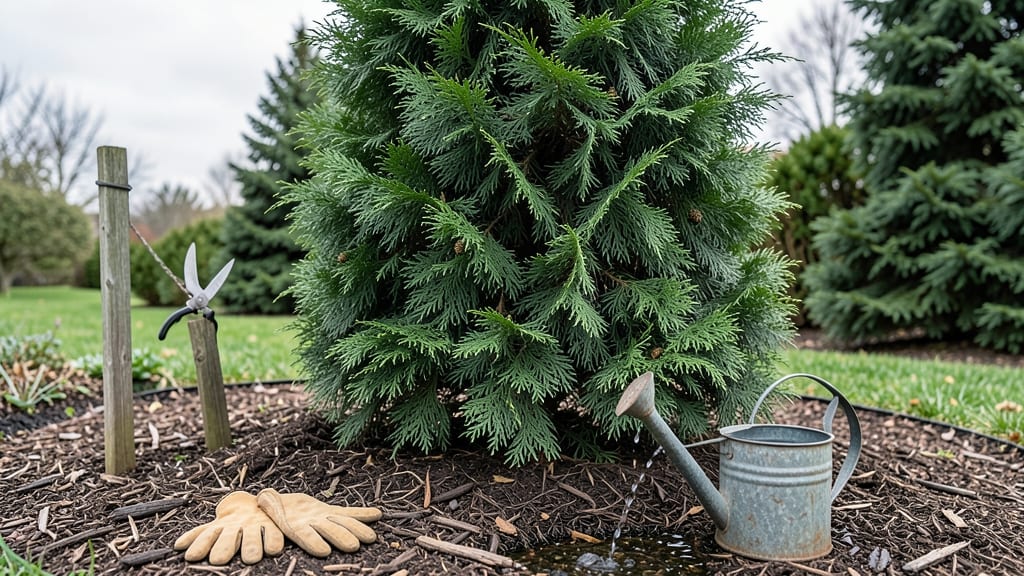
The arbor vitae tree care secrets to that dense, evergreen beauty start with smart pruning—year-round, not just spring. 🌿 I’ve learned the hard way that aggressive cuts in winter stress these trees, while strategic trims in late winter or early spring encourage that lush, full look they’re known for.
The key isn’t just when you prune, but how: shaping for airflow while preserving that signature thick foliage.
You’ll need sharp bypass pruners, a ladder (for higher branches), and a clear day—arbor vitae trees hate wet cuts. Most pruning happens in late winter to early spring, but light shaping after storms or to remove dead branches can happen anytime.
The goal is to keep the tree’s natural pyramid shape while thinning just enough to let sunlight reach the inner branches.
What you’ll end up with is a tree that stays healthy, vibrant, and pest-resistant for decades. No more sparse, leggy branches or brown patches—just that classic, full arbor vitae silhouette that makes your landscape pop.
The best part? These trees handle pruning better than many others, so you won’t be fighting for recovery like with some finicky evergreens.
For those hot, humid summers, a little extra watering helps, but arbor vitae are tough—they’ll tell you when they’re thirsty with drooping branches. And here’s the secret: never top the tree—that’s the fastest way to kill its natural shape.
With the right approach, your arbor vitae will be the sturdy, low-maintenance star of your yard for years.
📚 In This Guide
- What you need
- Instructions
- Tips and common mistakes
- Wrapping up and next steps
What you need
- ● Pruning shears: Bypass pruners (sharp, 6–8-inch blades) for clean cuts on small branches.
- ● Loppers: 10–14-inch bypass or anvil loppers for thicker branches (up to 2 inches in diameter).
- ● Pruning saw: Curved-tooth saw for branches over 2 inches thick (avoid crushing the bark!).
- ● Extension pole: 6–10 ft telescoping pole with a pruning saw attachment for high branches.
- ● Gloves: Heavy-duty gardening gloves (cut-resistant, like those rated for thorns or branches).
- ● Disinfectant: 70% isopropyl alcohol or a 10% bleach solution to sterilize tools between cuts (prevents disease spread).
- ○ Sealing wax or pruning paste: Optional but helpful for sealing large cuts (1–2 inches) to prevent decay.
- ● Tarp or drop cloth: To collect fallen branches and debris (10x12 ft or larger).
- ● Safety glasses: Protect your eyes from debris (ANSI-rated for impact resistance).
- ● Sturdy ladder: If working above 6 ft, use a non-slip ladder rated for your weight (e.g., 250–300 lbs capacity).
- ● Weather check: Prune on a dry, calm day—avoid windy or rainy conditions.
- ● Tree identification: Confirm it’s an arbor vitae (Thuja spp.) (e.g., American arborvitae, Emerald Green) to avoid mistaking it for other evergreens.
- ● Local regulations: Check if your area requires permits for pruning large trees (common in urban zones).
- ● Sharpen your tools! Dull blades tear bark, inviting pests and disease. Use a file or sharpening stone before starting.
- ● Mark your cuts: Use chalk or tape to outline branches you plan to remove—helps visualize the final shape.
- ● Work in layers: For dense arbor vitae, thin out branches in stages to avoid over-stressing the tree.
Step-by-Step arbor vitae tree care: year-round pruning guide
Here’s how I keep my arbor vitae thriving with simple, seasonal pruning—no advanced skills needed.
⏰ Step 1: Prune in Late Winter or Early Spring for New Growth
This is the best time to shape your arbor vitae because the tree is dormant but about to burst with new growth. I wait until just before buds swell—usually February to March in most climates. Prune too early, and you risk damaging tender new shoots; wait too late, and you’ll cut off next year’s foliage.
Use clean, sharp pruning shears to make cuts at a 45-degree angle just above a healthy bud or branch collar. Avoid cutting into old wood—new growth only comes from the current year’s branches. I like to remove dead, diseased, or crossing branches first, then thin out the center to improve airflow.
☀️ Step 2: Light Summer Pruning to Maintain Shape
After the spring flush, I do a light maintenance trim in June or July to keep the tree’s natural shape. This isn’t about heavy pruning—just removing any sparse or leggy branches that stick out too much. Arbor vitae grow best when they’re dense, so I avoid cutting more than 10-15% of the foliage at once.
Watch for brown or yellowing branches—these often signal stress or pests. Snip them off immediately to prevent spread. I also check for water sprouts (fast-growing, vertical shoots) and remove them at the base. These little tweaks keep the tree looking full and healthy without shocking it.
✂️ Step 3: Fall Cleanup to Prep for Winter
By October or November, arbor vitae slow down for winter. This is the time to do a final check for damaged or weak branches and remove them before cold sets in. I avoid heavy pruning now because new growth won’t harden off before frost, but I do tidy up any broken limbs or diseased foliage that could harbor pests over winter.
If your tree has bagworms or spider mites, this is also the time to treat them before they overwinter. I spray with neem oil or insecticidal soap (following label directions) and rake up any fallen leaves to reduce hiding spots for pests.
🌱 Step 4: Year-Round Monitoring for Health
Between pruning seasons, I check my arbor vitae monthly for signs of stress. Healthy arbor vitae have dark green, dense foliage with no bare spots. If you see yellowing needles, it could mean overwatering, underwatering, or nutrient deficiency—adjust care accordingly.
Mulch around the base (but keep it 6 inches away from the trunk) to retain moisture and regulate soil temperature. Water deeply once a week during dry spells, but never let the soil stay soggy. Arbor vitae are tough, but they’ll thank you for consistent care with vibrant, lush growth year after year.
Tips & tricks for perfect arbor vitae pruning
Keeping your arbor vitae lush and thriving takes just a few smart seasonal adjustments—and avoiding these common mistakes makes all the difference.
Timing is Everything: In Step 1, when you're pruning in February-March, watch for those first tiny buds swelling on the branches. That's your cue—prune just before they open. I learned this the hard way after accidentally cutting off new growth by waiting too long. A quick finger test works: gently press a bud; if it feels firm but slightly soft, it's ready.
Tool Prep Matters: Before you start any pruning, sterilize your shears with rubbing alcohol between cuts, especially in Step 1 when removing diseased branches. I keep a small spray bottle of diluted bleach water (1 part bleach to 9 parts water) handy for quick disinfection. This prevents spreading fungal infections or bacterial diseases between branches.
Visual Pruning Guide: In Step 2, when thinning for shape, imagine your arbor vitae as a cone. Remove branches that grow inward or cross others—these compete for sunlight and nutrients. For water sprouts, look for those thin, vertical shoots shooting straight up like arrows. These grow fast but drain energy from the rest of the tree.
Pest Prevention: During your fall cleanup (Step 3), focus on removing all fallen leaves and debris from under the tree. I use a stiff broom to sweep up thoroughly—this eliminates hiding spots for bagworms and spider mites. If you spot webbing or tiny brown bags on branches, treat immediately with neem oil before winter sets in.
Pro Tips for Arbor Vitae Tree Care
- Keeping your arbor vitae lush and thriving takes just a few smart seasonal adjustments—and avoiding these common mistakes makes all the difference.
- Timing is Everything: In Step 1, when you're pruning in February-March, watch for those first tiny buds swelling on the branches.
- Tool Prep Matters: Before you start any pruning, sterilize your shears with rubbing alcohol between cuts, especially in Step 1 when removing diseased branches.
Frequently asked questions
Got questions about keeping your arbor vitae thriving?
Here are answers to the most common concerns—from pruning timing to troubleshooting—so you can maintain a lush, healthy tree all year round.
When is the best time to prune arbor vitae trees?
The ideal time is late winter or early spring (before new growth starts) to avoid stressing the tree. Avoid heavy pruning in late summer or fall, as it can stimulate tender growth vulnerable to winter damage. Light shaping in summer is fine, but keep cuts minimal to prevent disease risks.
How much can I trim my arbor vitae without harming it?
Never remove more than 25% of the tree’s foliage in one year—this can weaken it. Focus on selective pruning to open the canopy for airflow and sunlight. Thin out crowded branches first, then shape gently. Over-pruning leads to sparse growth or dieback, so patience is key!
Why are my arbor vitae branches turning brown?
Brown branches often signal bagworms, spider mites, or winter burn. Check for webbing or tiny pests, then treat with horticultural oil or insecticidal soap. If damage is from cold, prune dead tips in spring. Avoid heavy fertilization, which can stress the tree further.
Can I prune arbor vitae in winter?
Light pruning in mild winter months (when temps stay above freezing) is safe, but avoid heavy cuts. Cold snaps can stress fresh wounds, inviting disease. If you must prune in winter, do so on warmer days and seal larger cuts with pruning sealant.
Are there alternatives to traditional pruning for arbor vitae?
Yes! Try selective thinning (removing entire branches at the base) to improve airflow, or coppicing (cutting back to a main stem) for rejuvenation. For dense trees, shear pruning (using hedge shears) works but requires frequent maintenance. Always prioritize health over aesthetics!
Wrapping up and next steps
Caring for your arbor vitae tree doesn’t have to be overwhelming—just a little patience and consistency go a long way! By following seasonal pruning techniques, you’ll encourage lush, dense growth while keeping your tree healthy and vibrant. Remember, timing, sharp tools, and proper cuts are your best friends.
Ready to take the next step? Start small—pick one season to focus on first, then gradually build your skills. Before you know it, your arbor vitae will be the showstopper of the neighborhood! 🌿✨