
Pruning
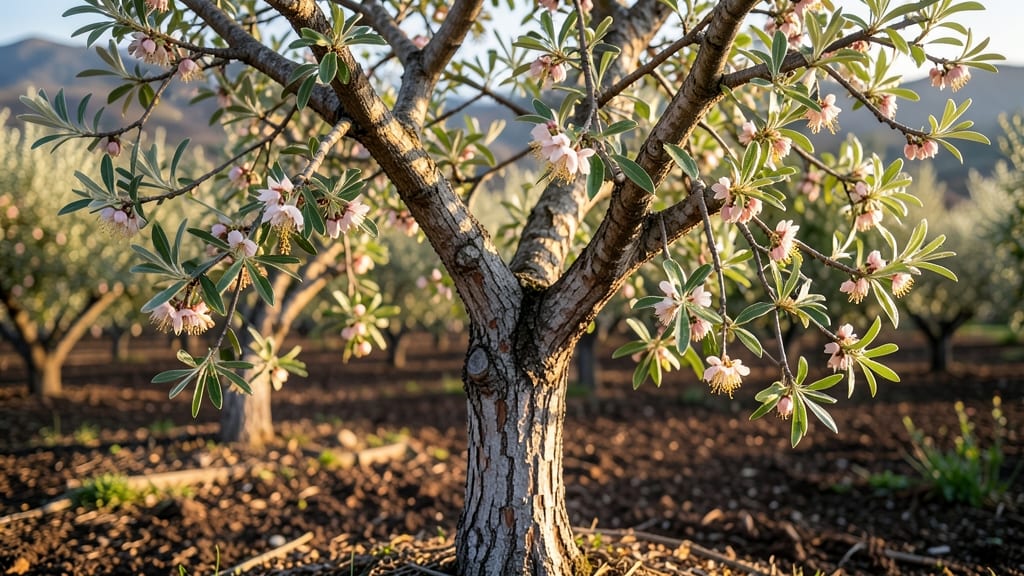
Almond trees grow best in USDA Zones 5 through 9, but they need 300-1,000 winter chilling hours and protection from temperatures below 15°F to survive. Cold-hardy varieties like Nonpareil handle colder climates better than heat-sensitive types like Carmel.
Understanding your almond tree hardiness zone is key to long-term success because these trees rely on winter dormancy to set fruit. 🌱 The chilling requirement varies by variety—some need 500 hours below 45°F, while others demand nearly 1,000 hours.
In northern zones like 5-6, you’ll need to choose varieties bred for cold resilience and use mulch or windbreaks to shield roots from harsh winds. Southern zones (8-9) face different risks, like summer heat stress, so proper irrigation becomes just as critical as winter protection.
For example, the 'Texas' variety thrives in warmer zones (7+) because it tolerates heat better, while 'Fritz' is a top pick for Zone 5 gardens due to its cold endurance. Microclimates matter too—planting near a south-facing wall can add 2-5°F of warmth in winter, extending your viable growing range.
Always check your local USDA Plant Hardiness Map and adjust for microclimates before selecting a variety.
💡 In This Article
- How USDA Zones Affect Almond Tree Survival
- Best Almond Tree Varieties for Different USDA Zones
How USDA zones affect almond tree survival
Almond trees rely on a biological process called dormancy, where they enter a rest phase during winter to prepare for spring bloom. This dormancy requires 300-1,000 hours of temperatures between 32°F and 45°F—a range called "chilling hours."
Trees in colder zones (5-6) naturally accumulate these hours, but varieties like Nonpareil need only 500-600 hours, while heat-loving types (e.g., Carmel) demand 800-1,000 hours. Without enough chilling, buds fail to open, and the tree produces little to no fruit. 🌡️
The real challenge comes when temperatures drop below 15°F. Almond tree roots and trunks can sustain damage at these extremes, leading to dieback or even death.
Zone 4 gardens (average winter lows of -20°F to -30°F) are typically too harsh unless you use cold-hardy varieties like 'Texas' or implement protective measures.
In contrast, Zone 8-9 climates (mild winters) pose risks like late frosts that damage blossoms or summer heat stress above 95°F, which can reduce nut development. The key is matching your variety to your zone's average last frost date and extreme lows.
Dormancy cycles also interact with flowering timing. Almond trees bloom 1-2 weeks earlier in warmer zones (8-9) than in cooler ones (5-6), making them vulnerable to late spring frosts.
For example, a 28°F frost in Zone 7 can devastate blossoms, while Zone 5 trees might escape such damage due to later blooming.
Gardeners in marginal zones (like Zone 4 edges) often use row covers or windbreaks to create microclimates that add 3-5°F of warmth, effectively extending their viable growing range. 🌳
Another critical factor is soil temperature. Almond roots need soil temps above 50°F to resume growth in spring. In colder zones, slow soil warming can delay bud break, while in warmer zones, rapid warming might trigger premature blooming before frost risk has passed.
This is why Zone 5-6 growers often choose early-blooming varieties like 'Fritz'—they've evolved to handle these timing challenges better. Meanwhile, Zone 8-9 gardeners focus on varieties with heat tolerance, such as 'Carmel,' which can handle summer temperatures up to 105°F without stress.
Understanding these interactions helps explain why some almond trees thrive in one zone but struggle in another. For instance, a 'Nonpareil' tree might produce well in Zone 6 but fail in Zone 4 without protection, while a 'Texas' variety could handle Zone 7's heat but suffer in Zone 9's humidity.
The solution often lies in selecting the right variety for your specific zone's combination of winter chilling, frost risk, and summer heat patterns. 🌿
Advanced growers also monitor growing degree days (GDD), which measure heat accumulation during the growing season. Almond trees typically require 1,200-1,500 GDDs for proper nut development.
In cooler zones, this means a longer growing season is needed, while warmer zones might see accelerated growth—sometimes too fast, leading to smaller nuts. Balancing these factors through proper variety selection and microclimate management is the secret to successful almond cultivation across different USDA zones. 🌱
Remember: while USDA zones provide a general guideline, your local microclimate can shift your effective zone by 1-3 degrees. Factors like elevation (cooler by 3-5°F per 1,000 feet), proximity to water bodies, and urban heat islands all play roles.
Always conduct a site assessment before planting to account for these local variations. 🔍