
Trees
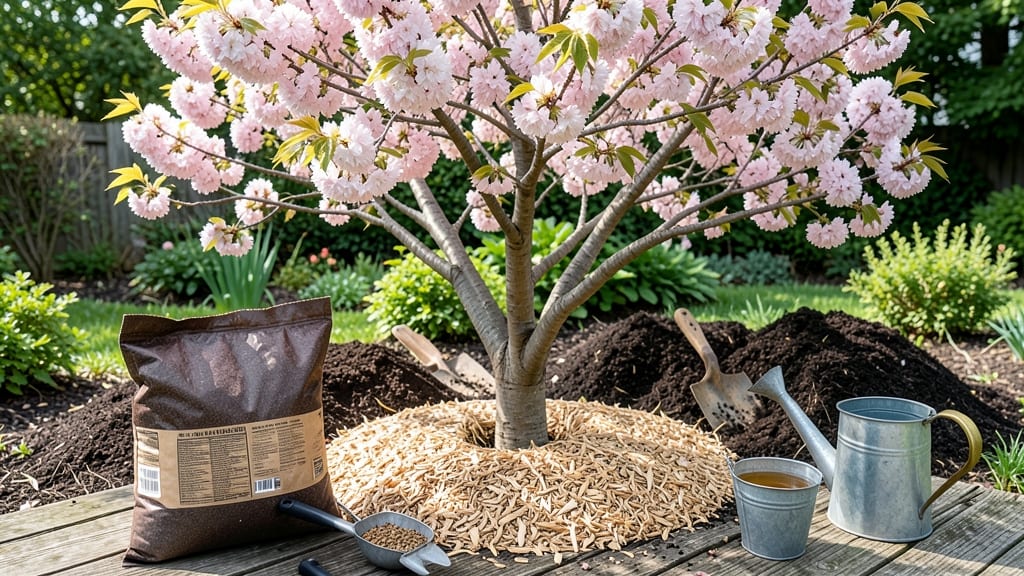
For Yoshino cherry tree fertilizer, use a balanced organic blend with equal parts nitrogen, phosphorus, and potassium—like a 10-10-10 mix—to support vibrant blooms and strong roots. Apply in early spring and late fall, but avoid high-nitrogen fertilizers after summer to prevent leafy growth that crowds out flowers.
Yoshino cherry trees are picky about their food—too much nitrogen makes them grow leaves instead of flowers, while too little means weak roots and sparse blooms. 🌸 The key is finding that sweet spot with a balanced organic fertilizer, like composted manure or fish emulsion, which also adds beneficial microbes to the soil.
I’ve seen firsthand how a well-fed Yoshino can burst into pink blooms in spring, while an over-fertilized one just puts out lush green foliage. Testing your soil’s pH (aim for 6.0–7.0) before applying fertilizer helps avoid common mistakes, like burning roots with over-acidic blends.
Pro tip: Granular fertilizers work best when spread evenly around the drip line (the outer edge of the tree’s canopy) and lightly watered in. For liquid options, dilute according to package instructions and apply every 4–6 weeks during growing season.
Overdoing it? Watch for yellowing leaves or stunted growth—both signs your Yoshino’s getting too much of a good thing.
💡 In This Article
- Optimal Nutrient Ratios for Yoshino Cherry Tree Blooms
- Step-by-Step Guide to Fertilizing Yoshino Cherry Trees
Optimal nutrient ratios for Yoshino cherry tree blooms
The Yoshino cherry tree's stunning spring blooms are a direct result of its nutrient intake, particularly the delicate balance between nitrogen, phosphorus, and potassium. Nitrogen (N) fuels leaf and flower development, but too much after mid-summer causes the tree to produce excessive foliage at the expense of next year's blossoms.
A 10-10-10 organic fertilizer ratio provides equal support for all three functions, while a 5-10-5 blend is gentler for established trees needing more phosphorus for root reinforcement. This balance is critical because Yoshino cherries are prone to "bloom starvation"—when nitrogen-heavy fertilizers trick the tree into prioritizing leaves over flower buds.
Micronutrients like iron and zinc play equally vital roles in bloom quality. Iron deficiency (chlorosis) causes yellowing between leaf veins, while zinc deficiency leads to stunted growth and poor flower formation. These trace elements become more available when soil pH is between 6.0 and 7.0.
The tree's root system absorbs nutrients most efficiently during dormancy (late fall) and early spring growth spurts, which is why timed applications work best.
For example, a 1 cup of balanced organic fertilizer spread over 10 square feet of soil in early spring provides enough nutrients for the entire growing season without risk of overloading.
Seasonal nutrient needs shift dramatically. During dormancy (fall/winter), phosphorus and potassium dominate root strengthening and disease resistance. In spring, nitrogen takes center stage for new foliage and flower bud formation. What most gardeners overlook is how micronutrients like manganese and boron enhance pollination success.
A 1 tablespoon of kelp meal per tree in early spring adds these critical elements naturally. The key is mimicking nature's slow-release system—organic matter breaks down gradually, preventing nutrient spikes that stress delicate cherry tree roots.
Here's what happens when ratios go wrong: Too much nitrogen (12-6-6 blends) produces lush leaves but weak stems that can't support heavy blossoms. Too little potassium (6-12-6) makes trees vulnerable to fungal diseases like powdery mildew. The ideal ratio isn't just about numbers—it's about timing.
Yoshino cherries need their nitrogen supply to taper off by July 1st to ensure energy shifts toward flower bud formation for next spring. This is why organic fertilizers with slow-release properties (like composted cow manure) outperform synthetic quick-release options.
Consider this real-world example: A Yoshino cherry tree in a 6.5 pH soil with 2% organic matter will show visible stress if fertilized with a 15-5-10 blend. The high nitrogen causes rapid but unbalanced growth, while the phosphorus deficiency weakens root structure.
The solution? Switch to a 5-10-5 organic blend and add 1 inch of compost annually to rebuild soil health. This approach mirrors how Yoshino cherries evolved in Japan's volcanic soils—rich in organic matter but low in synthetic nutrients.
The science behind these ratios comes from plant physiology: Nitrogen promotes chlorophyll production (green leaves), phosphorus supports energy transfer (roots and flowers), and potassium regulates water balance (disease resistance).
When these elements work together in harmony, you get the iconic Yoshino cherry tree with its 2-inch-wide pink blossoms that appear before the leaves. The tree's ability to produce flowers on 1-year-old wood means last year's nutrient storage directly impacts this year's bloom quality—making proper fertilization a year-round commitment.