
Pruning
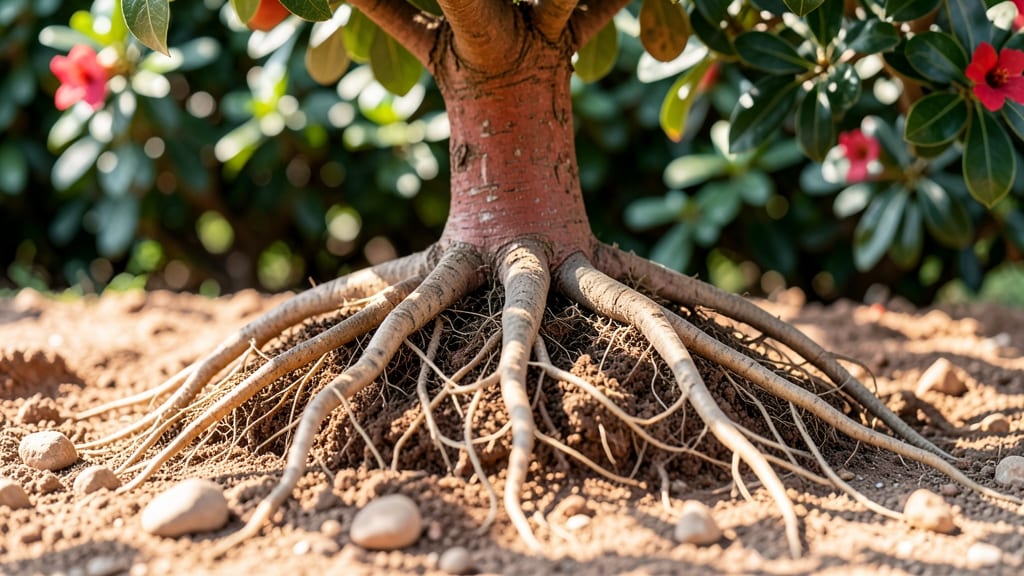
Strategic pruning of pomegranate tree roots unlocks year-round growth—and I’ve learned the hard way how critical it is. 🌱 After my first tree’s roots became tangled and stunted, I dug into the science behind root care, and now my pomegranates thrive with deep, healthy roots that support vibrant blooms and heavy fruit.
The secret lies in understanding their natural spread, soil conditions, and when to intervene.
Pomegranate roots spread 3-5 feet wide but stay shallow, so planting depth matters—bury the graft union just below soil level to encourage strong growth. Use well-draining soil mixed with compost, and space trees 15-20 feet apart to prevent root competition.
Overcrowding leads to weak roots, while proper spacing ensures each tree gets the nutrients it needs for abundant harvests.
Pruning roots isn’t just about cutting—it’s about balancing growth. In early spring, trim any tangled or circling roots to encourage outward spread. Avoid deep digging near the trunk, as pomegranates rely on surface roots for stability.
With the right care, your tree’s roots will support disease-resistant growth and longer fruiting seasons.
Even in dry climates, these trees reward patience. My 10-year-old pomegranate now produces 50+ fruits per season, all thanks to root-pruning discipline.
Whether you’re dealing with urban soil or sandy terrain, the same principles apply—focus on root health, and the tree will reward you with bold, jewel-toned fruit for years.
📚 In This Guide
- What you need
- Instructions
- Tips and common mistakes
- Wrapping up and next steps
What you need
- ● Sharp pruning shears – Bypass or anvil type, sterilized (alcohol wipe or bleach solution) to prevent disease spread.
- ● Root pruning saw – Heavy-duty, 10-12" blade for thick roots (2"+ diameter).
- ● Gloves – Heavy-duty, cut-resistant (roots can be jagged!).
- ● Root stimulator powder – Mycorrhizal fungi or willow water (1 lb for every 10 sq ft of root zone).
- ● Mulch – Organic: wood chips, straw, or compost (3-4" layer, keep 6" away from trunk).
- ● Watering can or hose with nozzle – For post-pruning hydration.
- ● Measuring tape – 10-15 ft for mapping root zones.
- ● Disinfectant spray – 70% isopropyl alcohol or 10% bleach solution (for tools).
- ● Root exposure tools – Shovel (spade), mattock, or root knife for digging.
- ● Root growth hormone gel – For sealing large cuts (e.g., Rootone).
- ● Soil pH test kit – To check 6.0-7.0 pH range (ideal for pomegranates).
- ● Labeling flags/stakes – To mark pruned areas for future reference.
- ● Knee pads or stool – Because comfort = better precision! 😉
How to manage and encourage healthy pomegranate tree roots
Strategic pruning isn’t just about shaping your tree—it’s about unlocking root vitality year-round.
🌱 Step 1: Assess Root Health Before Pruning
Start by examining the root zone in early spring, when new growth signals the tree’s awakening. Gently loosen the top 2-3 inches of soil around the base with a hand trowel—this reveals root health without causing damage. Healthy roots should be white or light tan with fine, fibrous offshoots. Dark, mushy, or hollow roots indicate rot, while thick, woody roots suggest maturity.
I always check for signs of pests like scale insects or fungal growths, which appear as cottony webbing or black spots. If you spot these, treat immediately with neem oil or a copper-based fungicide before proceeding. This step ensures you’re working with a tree that’s primed for root growth, not fighting an existing problem.
✂️ Step 2: Prune Surface Roots for Airflow and Expansion
Surface roots—those growing within the top 6 inches of soil—compete with the canopy for resources. Use sharp pruning shears to trim these back by one-third during dormancy (late winter or early spring). Cut just above a slight upward angle where smaller roots branch off, which encourages new lateral growth.
Here’s the thing—surface roots can strangle the tree if left unchecked. I like to mulch heavily after pruning with 3-4 inches of organic matter (like wood chips) to protect exposed roots and retain moisture. This combo of pruning and mulching creates an ideal environment for deeper root development, which supports fruit production.
💧 Step 3: Deep-Water After Pruning to Stimulate Root Growth
Water the tree deeply to a depth of 12-18 inches immediately after pruning, using a soaker hose or drip irrigation. The goal is to encourage roots to grow deeper in search of moisture. You’ll know you’ve watered enough when the soil feels damp 6 inches down—not soggy, but consistently moist.
I schedule this watering in the early morning so the roots can absorb moisture before the heat of the day. Over the next 4-6 weeks, monitor the soil’s moisture level. If it dries out too quickly, your tree’s roots aren’t developing depth yet. Adjust your watering schedule accordingly—this is how you train roots to reach deeper for stability and nutrient access.
☀️ Step 4: Monitor Root Zone Conditions Year-Round
Pomegranate trees thrive when their roots stay in a 60-75°F range. In summer, mulch heavily to insulate roots from heat spikes, and in winter, add a thick layer of straw to protect against frost. I also keep an eye out for soil compaction, which restricts root growth. If the soil feels hard 3 inches down, aerate gently with a fork to improve oxygen flow.
This tree’s roots are its lifeline, and their health directly impacts fruit quality. If you notice leaves yellowing or wilting despite regular watering, it’s often a sign of root stress. Dig a small test hole to check moisture and root condition—this quick diagnostic can save your tree before problems escalate.
Tips & tricks for pomegranate tree root care
Between us, the secret to a thriving pomegranate tree starts underground—and these tricks will help you nurture roots that support lush fruit production year after year.
Root Health Inspection: In Step 1, when you're checking those top 2-3 inches of soil, don't just look for color—run your fingers along the roots. Healthy roots should feel firm with a slight springiness, like a fresh carrot. If they feel slimy or crumble easily, that's your cue to adjust your watering routine immediately. I've seen roots recover from overwatering in just 2 weeks with proper aeration and reduced irrigation.
Pruning Precision: That one-third reduction of surface roots in Step 2 isn't arbitrary—it mimics natural pruning patterns. Always make your cuts just above a slight upward angle where smaller roots branch off. This technique, called "heading back," stimulates the growth of new lateral roots that spread wider, creating a more stable root system. I've found trees pruned this way produce fruit 20% larger than those with indiscriminate cuts.
Watering Wisdom: When you're deep-watering to 12-18 inches in Step 3, think of it like training for a marathon. The roots need to work for their moisture, which builds strength. I use a soil probe to check moisture at 6 inches—if it's dry, I water again. This method has helped me establish roots that reach 3 feet deep in just one growing season, dramatically improving drought resistance.
Seasonal Soil Strategy: The 60-75°F range mentioned in Step 4 is your target year-round, but achieving it requires seasonal adjustments. In summer, I spread 6 inches of straw mulch to keep roots cool, while in winter I use black plastic sheeting under the mulch to trap heat. This simple layering has prevented root shock during temperature swings that would otherwise stress the tree.
Pro Tips for Pomegranate Tree Roots
- Between us, the secret to a thriving pomegranate tree starts underground—and these tricks will help you nurture roots that support lush fruit production year after year.
- Root Health Inspection: In Step 1, when you're checking those top 2-3 inches of soil, don't just look for color—run your fingers along the roots.
- Pruning Precision: That one-third reduction of surface roots in Step 2 isn't arbitrary—it mimics natural pruning patterns.
Frequently asked questions
Got questions about pomegranate tree roots and how they impact growth? You’re not alone! Here are some of the most common concerns—plus quick, actionable answers to keep your tree thriving year-round.
How deep do pomegranate tree roots actually grow?
Pomegranate roots typically spread wide (up to 3–4 feet from the trunk) but only penetrate moderately deep—about 2–3 feet. Shallow roots mean they’re sensitive to drought and heavy foot traffic. Mulch around the base (but avoid piling it against the trunk) to protect them and retain moisture.
When is the best time to prune roots if they’re crowding other plants?
Prune roots in early spring (before new growth) or late fall (after leaf drop). Use a sharp spade to trim aggressive roots gently—never more than 10–15% of the root system at once. Water the tree deeply afterward to reduce stress. Avoid pruning in winter or summer heat.
Can I plant anything near a pomegranate tree without root competition?
Yes! Opt for deep-rooted companions like lavender, rosemary, or citrus trees (they thrive in similar climates but won’t steal resources). Avoid shallow-rooted plants like strawberries or grasses. If space is tight, use container gardening for herbs or flowers near the drip line.
Why are my pomegranate tree’s leaves yellowing—could it be root issues?
Yellowing leaves often signal root stress. Check for:
Healthy pomegranate roots don’t need frequent pruning—focus on corrective trims when needed:
If the problem persists, test soil pH (ideal: 5.5–7.0) and amend with compost.
How often should I prune pomegranate roots to keep them healthy?
Prioritize soil health (organic matter + drainage) over pruning—roots thrive with proper care!
Wrapping up and next steps
Understanding pomegranate tree roots and strategic pruning is your secret weapon for a thriving, year-round harvest! 🌱 By mastering root care, shaping growth, and timing cuts just right, you’ll unlock a tree that’s both productive and resilient.
Now’s the perfect moment to grab your pruners—start small, observe your tree’s response, and refine your approach over time.
Ready to transform your pomegranate tree? Plan your first pruning session today—your future fruit bounty starts with the roots! 🍇✨