
Pruning
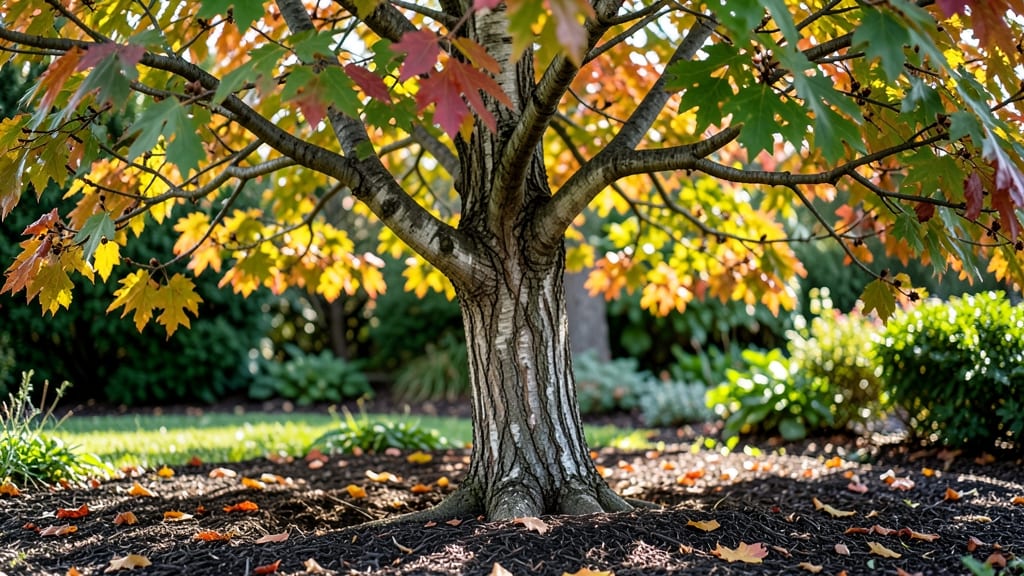
Staring at a tree with no idea what tree is this Google can help you figure out?
No more guessing games. 🌳 I’ve spent years identifying mystery trees in my neighborhood—from the gnarled oak in my backyard to the towering maple across the street—and here’s how to crack the code fast, without a degree in botany.
Start with the basics: leaf shape (needle-like, lobed, or smooth?), bark texture (smooth, furrowed, or scaly?), and any fruit/nuts. Snap a photo of all these details, then use free tools like Google Lens or iNaturalist to match them against thousands of species.
Season matters too—spring leaves look different from autumn’s fiery display.
You’ll narrow it down to the right tree in minutes, whether it’s a young sapling or a century-old giant. Bonus: knowing the species helps with pruning, pests, and even property value. My neighbor’s "weird tree" turned out to be a rare hickory—now it’s the talk of the block.
Still stuck? Share your photo in gardening forums or with local arborists. Someone’s seen it before—and they’ll tell you exactly what it is. No more mystery trees on your street.
How Nature Confuses Tree ID
Ever stood staring at a towering oak or a mysterious shrub, phone in hand, typing "what tree is this Google"—only to get back results that seem more like a botanical guessing game? 🌳🤔 The truth is, identifying trees isn’t always as straightforward as it looks.
Several factors—some scientific, others purely environmental—can muddle even the most seasoned tree-spotter’s confidence. Let’s break down the real reasons why your tree ID quest might feel like solving a puzzle with missing pieces.
Trees are masters of disguise, and their appearance changes dramatically depending on the season. What looks like a lush, broadleaf maple in summer might resemble a bare twig in winter—leaving you scratching your head over Google’s suggestions.
- Leaf Loss: Deciduous trees (like oaks, maples, and birches) shed their leaves in fall, exposing bark textures that may not match their summer foliage. Evergreens like pines or spruces keep their needles year-round, but their color shifts from vibrant green to dull brown or even red in winter.
- Flowering Timing: Some trees bloom in spring (e.g., dogwoods, cherries), while others flower in late summer (e.g., catalpas). If you’re searching mid-year, you might miss key identifying features.
- Fruit or Seed Pods: Trees like hickories produce nuts, while elms drop samaras (those helicopter seeds). If you’re not in the right season to spot these, your ID search might return generic or incorrect matches.
Pro Tip: 📅 Time your search. For the most accurate results, identify trees when they’re at their most distinctive—spring for blooms, summer for full leaves, or winter for bark patterns.
Not all trees thrive everywhere. A tree that dominates forests in the Pacific Northwest (like a Douglas fir) might barely survive in the arid Southwest. Even within a region, microclimates—like urban heat islands or river valleys—can alter a tree’s growth, making it look unfamiliar.
- Climate Mismatches: A tree adapted to wet climates (e.g., redwoods) may struggle in drought-prone areas, leading to stunted growth or deformed leaves. Conversely, desert-adapted trees (like mesquite) might look unhealthy in humid zones.
- Invasive Species: Non-native trees (e.g., Bradford pear or Chinese elm) often spread beyond their natural range, confusing locals and search engines alike. Their hybrid traits can make ID apps or Google’s suggestions wildly off.
- Urban vs. Wild: City trees are often pruned, grafted, or stressed by pollution, altering their shape and size. A "wild" tree in a park might look nothing like its forest-dwelling cousins.
Pro Tip: 🗺️ Narrow your search by region. Use phrases like "what tree is this in [your state/city]" to filter out irrelevant matches. Tools like the USDA Plant Hardiness Zone Map can also help predict which trees should (or shouldn’t) grow where.
Young trees are like teenagers—they haven’t quite "filled out" yet. Their bark, leaves, and branches may not resemble their mature counterparts, leading to frustratingly vague search results.
- Bark Differences: A mature oak has thick, furrowed bark, but a sapling might look smooth and gray, resembling a beech or hickory instead.
- Leaf Shape Shifts: Some trees (like sycamores) have lobed leaves as adults but simple, rounded leaves when young. A quick Google image search might pull up the wrong stage of growth.
- Branch Patterns: Mature trees develop distinct branching habits (e.g., horizontal layers in oaks, upward spikes in pines), but juveniles can look scraggly or identical to other species.
Pro Tip: 📏 Compare size and scale. If the tree is small (under 20 feet), focus on juvenile traits in your search. Use terms like "young [tree type] identification" or check local field guides for sapling characteristics.
Even the most advanced AI or mobile apps rely on databases—some of which are outdated, incomplete, or overly broad. Here’s why your digital detective work might hit a wall:
- Outdated Images: Tree databases often use photos from decades ago, when species ranges or appearances may have changed due to climate shifts or hybridization.
- Overlapping Traits: Many trees share similar features (e.g., white bark in birch, aspen, and paper mulberry). Without fine details, Google or apps may serve up a "top 10" list with no clear winner.
- Regional Gaps: Some trees are rare or poorly documented in certain areas. A local species might not even appear in national databases, leaving you with irrelevant suggestions.
Pro Tip: 🔍 Cross-reference with experts. If Google spits out conflicting results, try:
- Uploading photos to iNaturalist (a crowdsourced ID platform).
- Posting in local Facebook groups or r/whatsthisplant.
- Visiting a local arboretum or contacting a university extension service.
Next time you’re baffled by a tree and type "what tree is this Google", remember: nature’s camouflage is real, and even tech has its limits. But with a little patience—and these science-backed strategies—you’ll crack the case like a botanical Sherlock Holmes. 🕵️♂️🌲
Identify & Solve Tree Mysteries
Got a leaf, bark, or branch that’s got you stumped? 🌿 No need to guess—here’s how to pinpoint your tree and fix common issues (like overgrowth, disease, or pests) with step-by-step solutions.
Before solving problems, you need to know what you’re dealing with. Use these quick fixes to ID your tree:
🍃 Method 1: Leaf Shape & Arrangement Not all leaves are created equal!
Match your sample to these common traits: - Needles in clusters? → Likely a pine, spruce, or fir (evergreens). - Opposite branching (leaves paired at nodes)? → Maple, dogwood, or ash. - Alternate branching (single leaf per node)? → Oak, walnut, or hickory. - Palmately lobed (like fingers)? → Maple or horse chestnut. - Pinnately lobed (single stem with lobes)? → Oak or walnut.
💡 Pro Tip: Snap a clear photo of the leaf underside—some trees (like poison ivy vs. Virginia creeper) have telltale vein patterns or hairiness.
🌲 Method 2: Bark & Branch Clues
Bark texture and branch arrangement are dead giveaways:
- Smooth gray bark that peels? → Birch or sycamore.
- Deep furrows (like elephant skin)? → Oak or beech.
- Thorny branches? → Hawthorn, black locust, or rose.
- White sap when cut? → Birch or paper mulberry.
🔥 Hot Tip: Rub your fingers along the bark—some trees (like hackberry) have corky bumps, while others (sycamore) have patchy, scaly textures.
📱 Method 3: Use Google Lens (Fastest Fix)
- Open Google on your phone.
- Tap the Lens icon (🔍) in the search bar.
- Point at the leaf/bark—Google will suggest matches in seconds!
- Tap the result to see details (height, care tips, and common issues).
⏰ Time-Saver: If outdoor light is dim, take a well-lit photo indoors and upload it to iNaturalist or LeafSnap apps for expert ID.
Once you’ve ID’d your tree, tackle issues with these cause-to-fix solutions:
🍂 Problem: Overgrown or Messy Branches
Cause: Poor pruning, fast growth, or weak structure. Fix It:
- 🔪 Trim at the right time: Late winter/early spring (dormant season) for most trees. Evergreens can be pruned in early summer.
- 🌿 Use the "3-cut method" for clean cuts: 1. Under-cut 6–12 inches below the branch collar.
- Top-cut just outside the branch collar.
- Clean up the stub. - 🚫 Avoid "topping" (cutting main branches back to stubs)—it weakens the tree.
💡 Prevention Tip: Prune 10–15% of the canopy max per year to avoid shock. Use sterilized tools to prevent disease spread.
🐜 Problem: Pests or Disease Spots
Cause: Infestations (aphids, borers) or fungal infections (powdery mildew, anthracnose). Fix It:
| Issue | Signs | Solution |
|---|---|---|
| Aphids | Sticky residue (honeydew), curled leaves | Spray with soapy water (1 tsp dish soap + 1 quart water). Repeat weekly. |
| Borers | Sawdust-like frass, dying branches | Apply systemic insecticide (like Bayer Advanced Tree & Shrub). Drill holes to inject treatment. |
| Powdery Mildew | White fuzzy coating on leaves | Prune infected leaves + spray neem oil (1 tbsp per gallon of water). |
| Anthracnose | Dark spots, leaf drop | Remove fallen leaves + fungicide (like copper fungicide). |
🌡️ Prevention Tip: Water at the base (not overhead) to reduce fungal spores. Mulch properly (2–4 inches deep) to keep roots healthy.
🌪️ Problem: Weak or Storm-Damaged Branches
Cause: Heavy snow, ice, or wind stress. Fix It:
- 🛠️ Remove broken branches with clean cuts (as above).
- 🌿 Support weak branches with tree ties or cables (for large limbs).
- 🚨 Call an arborist if the trunk is split or major limbs are hanging—DIY fixes can be dangerous!
✨ Safety First: Wear gloves and goggles, and never work on a ladder near power lines.
🌱 Problem: Slow Growth or Yellowing Leaves
Cause: Poor soil, nutrient deficiency, or root issues. Fix It:
- 📊 Test your soil (use a DIY kit or send a sample to a local extension office).
- 🌿 Amend soil with compost or organic matter (like cottonseed meal for nitrogen).
- 💧 Water deeply (1–2 inches per week) but avoid overwatering (root rot risk).
🎯 Growth Boost: Fertilize in early spring with a balanced tree fertilizer (10-10-10 or 20-20-20).
- 🌳 Inspect trees annually (spring and fall) for early signs of stress.
- 🍃 Mulch correctly—keep mulch 3–4 inches deep and 6 inches away from the trunk.
- 🚫 Avoid "volcano mulching" (piling mulch up the trunk)—it traps moisture and invites pests.
- 🌧️ Drainage matters: Ensure water flows away from the tree base to prevent root rot.
Now that you’ve ID’d your tree and fixed the issues, your yard will be healthier, safer, and more beautiful—without the guesswork! 🌟 For persistent problems, consult a certified arborist to keep your trees thriving for decades.
Frequently asked questions
What’s the fastest way to identify a tree using just my phone?
Use Google Lens—it’s the quickest method! Open Google on your phone, tap the camera icon in the search bar, and point at the tree’s leaves, bark, or fruit. Google will instantly suggest matches. For even better results, take a well-lit photo of the leaf underside or branch structure, then upload it to apps like LeafSnap or iNaturalist for expert verification.
Why does Google sometimes give me wrong tree identifications?
Google’s database relies on general traits, but trees can look drastically different by season or region. For example, a young oak might resemble a maple, or a winter birch could be mistaken for a beech. To improve accuracy, narrow your search by including your location (e.g., “what tree is this in Texas?”) and focus on unique features like bark texture or fruit.
Can I identify a tree from just its bark or fruit?
Bark and fruit are often the most reliable clues. For instance, smooth, peeling bark points to a birch or sycamore, while deep furrows suggest an oak. Fruit can be even more telling—helicopter seeds mean elm, and acorns confirm an oak. Combine these with leaf shape for foolproof ID.
What should I do if I can’t find my tree in Google’s results?
Try these backup methods: Post a photo in local gardening groups (Facebook or Reddit), visit an arboretum with a sample, or check regional field guides (like the USDA Plants Database). Rare or hybrid trees might not be in mainstream databases—experts in your area can often spot the subtle differences you missed!
How do I tell the difference between poison ivy and Virginia creeper?
This is a classic ID trap! Both have three leaflets, but poison ivy’s leaves grow in a cluster (like a group of three), while Virginia creeper’s leaflets are spaced along a single stem. Rub your fingers along the stems—poison ivy has hairy, smooth stems, while Virginia creeper’s are rough and woody. Never touch poison ivy!