
Plants
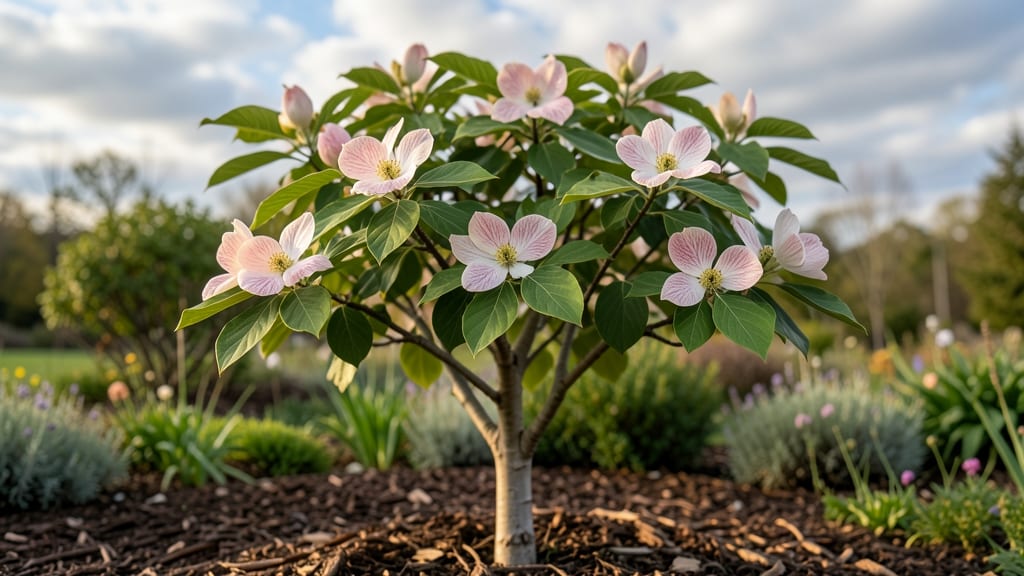
A dogwood tree in winter looks like a graceful skeleton with its distinctive smooth, grayish-brown bark showing horizontal lenticels and peeling patches, while its branches create a layered, zigzag pattern featuring slender twigs and small, oval buds clustered at the ends.
A dogwood tree in winter stands out with its smooth, exfoliating bark that often peels in thin strips, revealing fresh layers underneath. 🌲 The zigzag branching structure and oval buds create a unique silhouette that helps distinguish it from similar trees like serviceberry or hawthorn.
These visual cues make dogwoods recognizable even when they're bare, which is especially useful for gardeners planning winter pruning or identifying new plantings.
What's fascinating is how the lenticels (those tiny raised lines) form horizontal bands along the bark, adding texture that contrasts with the smooth areas. The branches grow in a layered, almost tiered pattern, giving the tree a structured yet elegant appearance.
This combination of bark and branch characteristics makes dogwoods a standout feature in winter landscapes, even when they're not in bloom.
💡 In This Article
- Identifying Dogwood Bark and Branch Characteristics in Winter
- How to Spot Dogwood Trees by Winter Silhouette
Identifying dogwood bark and branch characteristics in winter
Dogwood bark in winter reveals its true character through a fascinating interplay of textures. The outer layer typically appears smooth and grayish-brown, but what makes it distinctive are the horizontal lenticels—tiny, raised pores that allow gas exchange—arranged in irregular bands.
These lenticels often appear as subtle, slightly raised lines that run parallel to the ground, creating a subtle striped pattern when viewed from a distance. 🌲 The bark's exfoliation process begins in late winter or early spring, where thin strips peel away to reveal fresh, cream-colored layers underneath, a process known as "exfoliating bark."
This peeling pattern sets dogwood apart from similar trees like serviceberry, whose bark remains more uniformly smooth, or hawthorn, which develops more pronounced ridges and scales. The bark's moisture content plays a key role: drier winters cause more pronounced peeling, while wetter conditions may keep it smoother longer.
The bark's thickness also varies—younger trees have thinner bark that peels more easily, while mature specimens develop thicker, more resilient layers.
The branching structure of dogwoods creates another layer of winter identification. Dogwood branches grow in a distinctive zigzag pattern, where each new layer of branches emerges at a slight upward angle from the previous one.
This creates a tiered, almost layered effect when viewed from above, resembling the steps of a staircase. The twigs themselves are slender and slightly arched, often ending in clusters of oval-shaped buds that measure about 1/4 to 1/2 inch long.
These buds are typically shiny and reddish-brown, contrasting with the grayish-brown bark.
What's particularly useful for gardeners is how these characteristics change with the tree's age. Young dogwoods have more delicate, wispy branches with fewer buds, while mature specimens develop thicker branches with more pronounced lenticels and peeling patterns.
The bark's color can also shift from a lighter gray when young to a darker, almost chocolate-brown hue as the tree matures. This progression helps distinguish dogwoods from other winter-bare trees that maintain consistent bark colors throughout their lifespan.
Comparing dogwoods to their winter-bare counterparts reveals key differences. For example, serviceberry branches tend to be more upright and less layered, while hawthorn branches often have thorns and more irregular bud arrangements. Dogwood's oval buds are also typically more clustered than the more evenly spaced buds of other trees.
These distinctions become especially valuable when identifying trees in mixed landscapes or during winter pruning sessions.
The combination of peeling bark, horizontal lenticels, and tiered branching creates a visual signature that makes dogwoods instantly recognizable to trained eyes.
This unique winter appearance isn't just for show—it's an adaptation that helps the tree survive cold months by regulating moisture loss through those lenticels while maintaining structural integrity through its layered branch pattern. 🌿