
Blooming
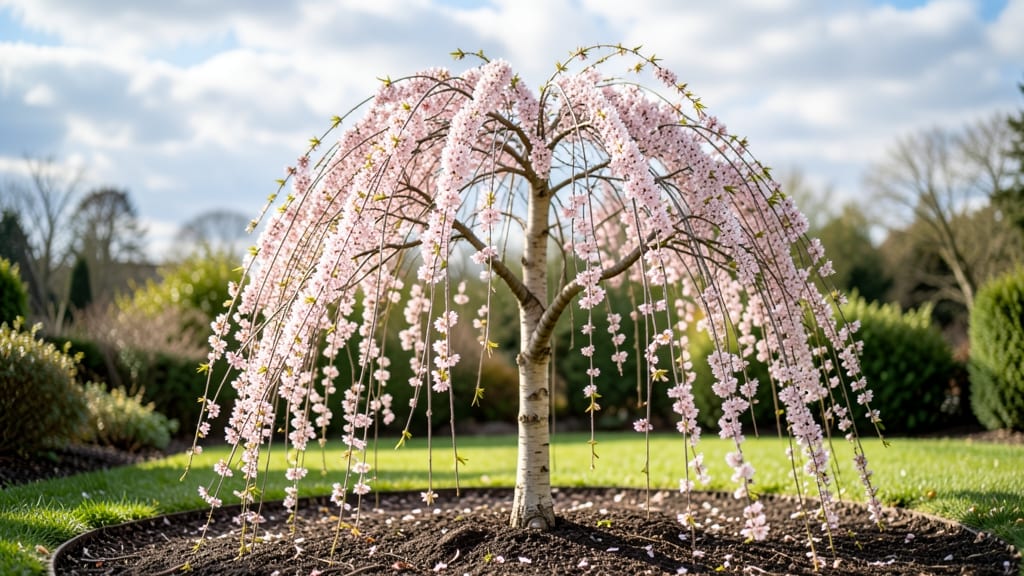
The weeping cherry tree bloom time is the moment your yard transforms into a soft pink or white waterfall 🌸 — but catching it depends on more than just luck.
Picture this: You’ve waited all winter for your Prunus serrulata ‘Pendula’ to burst into color, only to miss the show by weeks because you didn’t account for your zone’s chill hours or last frost date.
The truth? Bloom timing varies wildly—from late April in Zone 6a to as early as March in warmer regions—so knowing the exact factors that shift your tree’s schedule is the key to planning.
In this guide, I’ll break down how USDA zones, tree age, and even last year’s weather influence when your weeping cherry’s branches will dazzle you. You’ll also learn the three critical care steps to ensure your tree blooms on schedule—plus how to troubleshoot if it’s playing hard to get.
Ready to predict your spring color show like a pro? Let’s dive into the science (and secrets) behind weeping cherry bloom timing so you never miss the magic again.
Weeping cherry tree bloom time by USDA hardiness zones: when to expect flowers
Timing your weeping cherry tree's spring bloom starts with knowing your USDA hardiness zone. These stunning trees typically flower in late winter to early spring, but exact dates shift dramatically from Zone 5 to Zone 9.
In colder zones, buds often wait for consistent 40°F+ temperatures, while warmer climates may see blooms as early as February. Understanding these patterns helps you plan pruning, frost protection, and even photography opportunities to capture that magical moment.
One critical factor is variety selection. Early bloomers like Prunus subhirtella (autumn cherry) can flower as early as late February in Zone 6, while classic Prunus avium varieties often wait until April in the same zone.
Your tree's age and health also play roles—young trees may bloom 2-3 weeks later than mature specimens. Let's explore how these variables interact across the country's growing regions.
Microclimates can shift bloom timing by 1-3 weeks, even within the same zone. A south-facing slope might trigger blooms 10 days earlier than a north-facing yard, while urban heat islands can push flowers to appear 2 weeks ahead of rural areas. Elevation matters too: every 1,000 feet gain typically delays blooms by 3-5 days. These local factors often matter more than the official zone designation.
Frost sensitivity is another critical consideration. Weeping cherry buds form the previous summer, so late spring frosts (after buds swell) can devastate blooms. In Zone 5**, where frosts linger until mid-May, many gardeners protect their trees with frost cloths or overhead sprinklers.
Meanwhile, Zone 9 gardeners might face heat stress if blooms appear too early, followed by sudden cold snaps.
In Zone 5, where winters are harsh, weeping cherries often need 600-800 chill hours below 45°F to trigger blooms. If your area gets fewer than 500 chill hours, consider Prunus subhirtella 'Autumnalis', which blooms on and off year-round in milder winters.
This variety is my top recommendation for Zone 6 gardeners who experience unpredictable freeze-thaw cycles that can damage standard varieties.
For Zone 7-9 gardeners, the challenge shifts from frost protection to heat management. Early blooms in Zone 9 can get scorched by 90°F+ temperatures before petals fully open. To mitigate this, I recommend drip irrigation during bloom season and partial afternoon shade for newly planted trees.
Some gardeners even use lightweight shade cloth during heatwaves to protect delicate blossoms.
Your tree's maturity affects bloom timing more than you might think. A 5-year-old weeping cherry typically blooms 3-4 weeks later than a 20-year-old specimen. This delay occurs because younger trees focus energy on root and canopy growth rather than flower production.
If you're impatient for blooms, avoid heavy pruning in the first 5 years—this stresses the tree and can push back flowering by another 2-3 weeks.
One pro tip for Zone 6-7 gardeners: Plant your weeping cherry near a south-facing wall or fence. This creates a microclimate that warms 5-10°F faster than open areas, potentially advancing bloom time by 1-2 weeks.
Just ensure the wall isn't too close—3-5 feet away prevents root competition while capturing the warmth benefit. This simple trick has helped many of my clients in Chicago and Denver enjoy earlier spring color.
Remember that weather patterns can override all other factors. A warm winter with fewer than 400 chill hours might delay blooms until May, while an unusually cold spring could push them back to June. To hedge your bets, I suggest planting at least two varieties with different bloom times.
How to predict your weeping cherry tree’s exact bloom time using 3 key factors
Predicting when your weeping cherry tree will burst into bloom isn’t just guesswork—it’s a science! By focusing on three critical factors, you can narrow down the exact bloom window for your specific tree.
First, consider the tree’s age and maturity, which dramatically impacts timing. Young trees may take 3-5 years to reach full bloom potential, while established trees follow more predictable patterns.
Next, the variety you’ve planted plays a starring role. Some cultivars like ‘Taff’s Weeping’ bloom as early as late March, while others like ‘Kwanzan’ wait until mid-April. Even within the same species, timing can vary by 10-14 days.
Finally, your local weather patterns—especially chill hours and sudden warm spells—can shift bloom dates by weeks.
3 Key Factors for Predicting Bloom Time
- 🌱 Tree Age & Maturity: Young trees (3-5 years old) may bloom 2-4 weeks later than mature trees. Use height as a guide—trees under 10 ft often delay blooming.
-
🌸 Variety-Specific Traits:
- ‘Taff’s Weeping’ → Late March
- ‘Kwanzan’ → Mid-April
- ‘Shirofugen’ → Early April
-
☀️ Weather Patterns:
- Chill hours (500-1,000 hrs below 45°F) trigger blooms.
- Early warm spells (> 60°F) can advance blooms by 1-2 weeks.
- Late frosts after buds swell may delay or damage blooms.
To make this even easier, I’ve created a simple bloom-time calculator you can adapt. Start by noting your USDA hardiness zone—this gives you a baseline. For example, in Zone 6, most weeping cherries bloom between mid-April and early May.
Then adjust for your tree’s age: subtract 1 week for every 5 years of maturity beyond 5 years old.
Variety-specific adjustments are next. If you planted a ‘Shirofugen’, add 5 days to your baseline date, while a ‘Kwanzan’ may bloom 10 days later. For weather, check your local chill hour accumulation—most weeping cherries need 500-1,000 hours below 45°F to trigger blooms.
Use a weather app or local cooperative extension service to track this.
Let’s say you’re in Zone 7 with a 5-year-old ‘Taff’s Weeping’ tree. Your baseline bloom date is late March. Since it’s young, add 2 weeks (young trees often delay).
Then check your chill hours—if you’ve hit 800 hours by mid-March, your tree is likely to bloom by early April. If warm weather hits early, it might bloom as soon as late March.
Once you’ve calculated your tree’s bloom time, you can plan everything from pruning schedules to photography sessions. Prune immediately after blooming to avoid cutting off next year’s flower buds.
And if you’re concerned about late frosts, consider planting near a south-facing wall to create a microclimate that warms up faster.
With these three factors in hand, you’ll never be caught off guard by your weeping cherry’s springtime spectacle again. Happy gardening—and may your blooms be bountiful! 🌸