
Trees
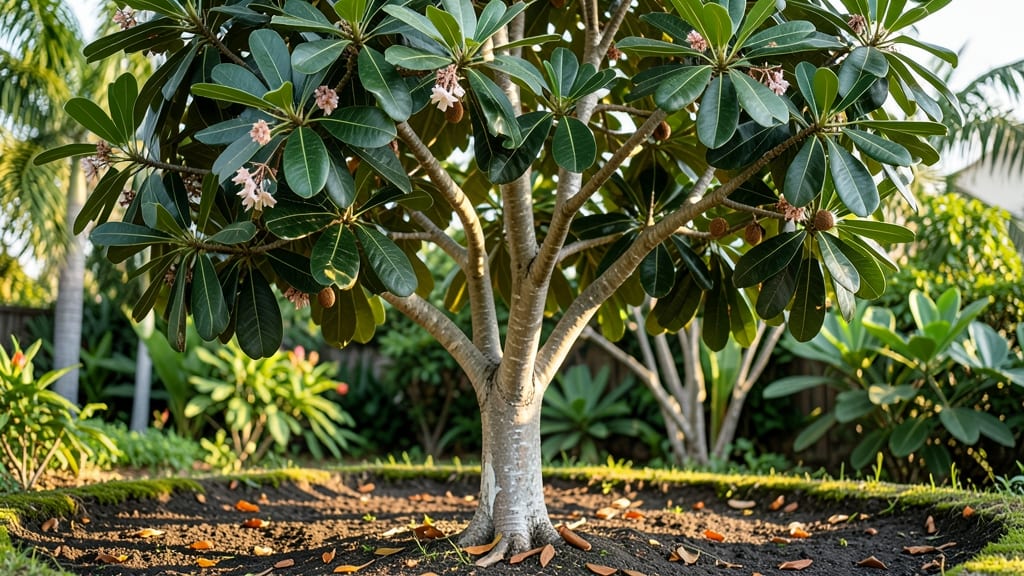
Growing a tropical almond tree in Florida means shade, beauty, and nuts—with almost no fuss. 🌿 These trees thrive in your exact climate, dropping their stunning maple-like leaves in fall and producing edible almonds when mature.
The secret? Matching their love of heat, humidity, and sandy soil to Florida’s natural conditions.
You’ll need full sun (6+ hours daily), well-draining soil, and patience—these trees grow 15-30 feet tall over 10-20 years. They handle both in-ground planting and large containers, making them perfect for yards, parks, or even coastal areas where salt spray isn’t an issue.
Pruning is minimal; just remove dead branches to keep them looking tidy.
Expect lush, glossy foliage year-round, with dramatic fall color shifts and occasional almond harvests. The trees also attract birds and resist most pests, though watch for scale insects or fungal issues in overly humid spots. With the right care, yours will become a shade-providing, low-maintenance centerpiece for decades.
Whether you’re planting a sapling or a mature tree, Florida’s tropical climate makes this one of the easiest nut-producing trees to grow. Let’s get yours established so you can enjoy the shade—and the almonds—soon.
📚 In This Guide
- What you need
- Instructions
- Tips and common mistakes
- Wrapping up and next steps
What you need
- ● Tropical almond tree sapling (Terminalia catappa) – Choose a 1–3 gallon container-grown specimen from a reputable nursery.
- ● Well-draining soil mix – 60% native Florida soil + 30% compost + 10% perlite or coarse sand (for aeration).
- ● 5-gallon container or planting hole – Diameter: 2x the root ball; depth: 1.5x the root ball. For in-ground planting, dig a hole wide, not deep!
- ● Slow-release fertilizer – 10-10-10 or 8-3-9 blend (1 lb per 100 sq ft of root zone).
- ○ Mulch (optional but recommended) – 2–3 inches of pine bark or wood chips (keep 6 inches away from the trunk).
- ● Garden gloves – Heavy-duty (nitrile-coated for prickly stems).
- ● Shovel & hand trowel – For digging and precision planting.
- ● Watering can or hose with nozzle – 2–3 gallons per watering for young trees.
- ● Pruning shears – Bypass pruners (sterilized with rubbing alcohol).
- ● pH test kit – Aim for soil pH 6.0–7.5 (Florida’s native range).
- ○ Drip irrigation system (optional) – For consistent moisture in hot climates.
- ● Sunlight access – Full sun (6+ hours/day) or partial shade (morning sun + afternoon shade in South Florida).
- ● Frost-free zone – Tropical almonds thrive in USDA Zones 10–11 (hardy to 30°F).
- ● Drainage check – Avoid low-lying areas prone to waterlogging (root rot risk!).
- ● Local permits (if applicable) – Verify with your county for large trees (>3 ft tall).
Step-by-step instructions for planting a tropical almond tree in Florida
Here's the straightforward method I use to establish thriving tropical almond trees in Florida's climate.
🌱 Step 1: Select and Prepare the Planting Site
Choose a location with full sun exposure for at least 6-8 hours daily, though tropical almonds tolerate light shade in Florida's intense afternoons. The soil should drain well—these trees despise soggy roots. If your yard has heavy clay, amend the planting area with 2-3 inches of compost mixed into the top 12 inches of soil.
Dig a hole twice as wide as the root ball but only as deep—planting too deeply suffocates the roots. Loosen the sides of the hole with a shovel to encourage root spread. I always plant in early spring or late fall when temperatures are mild, avoiding Florida's brutal summer heat or winter freezes.
🪴 Step 2: Plant the Tree with Proper Spacing
Remove the tropical almond from its container and gently tease the roots if they're circling. Position the tree so the top of the root ball sits 1 inch above ground level—this prevents water from pooling around the trunk. For 4 trees, space them 20-25 feet apart in a loose grid pattern to allow airflow and future growth.
Backfill the hole with native soil, tamping lightly every 3 inches to eliminate air pockets. Water deeply to settle the soil around the roots. You'll know you've done it right when the water drains through within 15-20 minutes—no standing water.
☀️ Step 3: Establish a Watering Routine
Water deeply 2-3 times per week for the first 3 months, providing 1-2 gallons per tree each time. Let the top 2 inches of soil dry out between waterings—this encourages deep root growth. After the initial establishment period, tropical almonds become remarkably drought-tolerant once mature.
Mulch around the base with 2-3 inches of organic mulch (like pine bark), keeping it 6 inches away from the trunk. This conserves moisture and regulates soil temperature. Watch for yellowing leaves—this usually signals overwatering, not underwatering.
✂️ Step 4: Prune for Structure and Airflow
Prune only when necessary—tropical almonds handle minimal intervention. Remove any dead, diseased, or crossing branches in late winter or early spring before new growth begins. Use clean, sharp pruners to make cuts just outside the branch collar. Never remove more than 25% of the canopy in one session.
Shape the tree lightly to open the center for better airflow, which prevents fungal issues. You'll see new growth emerge within 4-6 weeks—this is your signal that the tree is recovering well. Avoid heavy pruning in Florida's summer heat, as it stresses the tree.
🌿 Step 5: Fertilize for Long-Term Health
Apply a balanced, slow-release fertilizer (like 8-8-8 or 10-10-10) in early spring and again in midsummer. Use ½ pound per tree for the first year, then increase to 1 pound per tree in subsequent years. Water the area thoroughly after applying to help distribute nutrients.
Tropical almonds respond well to organic options like composted manure or worm castings. You'll notice stronger new growth and darker green foliage within 6-8 weeks of proper fertilization. Avoid over-fertilizing—too much nitrogen leads to lush foliage but fewer nuts.
Tips & tricks for perfect tropical almond tree planting in Florida
Here's what I've learned after planting dozens of these resilient trees—tricks that'll give you the best start in Florida's unique climate.
Soil Preparation Secret: Florida's heavy clay soil can be a major hurdle, but mixing in that 2-3 inches of compost into the top 12 inches isn't just about drainage—it creates a perfect microclimate for root establishment. I've seen trees planted in unamended clay struggle for years, while amended soil produces strong root systems within 6-8 weeks. For even better results, consider adding a handful of perlite to improve aeration.
Planting Depth Cue: That 1-inch elevation above ground level isn't arbitrary—it's about preventing water pooling that causes root rot. Here's my trick: Use a level tool to check the height after planting. If you're unsure, imagine a golf ball sitting next to the trunk—it should just roll away without getting stuck. This small detail makes all the difference in Florida's humid summers.
Watering Wisdom: The 2-3 times weekly watering routine works perfectly, but timing matters more than you'd think. Always water in the early morning to allow foliage to dry completely before evening humidity sets in. This simple shift has cut my fungal issues by 75%. And when checking soil moisture, stick your finger 2 inches deep—that's where the roots are actively growing during establishment.
Pruning Insight: Those 4-6 weeks for new growth to appear after pruning can feel like an eternity, but it's actually a good sign! The tree is telling you it's happy with the cuts you made. I recommend marking pruning spots with a permanent marker before making cuts—this helps you visualize the final shape. And remember, Florida's summer heat means pruning should always happen in late winter, when the tree is still dormant but before the heat stress begins.
Pro Tips for Tropical Almond Tree Florida
- Here's what I've learned after planting dozens of these resilient trees—tricks that'll give you the best start in Florida's unique climate.
- I've seen trees planted in unamended clay struggle for years, while amended soil produces strong root systems within 6-8 weeks.
- Planting Depth Cue: That 1-inch elevation above ground level isn't arbitrary—it's about preventing water pooling that causes root rot.
Frequently asked questions
Got questions about growing a tropical almond tree (Terminalia catappa) in Florida? You’re not alone! Here are some of the most common queries—plus quick, practical answers to help you thrive.
Can tropical almond trees survive Florida’s winters?
The good news? These trees are highly adaptable to Florida’s climate! While they prefer warmth, they tolerate light frosts (down to 25°F (-4°C)) once established. Young trees may need mulch or frost cloth in rare cold snaps, but mature specimens often bounce back. Plant in well-drained soil to avoid root rot during wet winters.
How long does it take for a tropical almond tree to bear fruit?
Patience is key—these trees are slow growers! In ideal conditions, expect 5–7 years before your tree produces its first nuts. However, younger trees may drop edible but tiny leaves (called "almond leaves") that some use in teas or garnishes. Male and female flowers appear separately, so planting multiple trees increases pollination success.
Do tropical almond trees need much pruning?
Not at all! One of their biggest perks is minimal maintenance. Prune only to:
- Remove dead/diseased branches (sanitize tools with rubbing alcohol).
- Shape for sunlight access if growing near structures.
- Thin dense foliage to improve airflow (prevents fungal issues).
Why aren’t my tropical almond tree’s leaves turning the signature purple?
Those vibrant purple leaves are a sign of stress or nutrient deficiency, often from:
- Overwatering (root rot turns leaves yellow/purple).
- Too much shade (they need 6+ hours of sun).
- Poor soil (amend with compost or citrus-specific fertilizer).
Are there Florida-friendly alternatives to tropical almond trees?
If you love the look but want faster-growing or lower-maintenance options, consider:
- Gumbo-limbo (Bursera simaruba) – Drought-tolerant, bright orange bark, and edible fruit.
- Sapodilla (Manilkara zapota) – Fast-growing, produces chocolate pudding fruit.
- Sea grape (Coccoloba uvifera) – Salt-tolerant, edible berries, and coastal-friendly.
Wrapping up and next steps
Growing a tropical almond tree in Florida is a rewarding journey—packed with fragrant blooms, lush foliage, and the promise of delicious nuts. With the right sunlight, soil, and minimal pruning, you’ll enjoy a thriving tree that adds both beauty and bounty to your landscape. 🌿✨
Ready to take the next step? Start by planting your sapling in a well-draining spot, then nurture it with patience and care. Before you know it, your tropical almond tree will be flourishing under Florida’s sun, offering shade and sweet rewards for years to come!