
Pruning
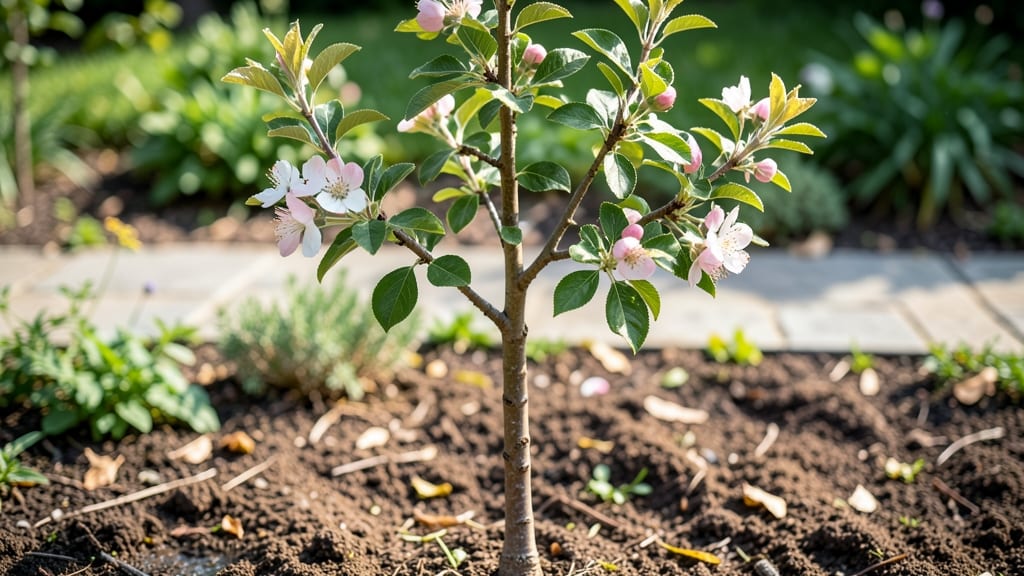
Strategic pruning turns a crabapple tree sapling into a sturdy, flowering centerpiece. 🌱 I planted mine last spring and watched it double in height by summer—with just three simple cuts that shaped its future.
The key is timing: prune in late winter before buds swell, or right after flowering, to avoid stressing the young tree.
Start with well-draining soil and full sun—at least 6 hours daily—and space saplings 15-20 feet apart. Water deeply once a week (more in summer heat), but avoid soggy roots.
The first year is about establishing roots, not flowers, so resist heavy pruning. Focus on removing dead wood and shaping branches to encourage strong growth.
By next spring, you’ll see vibrant blooms and a sturdy structure. Prune again in late winter to maintain shape and remove crossing branches. The result? A tree that thrives year-round with minimal effort. Pests are rare, but watch for aphids—spray with soapy water if needed.
Perfect for small yards or as a focal point in larger gardens. With patience, your sapling will grow into a 15-20 foot beauty that attracts pollinators and adds color for decades. Here’s how to keep it healthy every season.
📚 In This Guide
- What you need
- Instructions
- Tips and common mistakes
- Wrapping up and next steps
What you need
- ● Crabapple tree sapling (1–3 years old, disease-resistant variety like Malus coronaria or Malus 'Royalty')
- ● Pruning shears (bypass-type, sharp, and sanitized with rubbing alcohol)
- ● Loppers (for thicker branches, 20–24" cutting capacity)
- ● Hand pruners (for small cuts, ergonomic grip for comfort)
- ● Gloves (gardening gloves, cut-resistant for safety)
- ● Disinfectant (70% isopropyl alcohol or bleach solution for tools)
- ○ Pruning sealant (optional, for larger cuts to prevent disease)
- ● Tarp or bucket (for collecting debris)
- ● Stakes & twine (if sapling needs temporary support)
- ● Ladder (if sapling is >6 ft tall, lightweight aluminum recommended)
- ● Safety glasses (to protect from debris)
- ● Rake or broom (for cleanup)
- ● Spray bottle with water (to keep cuts moist post-pruning)
- ○ Tree growth regulator (optional, for controlling vigorous growth)
How to maintain a healthy crabapple sapling through strategic pruning
Here's the year-round approach I've used to keep crabapple saplings thriving for over a decade.
✂️ Step 1: Perform Winter Dormancy Pruning (Late Winter)
Prune your crabapple sapling in late winter (just before buds swell) to remove dead, diseased, or crossing branches. This is the most critical cut of the year because it shapes the tree's structure while it's dormant. I always start by removing any branches that are rubbing against others—these create wounds that invite pests and disease.
Use sharp, clean pruning shears to make cuts at a 45-degree angle, about ¼ inch above an outward-facing bud. This ensures water runs off the cut and new growth emerges in the right direction. For branches thicker than ½ inch, use a pruning saw to avoid tearing the bark. Never remove more than 25% of the tree's canopy in one season—this stresses young saplings.
☀️ Step 2: Light Summer Maintenance Pruning (Mid-Summer)
In mid-summer, focus on thinning the canopy to improve airflow and sunlight penetration. This prevents fungal diseases that thrive in dense, shaded foliage. Look for branches growing straight up (called "water sprouts") or those that cross and rub—these are prime candidates for removal. I also remove any suckers sprouting from the base, as they drain energy from the main trunk.
Use hand pruners for branches up to ½ inch thick and a pruning saw for thicker growth. Make cuts just outside the branch collar (the swollen area where the branch meets the trunk). Avoid leaving stubs—these can rot and attract pests. After pruning, I always sterilize my tools with rubbing alcohol to prevent spreading disease between cuts.
🌿 Step 3: Post-Bloom Structural Pruning (Early Fall)
After the crabapple blooms but before late summer, do a final light pruning to maintain shape and remove any weak or spindly growth. This is when you can see which branches are competing for sunlight and which are growing too aggressively. I focus on opening up the center of the tree to prevent a dense, shaded interior that discourages flowering.
Remove any branches that are growing inward or downward, as these create a crowded canopy. For each cut, aim to maintain the tree's natural shape while improving its structure. Avoid heavy pruning now—this can stimulate new growth that won't harden off before winter. After pruning, I apply a thin layer of arborist's wound dressing to larger cuts to protect them from disease and pests.
⏰ Step 4: Year-Round Monitoring and Corrective Pruning
Throughout the year, keep an eye out for branches that are dying, diseased, or growing in problematic directions. If you notice a branch with yellowing leaves or sawdust-like frass (a sign of borers), prune it out immediately. I also check for any branches that have been damaged by storms or heavy fruit loads—these should be removed to prevent further stress on the tree.
For any corrective pruning, make clean cuts just outside the branch collar. If a branch is too large to remove in one cut, make a second cut just outside the branch collar after removing the first section. Always sterilize your tools before and after pruning to prevent spreading disease. This ongoing maintenance keeps your crabapple sapling healthy and productive year after year.
Tips & tricks for perfect crabapple sapling pruning
Mastering the art of pruning transforms a struggling young crabapple into a thriving, flowering beauty. Here's what I've learned after years of trial and error with these delicate trees.
Timing is Everything: Late winter pruning (just before buds swell) is non-negotiable for crabapple saplings. This precise timing ensures you're working with dormant wood while avoiding the tree's active growing season. I mark my calendar for February-March in most climates—this window gives you about 4-6 weeks before buds begin to open. If you miss this window, wait until after the tree finishes blooming in spring, but never prune during active growth periods when the tree is vulnerable to stress.
Tool Precision Matters: Your pruning tools are just as important as your technique. I've ruined multiple cuts using dull shears that tear bark rather than make clean incisions. Invest in high-quality bypass pruners for branches up to ½ inch thick—they create cleaner cuts that heal faster. For anything thicker, use a sharp pruning saw and make your cuts just outside the branch collar. Pro tip: Wipe down your tools with rubbing alcohol between each cut to prevent spreading any potential diseases hiding in the bark.
Structural Integrity First: When pruning in Step 1 or Step 3, always prioritize maintaining the tree's natural shape. I use the "open center" approach for crabapples—this creates better airflow and encourages more abundant flowering. Remove any branches growing inward or crossing others, but never take more than 25% of the canopy in any single season. For young saplings, this often means just 2-3 strategic cuts per season. Remember, you're shaping the tree's future growth pattern, not just cleaning up what's already there.
Seasonal Maintenance Strategy: Each season serves a different purpose in your pruning calendar. Winter's about structure, summer's about airflow, and fall's about refinement. I've found that crabapple saplings respond best to this phased approach rather than one heavy pruning session. During summer maintenance (Step 2), focus on removing water sprouts—those vertical shoots growing straight up. These compete with your desired horizontal branches for energy and often result in a leggy, weak tree if left unchecked.
Pro Tips for Crabapple Tree Sapling
- Mastering the art of pruning transforms a struggling young crabapple into a thriving, flowering beauty.
- Timing is Everything: Late winter pruning (just before buds swell) is non-negotiable for crabapple saplings.
- Tool Precision Matters: Your pruning tools are just as important as your technique.
Frequently asked questions
Got questions about nurturing your crabapple tree sapling? You're not alone!
Here are answers to the most common queries to help you grow a thriving, healthy tree with confidence.
When is the best time to plant a crabapple tree sapling?
The ideal time to plant your sapling is in early spring or fall—when the soil is workable but not frozen. Avoid extreme heat or drought periods. If you must plant in summer, water deeply and mulch to retain moisture. Spring planting gives roots time to establish before winter, while fall planting allows root growth before dormancy.
How often should I prune a young crabapple tree sapling?
For saplings (under 3 years old), prune once a year in late winter or early spring (before buds swell). Focus on removing dead, diseased, or crossing branches to encourage strong structure. Avoid heavy pruning—stick to <10% of the canopy per year. As the tree matters, you can adjust to 2-3 light prunings annually for shape and health.
Why are the leaves on my crabapple sapling turning yellow or brown?
Yellowing leaves (chlorosis) often signal nutrient deficiency (like iron or nitrogen) or overwatering. Brown edges may mean underwatering, pests (like spider mites), or environmental stress (e.g., windburn). Check soil moisture, test pH (ideal: 6.0–7.0), and inspect for pests. Adjust watering and fertilize with a balanced, slow-release formula if needed.
Can I grow a crabapple tree in a container before transplanting?
Yes! Start your sapling in a 5-gallon container with well-draining soil and a mix of compost. Use a pot with drainage holes and repot annually until it’s 2–3 feet tall. Keep it in partial sun and water when the top inch of soil is dry. Transplant to the ground in spring after hardening off (gradually exposing it to outdoor conditions for 1–2 weeks).
Will my crabapple tree produce fruit if I prune it heavily?
Pruning encourages fruit production by improving airflow and sunlight penetration—just avoid over-pruning! Heavy cuts can reduce fruit yield temporarily, but strategic pruning (removing suckers, water sprouts, and dead wood) actually boosts fruit quality and quantity in mature trees. Focus on structural shaping in early years; fruit production ramps up as the tree matures (typically 3–5 years).
Wrapping up and next steps
Growing a healthy crabapple tree sapling is all about timing, technique, and a little patience! 🌱 With the right pruning cuts—whether for spring blooms, summer growth, or winter care—you’ll nurture a stunning, resilient tree that rewards you year-round.
Remember, consistency is key, so keep an eye on your sapling and adjust as it grows.
Ready to take the next step? Mark your calendar for your first pruning session and gather your tools. Happy pruning—your future crabapple’s beauty starts with you!