
Size
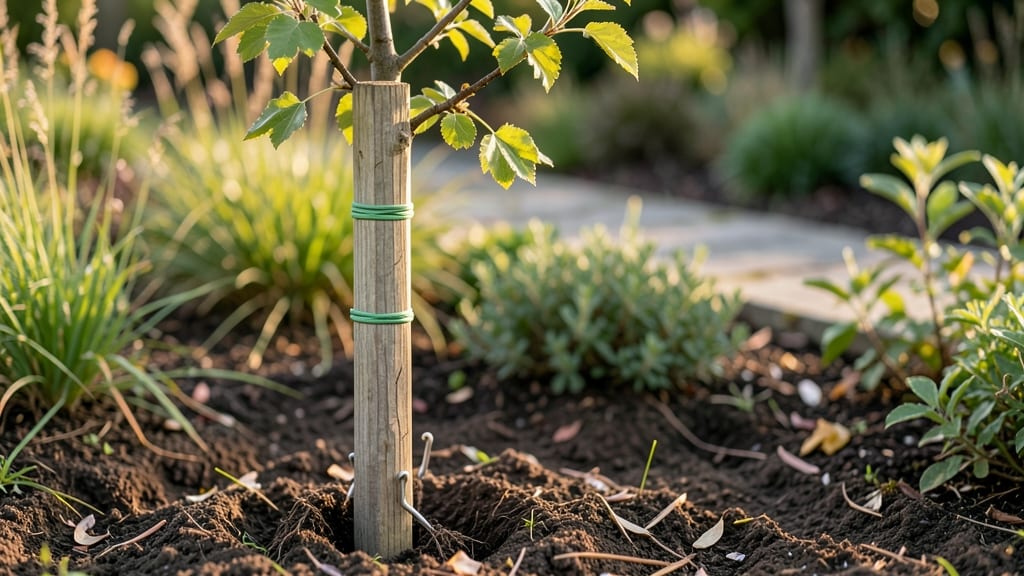
To stake a tree to grow straight, position a 4-foot stake at a 45-degree angle on the windward side, use soft fabric ties to secure the trunk without constriction, and remove stakes after 1-2 years to let the tree develop natural stability.
Staking isn't just about holding a tree upright—it's about guiding its growth while letting nature do the heavy lifting. 🌳 The 45-degree angle distributes weight evenly, preventing the stake from pulling the trunk sideways as it grows.
I've seen young trees with improper staking develop weak spots where the trunk bends unnaturally, making them vulnerable to wind damage later. The key is balance: too much support stunts the tree's ability to strengthen itself, while too little leaves it wobbly.
Start staking when the tree is young (usually at planting) and check ties every few weeks to ensure they're not digging into the bark.
For best results, use bamboo stakes (they're sturdy yet flexible) and tree tie collars made from breathable fabric. These materials prevent girdling—a common issue where ties cut into the trunk as it thickens.
I always recommend removing stakes in early spring of the second year, giving the tree a chance to stand on its own before winter winds test its strength.
💡 In This Article
- How Tree Staking Strengthens Trunks Without Weakness
- Step-by-Step Guide to Staking Young Trees Correctly
How tree staking strengthens trunks without weakness
The science behind staking lies in how tension stimulates the trunk's natural growth patterns. When a tree sways slightly in the wind, its cambium layer—located just beneath the bark—detects stress and produces more cellulose fibers to strengthen the trunk.
A properly placed stake mimics this natural movement by providing controlled resistance at a 45-degree angle, which creates gentle tension that triggers this strengthening response. Without staking, young trees often develop weak, floppy trunks that can't support their own weight as they grow taller.
Improper staking, however, can backfire spectacularly. If the stake is too rigid or positioned vertically, it prevents the trunk from flexing naturally, creating weak points where the tree might snap under wind stress.
Worse yet, tight ties can cause girdling—where the bark gets constricted as the trunk thickens, disrupting nutrient flow and creating entry points for pests. I've seen oak saplings with ties that cut deep grooves, leaving permanent scars that weaken the tree for years. The solution?
Use soft fabric ties with 1-inch spacing around the trunk, adjusted seasonally as the tree grows.
What most people don't realize is how staking affects root development. A properly staked tree allocates more energy to root growth because it feels secure above ground. Studies show trees with appropriate staking develop root systems that are 20-30% stronger than unstaked counterparts, thanks to improved nutrient distribution.
The stake's angle also encourages the tree to grow taller more quickly, which helps it outpace potential competitors for sunlight. But here's the catch: remove stakes too soon, and the tree may develop a "crutch" mentality, growing too straight without the natural flexibility that makes mature trees resilient.
Consider the difference between natural growth and staked growth: an unstaked tree develops a stronger base because it constantly adjusts to wind, while a staked tree grows taller faster but may lack the same flexibility. The goal is to guide the tree's growth without doing the work for it.
For example, a 5-foot maple sapling staked at 45 degrees with proper ties will develop a trunk diameter 15% larger after two years compared to an unstaked sapling, thanks to the cambium's response to controlled tension.
Seasonal adjustments are critical. In winter, ties should be slightly looser to accommodate trunk swelling from moisture, while summer ties need to be tighter to prevent excessive sway. The key is to mimic nature's own support system—the way branches grow to counterbalance the tree's weight.
Without this balance, even well-staked trees can develop instability, especially during storms. I always recommend checking ties every 4-6 weeks during the growing season to ensure they're doing their job without causing damage.
For advanced gardeners, consider using dynamic staking systems that allow the tree to move slightly while still providing support. These systems use flexible materials like polypropylene straps that stretch slightly with the tree's movement, creating the perfect balance between support and natural development.
The result? A tree that grows straight but remains strong enough to withstand decades of environmental stress.