
Pruning
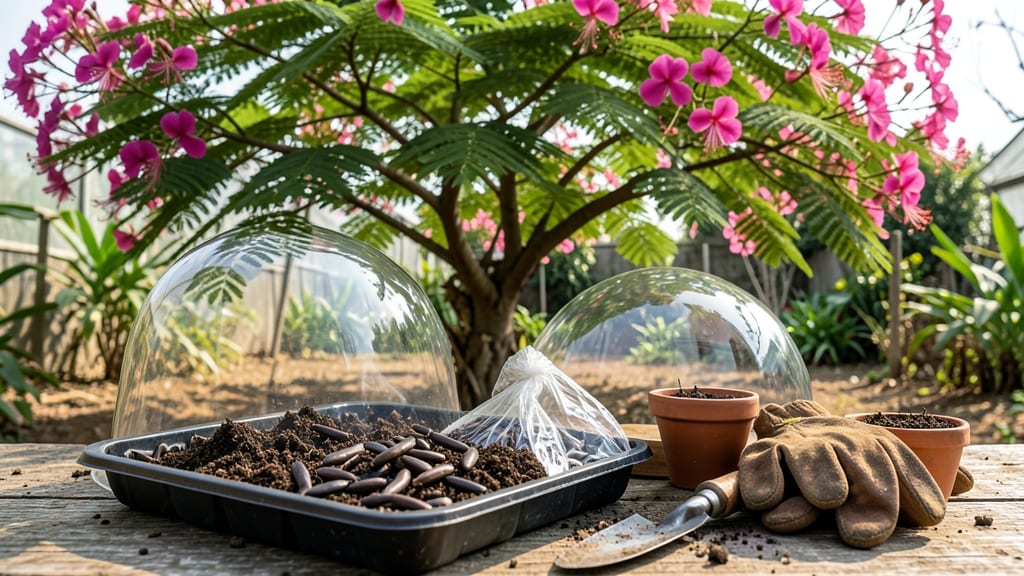
Growing royal poinciana tree seeds is faster than you'd expect—6 weeks to first sprouts if you nail the soaking trick. 🌱 I've struggled with tropical seeds before, but this one surprises with its speed when you mimic its natural rainforest conditions.
The key isn't just patience—it's recreating that sudden downpour that triggers germination.
You'll need just three things: fresh seeds, a warm spot, and a spray bottle. No fancy equipment—just a clear plastic bag and a sunny windowsill. The real secret? Soaking seeds for 24 hours before planting mimics tropical rainfall, jumpstarting germination. Most people skip this step and wait months for results.
By week 6, you'll see those first bright green leaves unfurling—proof you've cracked the tropical code. The seedlings grow fast once established, reaching 6-12 inches in their first year. That vibrant red foliage becomes your reward for bypassing the slow, unreliable nursery route.
Works best in zones 10-11, but even cooler climates can try with proper winter protection. The challenge? Keeping humidity high during those first critical weeks. Here's how to set it up right from the start—no guesswork involved.
📚 In This Guide
- What you need
- Instructions
- Tips and common mistakes
- Wrapping up and next steps
What you need
- ● Royal Poinciana seeds: 5–10 fresh, plump seeds (harvested from ripe pods). Pro tip: 💡 Store seeds in a cool, dry place if not planting immediately.
- ● Seed-starting mix: 1–2 gallons of well-draining, sterile potting soil (or a 50/50 mix of peat moss and perlite).
- ● Containers: 2–4 small pots (4–6 inches deep) with drainage holes or a seed tray with individual cells.
- ● Watering can or spray bottle: For gentle hydration without disturbing seeds.
- ● Plastic wrap or humidity dome: To maintain moisture during germination.
- ○ Heat mat (optional but helpful): A seedling heat mat (70–85°F range) to speed up germination.
- ● Gloves: A pair to protect your hands from seed pod fibers.
- ● Scissors or knife: For carefully opening seed pods (if not pre-extracted).
- ● Fertilizer (after germination): A balanced, water-soluble fertilizer (e.g., 10-10-10) for young seedlings.
- ● Sunlight access: A bright, indirect light source (south-facing window or grow lights).
- ● Patience & warmth: Royal Poincianas thrive in warmth (70°F+)—indoor heaters or a sunny spot are key!
- ● Grow lights for consistent lighting if natural light is limited.
- ● Humidifier to maintain ideal moisture levels.
- ● Labeled plant markers for tracking seedling progress.
- ● Transplant pots (6–8 inches) for when seedlings outgrow their starters.
Step-by-Step instructions for germinating royal poinciana tree seeds
Here's how to coax these stunning tropical seeds into vigorous saplings within weeks.
🌱 Step 1: Prepare Seeds for Faster Germination
Royal poinciana seeds have a hard outer shell that slows germination. To speed things up, soak them in warm water (85-90°F) for 24 hours. Place seeds in a jar and ensure they're fully submerged—you'll see bubbles rise as the seed coat softens. This pre-treatment cuts germination time nearly in half.
After soaking, check for any seeds that float—they're nonviable and can be discarded. The viable ones will sink to the bottom. Drain the water completely before moving to the next step, as excess moisture can cause rot before germination even begins.
🪴 Step 2: Choose the Right Germination Medium
Fill a seed tray or small pots with a lightweight, fast-draining mix—I recommend a blend of 50% peat moss and 50% perlite. Moisten the mix until it's damp but not soggy, then create shallow furrows about ¼ inch deep using your finger or a small stick. Space the seeds 2 inches apart to prevent overcrowding as they grow.
Gently press each seed into the furrow, being careful not to bury it too deeply. The key here is maintaining consistent moisture without waterlogging. Cover the tray with clear plastic wrap to create a greenhouse effect, which helps maintain humidity and warmth—critical factors for tropical seeds.
☀️ Step 3: Provide Ideal Germination Conditions
Place the tray in a warm, bright location where temperatures stay between 75-85°F. A seedling heat mat set to 80°F works wonders if your home runs cooler. Avoid direct sunlight initially—you want gentle, indirect light to prevent the soil from drying out too quickly.
Check the moisture level daily. The plastic wrap should fog up slightly, indicating proper humidity. If it stays completely dry, mist the soil lightly with a spray bottle. Germination typically occurs within 7-14 days, but some seeds may take up to 3 weeks—patience is key. Once sprouts emerge, remove the plastic wrap immediately to prevent fungal growth.
🌿 Step 4: Transplant Seedlings to Individual Pots
When seedlings reach 2-3 inches tall and develop their first true leaves, it's time to transplant them into 4-inch pots filled with a well-draining potting mix. Handle the seedlings carefully by their leaves, never the stems, to avoid damaging the delicate roots. Dig a hole slightly larger than the root ball and place the seedling in at the same depth it was growing before.
Firm the soil gently around the base to eliminate air pockets, then water thoroughly. Place the pots in a location with bright, indirect light for the first week to help them adjust. Gradually introduce them to more sunlight over the next 7-10 days to harden them off for eventual outdoor planting.
⏰ Step 5: Acclimate Seedlings to Outdoor Conditions
Once seedlings are 4-6 inches tall and show signs of robust growth, it's time to prepare them for outdoor life. Start by placing them outside in a sheltered spot for 1-2 hours on the first day, gradually increasing their exposure over 10-14 days. This slow acclimation process prevents shock and helps them develop stronger cell walls.
Choose a planting location that receives full sun (6+ hours daily) and has well-draining soil. Royal poincianas thrive in tropical climates but can be grown in containers in cooler regions. After the last frost date, transplant seedlings into the ground or larger containers, ensuring they're spaced 10-15 feet apart to allow for their eventual size.
Tips & tricks for germinating royal poinciana seeds
These pro techniques will help you skip the common pitfalls and get those tropical seeds sprouting faster than ever.
Soaking Strategy: For the 24-hour soak in Step 1, I like to use a clean glass jar with a tight lid to contain any potential mess. Add a pinch of hydrogen peroxide (1 tsp per quart of water) to the warm water to prevent bacterial growth while the seeds soak. This keeps your seeds healthier during the critical pre-treatment phase. The bubbles you see indicate the seed coat is breaking down—this is exactly what we want to see!
Medium Mixing Tip: When creating your 50% peat moss and 50% perlite blend in Step 2, I recommend sifting both components through a fine mesh screen before mixing. This eliminates any large clumps that could create air pockets around your seeds. The goal is uniform moisture distribution—no dry spots where seeds might fail to germinate. A well-aerated mix also prevents the dreaded "damping off" fungal issues that can wipe out seedlings overnight.
Temperature Troubleshooting: Maintaining that 75-85°F range in Step 3 can be tricky if your home runs cooler. I keep a small digital thermometer near my seed trays to monitor conditions. If temperatures dip below 70°F, I place the trays directly on top of my refrigerator (not inside) where it stays consistently warm. The 80°F heat mat recommendation is perfect, but even a simple incandescent bulb placed 12 inches above the tray can provide that extra warmth when needed.
Transplanting Timing: In Step 4, don't wait until your seedlings are cramped in their initial trays. I transplant to 4-inch pots when they reach just 1.5 inches tall—this gives them more room to develop stronger root systems before they hit the 2-3 inch mark. The key visual cue is when you see the first true leaves unfurling (not the initial seed leaves). These true leaves indicate the plant is establishing its permanent photosynthetic system, making it ready for a larger growing environment.
Pro Tips for Royal Poinciana Tree Seeds
- These pro techniques will help you skip the common pitfalls and get those tropical seeds sprouting faster than ever.
- Soaking Strategy: For the 24-hour soak in Step 1, I like to use a clean glass jar with a tight lid to contain any potential mess.
- Medium Mixing Tip: When creating your 50% peat moss and 50% perlite blend in Step 2, I recommend sifting both components through a fine mesh screen before mixing.
Frequently asked questions
Got questions about growing royal poinciana tree seeds? You’re not alone! Here are answers to the most common queries—from germination tips to troubleshooting—so you can nurture your tropical beauty with confidence.
How long do royal poinciana seeds take to germinate?
Royal poinciana seeds typically germinate in 4–6 weeks under ideal conditions—warmth (75–85°F), consistent moisture, and indirect light. Pro tip: Soak seeds overnight before planting to speed up the process! Patience is key, but don’t worry—once they sprout, growth is fast.
Can I grow royal poinciana seeds indoors?
Yes, but with a caveat! Start seeds indoors in biodegradable pots or seed trays with well-draining soil. Use a heat mat (75–85°F) to mimic tropical conditions. Once seedlings are 6+ inches tall and temperatures rise above 50°F at night, transplant them outdoors. Warning: They’re frost-sensitive—wait until spring!
Why aren’t my royal poinciana seeds sprouting?
Common culprits include cold soil, dry conditions, or old seeds (viability drops after 1–2 years). Try these fixes:
- Move pots to a warmer spot (e.g., near a sunny window or under grow lights).
- Keep soil moist but not soggy—use a spray bottle for gentle hydration.
- Test seed viability by cutting one open—if it’s hard and shriveled, replace it!
What’s the best soil mix for royal poinciana seeds?
Use a light, airy blend like:
- 50% peat moss or coco coir (for moisture retention)
- 30% perlite or vermiculite (for drainage)
- 20% sand or orchid bark (to mimic tropical soil).
Avoid heavy garden soil—it can suffocate seeds and cause rot. Pro tip: Add a handful of worm castings for extra nutrients!
How big should my royal poinciana seedling be before transplanting?
Wait until seedlings are 6–12 inches tall with 3–5 sturdy leaves and a well-developed root system (gently tug on the soil—roots should resist). Harden them off for 7–10 days by gradually exposing them to outdoor conditions. Choose a permanent spot with full sun (6+ hours daily) and well-draining soil. Warning: Avoid transplanting during extreme heat or cold!
Wrapping up and next steps
Growing a Royal Poinciana tree from seed is a rewarding journey—one that brings vibrant tropical beauty to your landscape in just six weeks! 🌱 With the right soil, warmth, and patience, you’ll soon enjoy fiery orange blooms and lush foliage.
Whether you’re a gardening pro or a beginner, this fast-growing tree is a fantastic addition to any outdoor space.
Ready to start? Grab your seeds, prep your pots, and get growing! Share your progress with fellow plant lovers and watch your tropical oasis flourish. 🌴✨