
Pruning
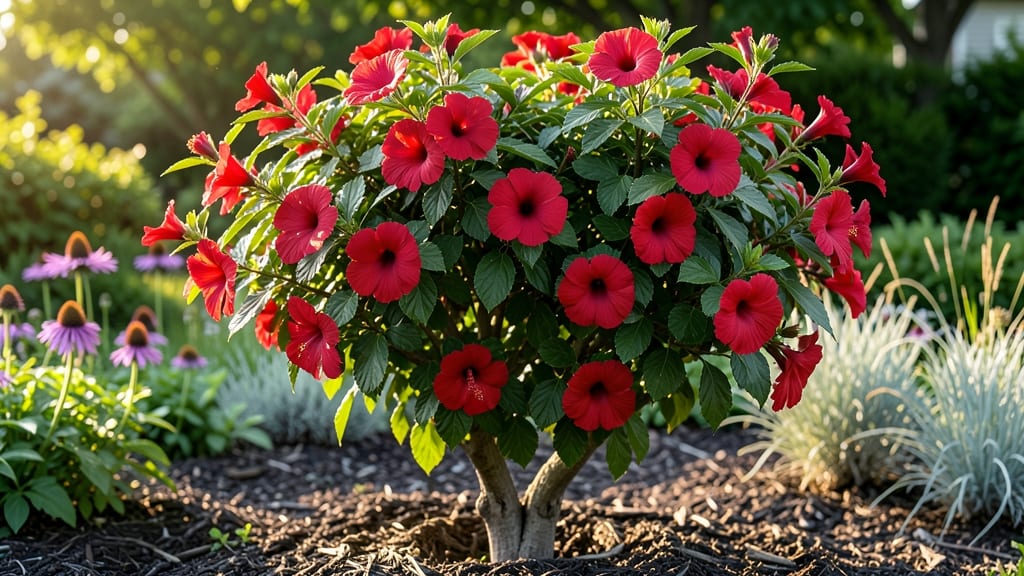
The red Tree Rose of Sharon transforms any yard into a lush, seasonal privacy screen with its vibrant blooms. 🌸 I planted mine last spring, and by summer, it was already standing tall—no fuss, just striking red flowers that last from mid-summer through fall.
This hardy shrub thrives in full sun and tolerates poor soil, making it perfect for beginners or busy gardeners. Start with well-drained soil and space plants 6-8 feet apart to give them room to grow. Water deeply once a week during dry spells, but avoid soggy roots.
A light application of balanced fertilizer in early spring encourages lush growth and abundant blooms. Pruning is key—cut back old wood in late winter to shape the shrub and promote new growth. The real magic happens in late summer when clusters of trumpet-shaped flowers burst open, attracting hummingbirds.
Even after blooms fade, the glossy foliage keeps the screen looking full year-round. Red Tree of Sharon handles heat, drought, and even urban pollution—ideal for tough spots in your landscape. Watch for aphids or powdery mildew, but a simple spray of soapy water or fungicide usually clears them up.
With minimal care, this shrub delivers bold color, privacy, and low-maintenance beauty that keeps giving season after season.
📚 In This Guide
- What you need
- Instructions
- Tips and common mistakes
- Wrapping up and next steps
What you need
- ● Red Tree Rose of Sharon Plant: 1 healthy, mature plant (3-5 feet tall) from a nursery or online retailer. Look for Hibiscus syriacus with vibrant red blooms.
- ● Pruning Tools: 1 pair of bypass pruners (for clean cuts on smaller branches).
- ● 1 pair of loppers (for thicker branches, ½–1½ inches in diameter).
- ● 1 pruning saw (for stubborn, thick branches).
- ● Gloves: 1 pair of gardening gloves (heavy-duty to protect against thorns and rough bark).
- ● Disinfectant: 1 bottle of rubbing alcohol (70%+) or pruning sealant (to sterilize tools and prevent disease).
- ● Mulch: 2–3 bags of organic mulch (e.g., shredded bark or wood chips) to retain moisture and suppress weeds.
- ● Fertilizer: 1 bag of balanced, slow-release fertilizer (10-10-10 or similar) for post-pruning growth.
- ● Staking: 2–3 plant stakes or bamboo supports (if your plant needs structural support after pruning).
- ● Plant Food: 1 bottle of bloom booster fertilizer (e.g., with phosphorus) to encourage vibrant red flowers.
- ● Watering Can or Hose: With a spray nozzle for gentle hydration.
- ● A sunny to partially shaded location (6+ hours of sunlight for optimal blooms).
- ● Well-draining soil (amend with compost if needed).
- ● Patience! Rose of Sharon thrives with time—prune in late winter or early spring for best results.
How to plant and maintain a stunning red Tree Rose of Sharon hedge
This fast-growing beauty delivers year-round privacy with minimal fuss—here's how to make it thrive.
🌱 Step 1: Choose the Perfect Planting Site and Spacing
Red Tree Rose of Sharon thrives in full sun to partial shade, with at least 6 hours of direct sunlight daily for optimal blooming. I always pick a location with morning sun and afternoon shade to prevent leaf scorch during hot afternoons. The plant's natural shape makes it ideal for hedges, so space them 8-10 feet apart for a dense, lush screen.
Check your site's drainage first—this plant hates soggy roots. If your soil drains poorly, amend with 2-3 inches of compost mixed into the top 12 inches of soil. The roots spread wide, so avoid planting near sidewalks or driveways where they might crack pavement as they grow.
🪴 Step 2: Plant at the Right Depth and Water Thoroughly
Dig a hole twice as wide as the root ball but only as deep. You'll see the top of the root ball should sit 1 inch above ground level—planting too deep suffocates the roots and causes rot. Gently loosen any circling roots before placing the plant in the hole to encourage outward growth.
Backfill with native soil mixed with 1 part compost to improve fertility. Water deeply right after planting to settle the soil around the roots. I like to add 2-3 inches of mulch around the base (but not touching the stem) to retain moisture and suppress weeds. This plant establishes quickly—within 4-6 weeks, you'll see new growth signaling it's taking root.
☀️ Step 3: Prune Strategically for Shape and Continuous Blooms
Prune your Rose of Sharon immediately after flowering (late summer) to encourage next year's blooms. Cut back 1/3 of the oldest stems to the ground—this rejuvenates the plant and prevents it from becoming woody. For shaping, remove any crossing branches or stems growing inward to maintain an open, airy structure.
In early spring, do a light cleanup by removing any dead or damaged wood. Never prune in fall—this plant needs its foliage to build energy for winter. You'll notice new shoots emerging from the base within 2-3 weeks of spring pruning, signaling vigorous regrowth.
💧 Step 4: Water Deeply and Fertilize for Lush Growth
Water newly planted Rose of Sharon deeply 2-3 times per week for the first 2 months until established. Once rooted, it tolerates drought beautifully but blooms most prolifically with 1 inch of water weekly. I always water at the base rather than overhead to prevent fungal diseases like powdery mildew.
Feed with a balanced 10-10-10 fertilizer in early spring and again after flowering. Avoid high-nitrogen fertilizers—they promote leafy growth at the expense of flowers. You'll see the difference in 4-6 weeks with darker green leaves and more abundant blooms.
✂️ Step 5: Protect in Winter and Prepare for Next Season
Rose of Sharon is surprisingly cold-hardy (zones 5-9), but young plants benefit from winter protection. Wrap the base with burlap or frost cloth if temperatures dip below 10°F. In late winter, before new growth appears, do a final cleanup by removing any dead wood—this prevents pests from overwintering in your hedge.
Here's the thing—this plant rewards patience. By year three, your hedge will be 10-15 feet tall with thick, impenetrable foliage. The key is consistent but not excessive care—let it grow naturally while you shape it lightly each year. That's how you get the bold, reliable privacy screen you're after.
Tips & tricks for perfect red Tree Rose of Sharon hedges
Here's what nobody tells you about growing this standout shrub—tricks that'll make your hedge thrive with minimal effort.
Sunlight Strategy: While the instructions mention 6 hours of daily sun, I've found that morning sun paired with afternoon shade works best in hotter climates. If your area gets intense afternoon sun, consider planting near a building or fence that provides natural shade after 2 PM. This prevents leaf scorch while still giving you those vibrant blooms. The plant's natural tolerance for partial shade makes it incredibly adaptable once established.
Root Ball Preparation: Before planting, soak the root ball in water for 15-20 minutes to ensure the roots are fully hydrated. This simple step helps reduce transplant shock and gives your Rose of Sharon a stronger start. I also recommend trimming any broken or overly long roots with clean pruners—this encourages outward growth rather than circling roots that can strangle the plant over time.
Pruning Timing: The instructions mention pruning immediately after flowering, but here's the thing: if you're in a region with late summer blooms, don't rush to prune right away. Wait until you've confirmed all flowers have faded completely—this ensures you're not accidentally removing next year's flower buds that might still be forming. I've seen people cut back too early and end up with sparse blooms the following season.
Winter Protection: While the plant handles down to 10°F, I've had success adding an extra layer of protection for the first two winters. After wrapping with burlap, I place a thick layer of straw mulch around the base (about 4-6 inches deep). This creates an insulating blanket that helps regulate soil temperature and prevents frost heave. Remove the straw in early spring once new growth appears.
Pro Tips for Red Tree Rose Of Sharon
- Here's what nobody tells you about growing this standout shrub—tricks that'll make your hedge thrive with minimal effort.
- Sunlight Strategy: While the instructions mention 6 hours of daily sun, I've found that morning sun paired with afternoon shade works best in hotter climates.
- Root Ball Preparation: Before planting, soak the root ball in water for 15-20 minutes to ensure the roots are fully hydrated.
Frequently asked questions
How often should I prune my Red Tree Rose of Sharon for best results?
Prune your Red Tree Rose of Sharon once a year, ideally in late winter or early spring (before new growth begins). This keeps the plant healthy, encourages vibrant blooms, and maintains its shape. Avoid heavy pruning in fall—it can stimulate tender growth that won’t survive winter. Light shaping in summer is fine, but major cuts should wait for dormancy.
Can I prune Red Tree Rose of Sharon in winter? What if it’s already dormant?
Yes! Winter pruning (Dec–Feb) works well after the first hard frost but before new buds swell. If your plant is fully dormant, prune when temps are above freezing (32°F/0°C) to avoid shock. Avoid pruning during extreme cold snaps or deep freezes. Pro tip: Wear gloves—thorny branches can be sharp!
Will pruning my Red Tree Rose of Sharon reduce its flowers?
No—pruning actually boosts blooms! Regular pruning removes old wood, improving air circulation and sunlight penetration, which leads to more abundant, healthier flowers. Just avoid over-pruning: Never cut back more than 1/3 of the plant’s height in a single session. Deadheading spent blooms in summer also encourages repeat flowering.
What if my Red Tree Rose of Sharon doesn’t bloom after pruning?
Several factors could be at play:
- Lack of sunlight: Ensure it gets 6+ hours of direct sun daily.
- Over-fertilizing: Too much nitrogen = leafy growth, fewer blooms. Use a balanced 10-10-10 fertilizer in spring.
- Improper pruning: If you cut too late (after buds form) or too aggressively, blooms may suffer. Prune in late winter for next year’s flowers.
- Age/stress: Young plants or those recovering from disease may bloom lightly. Be patient—mature shrubs (3–5 years old) produce the most flowers.
Are there alternatives to Red Tree Rose of Sharon for privacy screens?
If you love fast-growing, low-maintenance screens, consider:
- Forsythia: Bright yellow blooms in spring; thrives in partial shade.
- Privet (Ligustrum): Dense, evergreen (or semi-evergreen) options like ‘Waxleaf’ or ‘Amber Bar’.
- Arborvitae: Evergreen year-round privacy with minimal pruning.
- Weigela: Stunning red/pink flowers and dark foliage; slightly less hardy than Rose of Sharon.
Wrapping up and next steps
The Red Tree Rose of Sharon isn’t just a stunning addition to your landscape—it’s a year-round solution for privacy and beauty with minimal effort. With the right pruning techniques, you’ll keep it thriving, encourage vibrant blooms, and maintain that lush, natural screen you love. 🌿✨
Ready to take the next step? Grab your pruners, mark your calendar, and give your Rose of Sharon the care it deserves—your garden (and future neighbors!) will thank you. Start pruning today for a garden that’s as easy to maintain as it is breathtaking!