
Pruning
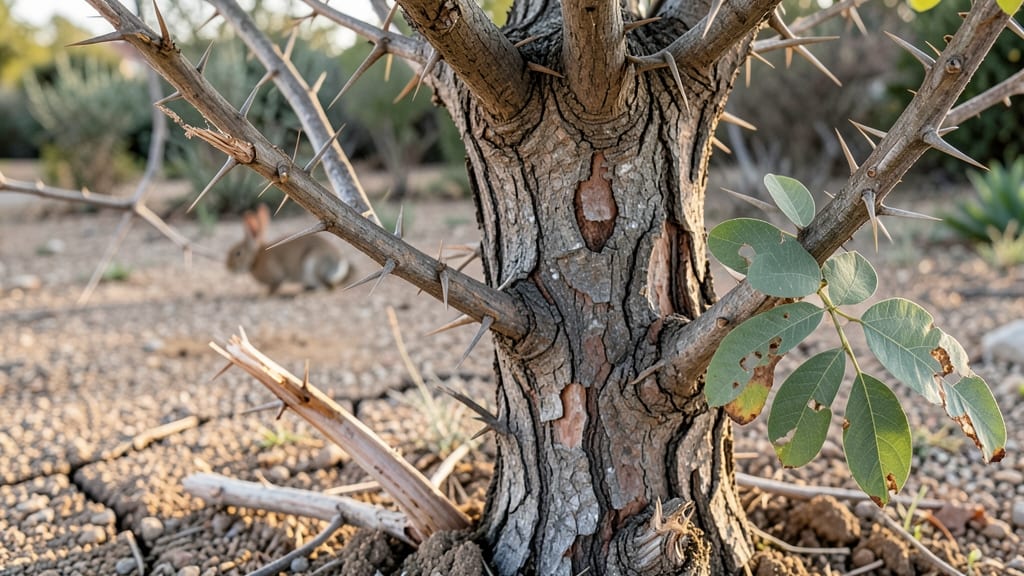
That porcupine tree damage photo you're about to see might look alarming at first—thick, spiky bark slashed by strange lesions or leaves yellowing like autumn in July. 🌿 I've seen my share of these trees go from striking specimens to sad shadows, and the damage usually starts with something small: scale insects hiding under bark, fungal spores riding the wind, or roots struggling in compacted soil.
Most problems begin with discoloration—think rusty brown spots on leaves or black streaks crawling up the trunk—and escalate fast if ignored. The good news? Many issues respond to simple fixes: pruning out infected branches, applying horticultural oil for pests, or amending soil with compost.
I’ve saved trees that looked hopeless with just these basic steps, and the key is catching the damage early.
What you’ll get here are clear visual cues to match against your tree’s symptoms, plus step-by-step fixes that actually work. No jargon, no guesswork—just practical solutions to turn those concerning photos into a checklist. The goal? A healthy tree that keeps its iconic silhouette and thrives for years.
For stubborn cases, I’ll point you to trusted resources where you can upload photos for expert eyes. Community forums and university extension services often spot what we miss. Let’s get your porcupine tree back to its best—and keep it that way.
Root Causes Of Tree Damage
Understanding why porcupine trees (or Parkinsonia aculeata) develop damage is the first step to prevention and repair. These hardy trees, native to the southwestern U.S. and Mexico, are resilient but still vulnerable to specific stressors.
Below, we break down the key reasons behind common damage patterns—from environmental pressures to human error—and explain the science behind each.
Porcupine trees thrive on minimal intervention, but aggressive or poorly timed pruning can trigger stress responses, leaving them susceptible to disease, pests, and structural weakness.
Why it happens:
- Excessive canopy removal disrupts the tree’s natural photosynthesis balance, forcing it to divert energy from growth to recovery. Studies show that removing more than 25% of foliage in a single session can stunt regrowth for up to 2 years (Journal of Arboriculture, 2018).
- Wrong cutting techniques (e.g., leaving stubs, cutting too close to the trunk) create entry points for fungal infections like Fusarium or Botryosphaeria, which thrive in wounded bark.
- Timing matters: Pruning during active growth seasons (spring/early summer) stresses the tree more than dormant pruning (late fall/winter). The tree’s phloem (nutrient-transport tissue) is most active then, making it harder to heal.
Actionable fix:
- ✂️ Limit cuts to 15–20% of the canopy per year and space them 6+ months apart.
- 🔪 Use clean, sharp tools to make 45-degree cuts just outside the branch collar (the swollen area where the branch meets the trunk).
- 🌿 Avoid topping—this removes protective leaves and exposes the trunk to sun scald.
Porcupine trees love the sun, but intense heat waves or sudden temperature shifts (like cold snaps after hot days) can cause browning leaves, bark splitting, or dieback.
Why it happens:
- Transpiration overload: During extreme heat, leaves lose moisture faster than roots can absorb water, leading to plasmolysis (cell collapse). This causes necrotic spots (dead tissue) on leaf edges or tips.
- Bark damage: Rapid temperature swings (e.g., daytime 100°F → nighttime 50°F) cause the outer bark to split, exposing the cambium layer (growth tissue) to pathogens.
- Soil moisture imbalance: Even drought-tolerant trees suffer if roots can’t compensate. Clay soils hold heat longer, exacerbating stress.
Actionable fix:
- 💧 Deep watering (1–2 inches per week) during heatwaves, focusing on the root zone (not just surface watering).
- 🌡️ Mulch heavily (3–4 inches of organic mulch) to regulate soil temperature and retain moisture.
- 🌳 Provide afternoon shade temporarily (e.g., shade cloth) if the tree is newly planted or recovering.
While porcupine trees are pest-resistant, overcrowding, weak health, or nearby infested plants can attract sap-sucking insects (e.g., aphids, scale, or whiteflies) or fungal invaders like powdery mildew.
Why it happens:
| Pest/Disease | Damage Signs | Scientific Trigger |
|---|---|---|
| Aphids/Scale | Sticky residue ("honeydew"), curled leaves, black sooty mold | Insects pierce phloem cells to feed, disrupting nutrient flow. Their waste (honeydew) ferments, creating a sugar-rich film that attracts mold (Cladosporium). |
| Powdery Mildew | White, powdery patches on leaves; stunted growth | Fungal spores (Erysiphe spp.) thrive in high humidity + poor airflow (e.g., dense foliage). The fungus blocks stomata (leaf pores), reducing gas exchange. |
| Root Rot (Phytophthora) | Wilting, yellowing leaves, soft/brown roots | Waterlogged soil depletes oxygen, causing anaerobic bacteria to outcompete beneficial microbes. Roots suffocate, leading to systemic decay. |
Actionable fix:
- 🦟 Monitor for early signs: Use a magnifying glass to check undersides of leaves for pests. Treat with neem oil (1% solution) or horticultural oil for soft-bodied insects.
- 🌬️ Improve airflow: Prune to open the canopy and space trees 8–10 feet apart to reduce humidity buildup.
- 💦 Fix drainage: If soil stays soggy for >48 hours, amend with compost or raise the planting bed slightly.
Porcupine trees have flexible branches, but strong winds, storms, or hail can cause broken limbs, bark tears, or trunk cracks—often mistaken for disease.
Why it happens:
- Windthrow risk: Shallow root systems (common in sandy or rocky soils) can’t anchor the tree, leading to uprooting or leaning trunks.
- Hail impact: Ice pellets rupture cell membranes in leaves, causing brown, bruised spots. Severe hail can strip bark, exposing the xylem (water transport tissue) to infection.
- Branch collision: Overhanging branches from nearby trees can abrasion bark, creating wounds that invite wood-boring beetles (Sirex spp.).
Actionable fix:
- 🌳 Stake young trees during storm season to reinforce roots (use flexible ties, not wire, to avoid girdling).
- 🛡️ Protect with burlap wraps if hail is forecasted (secure loosely to avoid cutting into bark).
- 🔧 Prune damaged branches immediately—seal large wounds with pruning sealant (though research shows clean cuts heal faster without sealant if the tree is healthy).
Poor soil health strangles growth, making trees vulnerable to secondary damage like leaf scorch or pest attacks.
Why it happens:
- Compaction: Heavy foot traffic, construction, or machinery crushes soil pores, reducing oxygen availability to roots. Compacted soil also limits water infiltration, causing root asphyxiation.
- Nutrient lockout: Porcupine trees prefer well-draining, slightly alkaline soil (pH 6.5–7.5). If soil is too acidic (pH <6) or salty, micronutrients like iron or zinc become unavailable, leading to chlorosis (yellowing leaves).
Actionable fix:
- 🏗️ Aerate compacted soil with a manual aerator or gypsum amendment (breaks up clay).
- 🧪 Test soil pH and adjust with lime (to raise pH) or sulfur (to lower pH). For micronutrients, use chelated iron or Epsom salt (magnesium sulfate).
Quick Fixes for Porcupine Tree Troubles
Porcupine trees (Carissa macrocarpa) are stunning with their glossy leaves and fragrant flowers, but they’re not immune to damage. Whether it’s chewed foliage from pests, browning leaves from overwatering, or stunted growth from poor soil, these issues can be tackled with the right approach.
Below, we break down practical solutions for common problems, mapped by cause, plus prevention tips to keep your tree thriving.
Cause: Porcupine trees often fall prey to aphids, mealybugs, or caterpillars, which leave jagged edges or skeletonized leaves.
How to Fix It
- 🔍 Inspect & Identify
- Shake leaves over a white sheet to spot pests. Aphids are tiny green/black bugs; mealybugs look like cottony clusters.
- 💦 Blast Off Pests
- Neem oil spray (1 tsp neem oil + 1 tsp mild soap + 1 quart water) kills soft-bodied insects without harming the tree.
- Hose them away: A strong spray of water (early morning) dislodges many pests.
- 🛡️ Introduce Beneficial Bugs
- Ladybugs and lacewings eat aphids naturally. Buy them online or attract them with dill or fennel plants nearby.
- 🌿 Prune Damaged Foliage
- Trim heavily infested leaves to prevent spread. Sterilize pruners with rubbing alcohol between cuts.
💡 Prevention Tip:
- Encourage airflow by spacing trees 4–6 feet apart to deter pests.
- Apply diatomaceous earth (food-grade) around the base as a natural barrier.
Cause: Porcupine trees prefer well-draining soil—soggy roots lead to root rot or nutrient deficiencies.
How to Fix It
- 🚰 Adjust Watering Habits
- Water only when the top 2 inches of soil are dry (stick your finger in to check).
- Reduce frequency in winter (they need less water then).
- ⏳ Improve Drainage
- Amend heavy clay soil with perlite or coarse sand (mix 20% into the top 6 inches).
- If potted, ensure pots have drainage holes and use a cactus/succulent mix.
- 🌱 Repot if Needed
- If roots are mushy or the pot smells foul, repot in fresh, dry soil and trim rotten roots with sterilized shears.
💡 Prevention Tip:
- Mulch lightly (1–2 inches of wood chips) to retain moisture without suffocating roots.
- Avoid saucer water—empty plant saucers after watering.
Cause: Too much direct afternoon sun (especially in hot climates) causes brown, crispy leaf edges.
How to Fix It
- 🌿 Provide Partial Shade
- Move potted trees to a spot with morning sun + afternoon shade.
- For in-ground trees, plant near taller shrubs (like bougainvillea) for dappled light.
- 💧 Hydrate & Mist
- Water deeply early in the day to reduce stress.
- Mist leaves on hot days (use a spray bottle with rainwater if possible).
- 🍃 Trim Damaged Leaves
- Snip off only the scorched tips—healthy green tissue will regrow.
💡 Prevention Tip:
- Acclimate gradually if moving from shade to sun—expose to 1–2 extra hours of sun per week.
Cause: Poor soil, lack of nutrients, or overcrowding slows growth and weakens structure.
How to Fix It
- 🌿 Fertilize Smartly
- Use a balanced, slow-release fertilizer (10-10-10) in early spring.
- For nutrient deficiencies:
- Yellow leaves? → Iron chelate spray.
- Purple stems? → Add potassium-rich fertilizer.
- 🔄 Prune for Shape & Airflow
- Trim 1/3 of leggy growth in late winter to encourage bushier growth.
- Remove crossing branches to prevent disease.
- 🏺 Repot or Refresh Soil
- If in a pot, repot every 2–3 years with fresh cactus mix + compost.
- For in-ground trees, top-dress with compost annually.
💡 Prevention Tip:
- Test soil pH (ideal: 6.0–7.0). Adjust with lime (to raise pH) or sulfur (to lower it) if needed.
To keep your porcupine tree healthy long-term: ✅ Water deeply but infrequently (drought-tolerant once established). ✅ Prune in late winter to remove deadwood and shape. ✅ Monitor for pests weekly during growing season. ✅ Fertilize lightly—too much nitrogen causes weak growth.
🌟 Pro Tip: Take a "before" photo of damage and a "after" photo 2–3 months post-treatment to track progress! Most issues improve within 4–6 weeks with consistent care.
Frequently asked questions about porcupine tree damage
How can I tell if my porcupine tree damage is from pests or disease?
Look for these key differences: pests often leave sticky residue (honeydew), curled leaves, or visible bugs like scale insects, while disease typically shows as powdery coatings (mildew), black spots (fungal infections), or soft, mushy bark (root rot). Check undersides of leaves with a magnifying glass—pests hide there!
What should I do if my porcupine tree's leaves are turning yellow?
Yellow leaves usually mean overwatering or nutrient deficiency. First, check soil moisture—if soggy, reduce watering to once every 7–10 days. For yellowing between veins, apply iron chelate spray (chlorosis). If edges are brown, it’s likely sunburn—provide afternoon shade temporarily.
Can I prune my porcupine tree during summer to fix damage?
Pruning in summer stresses the tree further—wait until late fall or winter when it’s dormant. If you must act now, remove only dead or diseased branches (up to 20% of the canopy) and seal cuts with pruning paste. Avoid heavy pruning, as it disrupts photosynthesis during peak growth.
How do I know if my tree needs repotting or soil amendment?
If roots are circling the pot or you see mushy, foul-smelling roots, it’s time to repot. For in-ground trees, amend soil with compost + perlite if drainage is poor. Test soil pH—porcupine trees thrive in 6.5–7.5 range. Add lime if too acidic or sulfur if too alkaline.
What’s the fastest way to stop bark damage from spreading?
Clean the wound with a sterilized knife, remove all loose bark, and apply copper fungicide to prevent infection. Seal with pruning sealant only if the cut is large (>1 inch wide). For small cracks, leave them open—they’ll heal faster with fresh air circulation.