
Pruning
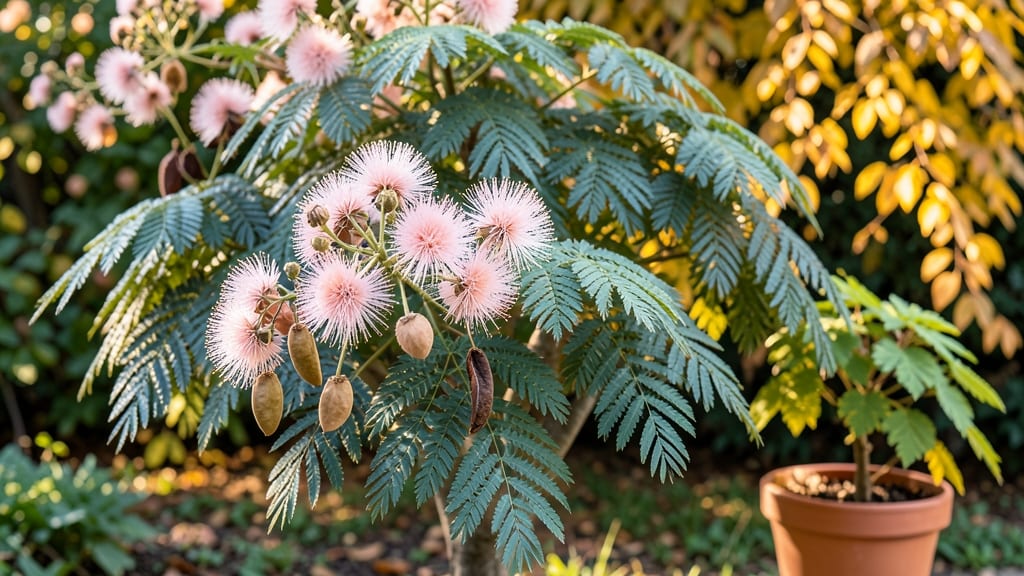
Persian silk trees are prized for their practical landscaping uses, including fast-growing privacy screens, drought-resistant shade solutions, and minimal-maintenance beauty that thrives with little pruning. Their lush foliage and vibrant flowers enhance curb appeal year-round.
These trees shine in urban and suburban settings where traditional plants struggle—think hot, dry climates or poor soil. 🌿 Their rapid growth makes them ideal for quick privacy solutions, while their feathery leaves and golden blooms create a soft, inviting look that works in hedges, street plantings, or mixed borders.
Unlike high-maintenance trees, Persian silk trees require only occasional pruning to maintain shape, saving you time and effort.
What sets them apart is their adaptability: they tolerate heat, drought, and pollution, making them perfect for city landscapes or drought-prone regions. Plus, their non-invasive roots won’t damage sidewalks or foundations, a common issue with other fast-growing trees.
💡 In This Article
- How Persian Silk Trees Adapt to Harsh Climates
- Best Landscaping Applications for Persian Silk Trees
How Persian silk trees adapt to harsh climates
Persian silk trees, native to Iran and Afghanistan, evolved in arid regions where summer temperatures often exceed 100°F and rainfall is scarce. Their survival strategy involves a deep root system that can reach 6-10 feet underground to access moisture, combined with small, waxy leaves that minimize water loss through transpiration.
This adaptation allows them to thrive in urban heat islands where pavement and buildings amplify temperatures by 5-10°F compared to rural areas.
Their drought tolerance comes from specialized stomata (leaf pores) that close during dry periods, reducing water vapor escape. Unlike many trees that wilt under stress, Persian silk trees enter a semi-dormant state, conserving energy until conditions improve.
Their ability to grow in USDA Hardiness Zones 7-11—from southern California to Florida—demonstrates their remarkable climate resilience. In poor soil, they form symbiotic relationships with mycorrhizal fungi, enhancing nutrient uptake from rocky or sandy substrates.
What makes them uniquely suited for urban environments is their tolerance of air pollution and salt spray. Their leaves contain compounds that neutralize ozone and nitrogen oxides, common pollutants in city air. Along coastal areas, they withstand salt spray better than many ornamentals, making them ideal for seaside plantings.
This hardiness translates to minimal irrigation needs once established—typically 1-2 deep waterings per month during dry spells—saving water while maintaining lush foliage.
Their growth mechanics also play a role in climate adaptation. Persian silk trees grow 2-3 feet per year, but their rapid early growth allows them to establish root systems quickly, outpacing competition from weeds.
The feathery foliage provides shade while allowing sunlight to penetrate, reducing soil moisture loss. Unlike thirsty lawns, their dappled shade creates a microclimate that benefits surrounding plants, making them excellent "anchor plants" in drought-prone landscapes.
For optimal placement, consider their native preferences: full sun to partial shade and well-draining soil. In urban settings, they perform best when planted 15-20 feet from buildings to allow airflow, preventing heat stress.
Their non-invasive roots make them safe for patios and driveways, unlike fast-growing trees like willows that can cause structural damage. The combination of these traits explains why they're often called the "perfect urban tree"—beautiful, functional, and resilient.
One often-overlooked benefit is their role in reducing the urban heat island effect. Studies show trees can lower surrounding temperatures by up to 10°F through shade and evapotranspiration. Persian silk trees contribute to this cooling effect while requiring minimal maintenance—no wonder they're a favorite in sustainable landscaping projects. 🌡️