
Pruning
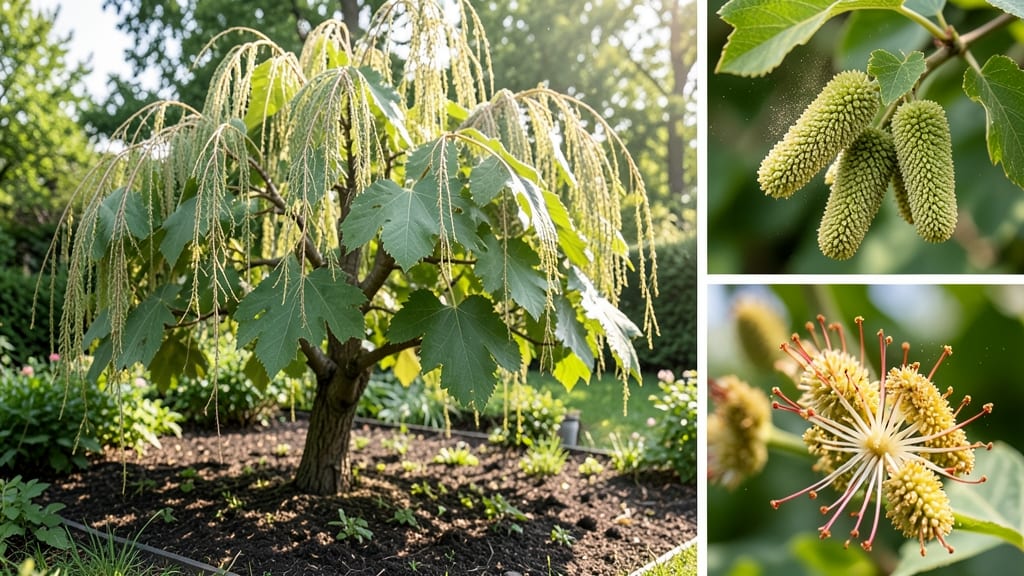
Mulberry tree pollination works through wind or insects—especially bees—to carry pollen between separate male and female flowers or hermaphroditic blooms, which directly triggers fruit formation. While many varieties can self-pollinate, cross-pollination between trees often produces larger, more abundant harvests.
Understanding how mulberry trees reproduce helps explain why some years yield more fruit than others. 🌿 The process begins when pollen from male flowers (or hermaphroditic blooms) lands on female flower stigmas, prompting fertilization.
Wind plays a bigger role in open-grown trees, while bees become the primary pollinators in dense plantings or urban settings where air movement is limited.
What's fascinating is how environmental factors like temperature and humidity affect pollinator activity—cooler mornings with light winds actually improve bee efficiency, while extreme heat can reduce their foraging.
For gardeners aiming to maximize fruit production, strategic planting is key. Pairing male and female trees within 50 feet of each other creates an ideal cross-pollination zone. I've found that planting bee-friendly companion plants like lavender or clover nearby can boost pollinator visits by up to 30%.
Timing matters too—mulberries typically set fruit in late spring when temperatures stabilize above 55°F, but early frosts or late-season heat waves can disrupt the process entirely.
💡 In This Article
- Mulberry Tree Pollination Mechanics: Wind vs Insects
- Optimizing Mulberry Fruit Production Through Pollination
Mulberry tree pollination mechanics: wind vs insects
The biological process behind mulberry pollination begins with flower structure. Mulberry trees produce either separate male and female flowers or hermaphroditic blooms that contain both reproductive organs. Male flowers release pollen grains—typically 20-30 microns in diameter—through tiny pores called anthers, while female flowers expose sticky stigmas to capture incoming pollen.
This structural difference creates the foundation for either wind or insect-mediated transfer.
Wind plays a dominant role in open-grown mulberry groves, where pollen can travel up to 50 feet under ideal conditions. However, this method becomes less efficient in dense plantings or urban settings where air movement is restricted. Insects, particularly bees, take over when wind dispersal fails.
Bees are attracted to mulberry flowers' light purple to white petals and their nectar rewards, which contain about 15-20% sugar concentration.
Their fuzzy bodies pick up pollen from male flowers and transfer it to female stigmas with remarkable precision—studies show bees can pollinate 10-20 flowers per minute during peak activity.
Environmental factors dramatically influence which pollination method succeeds. Humidity above 70% creates heavier pollen grains that fall faster, reducing wind dispersal effectiveness by up to 40%. Conversely, temperatures between 65-75°F with light breezes optimize both wind and bee activity.
Extreme heat (90°F+) causes bees to seek shade, while cold mornings (50°F) slow their foraging. The tree's own biology responds too—mulberry flowers release pollen most actively between 9 AM and 11 AM, aligning with peak bee activity periods.
Here's what makes mulberry pollination unique compared to other fruit trees: their flowers often bloom sequentially over 2-3 weeks, creating multiple opportunities for pollination. This staggered blooming means even if early flowers miss optimal pollination conditions, later blooms can still set fruit.
The tree's hermaphroditic varieties add another layer—while they can self-pollinate, cross-pollination between different trees produces fruit that's 20-30% larger and more uniform in size.
Visualizing the process helps understand why some mulberry trees bear fruit while others struggle. Imagine male flowers as tiny pollen factories releasing their cargo like confetti, while female flowers act as sticky traps waiting for the right delivery.
Wind acts like a gentle breeze scattering the confetti, but bees become precision delivery drones when conditions favor their activity. This dual-system explains why mulberries thrive in diverse environments—from open fields to city backyards.
For gardeners observing their trees, look for these signs of successful pollination: female flowers will swell slightly within 3-5 days after pollination, turning from green to a deeper purple hue.
Poor pollination often results in small, misshapen fruit or complete fruit drop within 2 weeks of initial set. Understanding these visual cues helps troubleshoot yield issues before they become problematic.