
Pruning
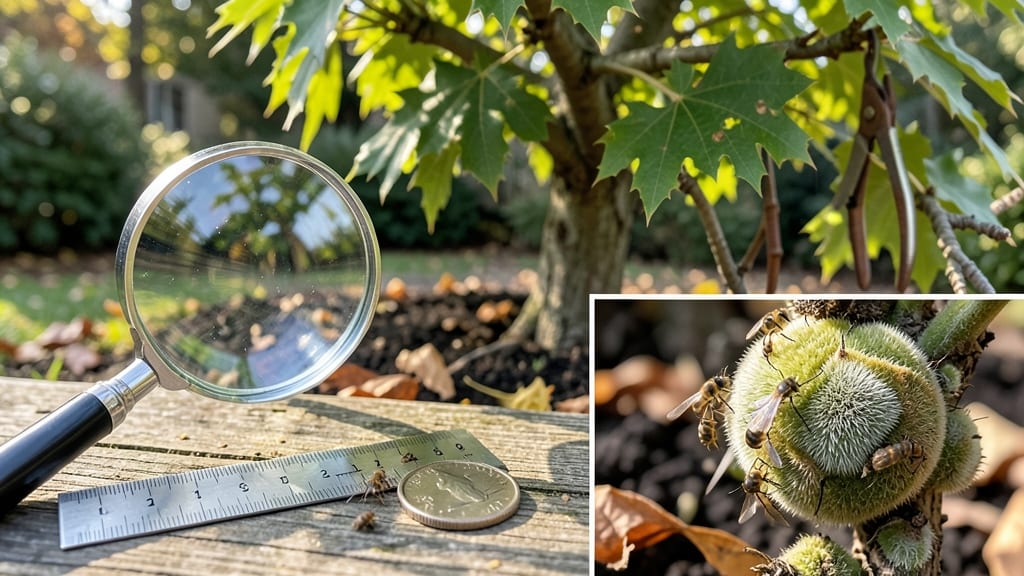
Removing maple tree galls starts with knowing what you're dealing with—those weird, growth-distorting bumps on branches or leaves. 🌳 I've seen everything from woolly maple galls (fuzzy white clusters) to hard, oak-apple-like growths, and each needs a different approach to prune safely without harming the tree.
The culprits are usually tiny wasps or mites that trigger the tree's abnormal growth response, though fungi can play a role too. Heavy infestations weaken the tree by diverting energy from roots and leaves, which is why early action matters—especially during late winter or early spring when the tree's dormant.
Pruning is your first line of defense: cut out galls completely, including a small section of healthy wood below them. For severe cases, organic sprays like horticultural oil (applied in early spring) can disrupt wasp life cycles without harming beneficial insects.
Healthy trees fight galls better, so focus on proper watering, mulching, and avoiding over-fertilization. The key is monitoring—catch galls small, and your maple will bounce back stronger than ever.
The Hidden Triggers Behind Tree Growths
Maple tree galls—those unsightly, often bumpy deformities—don’t just appear out of nowhere. They’re the result of a complex interaction between your tree, insects, and even fungi. Understanding these triggers is the first step to preventing or managing them effectively. Let’s break down the science behind why these growths form.
Most maple tree galls are caused by insect larvae, particularly species like the maple gall midge (Rhabdophaga spp.) or maple blister gall maker. These insects don’t just randomly attack—they’re highly specific in their behavior. Here’s how it works:
- Larval Injection: Female insects lay eggs on young maple shoots or buds. When the larvae hatch, they inject saliva containing plant hormones (like auxins and gibberellins) into the tissue. These hormones trick the tree into growing abnormal, swollen cells to protect the larva—resulting in a gall.
- Nutrient Source: The gall acts like a nutrient-rich nursery for the larva, providing food and shelter as it develops. The tree’s own resources are hijacked to sustain the invader.
- Seasonal Timing: Galls typically form in spring or early summer, when new growth is most vulnerable. Adult insects emerge in late summer to repeat the cycle.
💡 Pro Tip: If you spot small, round galls (often pebble-like) on twigs, you’re likely dealing with an insect-caused gall. These are usually harmless to the tree’s long-term health but can weaken branches if severe.
Not all galls are insect-driven—some are caused by fungi, which exploit wounds or stress in the tree. The most common fungal culprits include:
- Canker Fungi (e.g., Leucostoma spp.): These fungi enter through pruning cuts, storm damage, or bark injuries, then release enzymes that disrupt normal cell growth. The tree responds by forming raised, warty galls around the infection site.
- Nectria Canker: A aggressive fungal pathogen that thrives in warm, humid conditions. It creates sunken, oozing galls with pink or orange spores, often killing affected branches.
- Environmental Stress: Weakened trees (due to drought, poor soil, or pest damage) are far more susceptible to fungal gall formation because their defenses are compromised.
⚠️ Warning Sign: Fungal galls often oozes sap, have discolored tissue, or spread rapidly. Unlike insect galls, they can kill the tree if untreated.
While insects and fungi are the primary causes, environmental stress sets the stage for gall formation. Healthy trees resist attacks better—here’s how stress opens the door:
| Stressor | How It Helps Galls Form |
|---|---|
| Poor Soil Nutrition | Lack of nitrogen, phosphorus, or micronutrients weakens cell walls, making it easier for insects/fungi to penetrate. |
| Drought or Overwatering | Extreme moisture levels disrupt sap flow, creating ideal conditions for fungal growth and attracting gall-forming insects. |
| Physical Damage | Broken branches, poor pruning cuts, or hail scars provide entry points for fungi and egg-laying insects. |
| Competition from Weeds | Weeds steal nutrients and water, leaving the tree vulnerable to stress-related gall outbreaks. |
🌡️ Climate Connection: Galls are more common in humid climates (like the Northeast U.S.) because moisture promotes both insect activity and fungal spores.
Now that you know why these growths form, the next step is identifying the type of gall and taking targeted action. Stay tuned for our pruning and treatment guide to restore your maple’s health!
Treat and Prevent Tree Growths
Maple tree galls can be unsightly and even harmful if left unchecked, but with the right approach, you can restore your tree’s health and prevent future outbreaks. Below are practical, step-by-step solutions tailored to the most common causes of galls, along with prevention tips to keep your tree thriving.
If galls are caused by maple gall wasps or other insects, the key is to remove the galls early before they spread.
🍳 Remove Galls Safely
- Wear gloves and long sleeves – Some galls may contain irritating sap or insects.
- Use pruning shears or a sharp knife – Cut the gall completely from the branch, including the swollen tissue.
- Dispose of galls properly – Seal them in a plastic bag and toss them in the trash (do not compost, as wasp larvae may survive).
👨🍳 Treat Affected Branches
- Prune back to healthy wood – If the gall has weakened the branch, trim it back to a strong, healthy section.
- Apply horticultural oil or insecticidal soap – Spray the area to kill remaining larvae (best done in early spring or fall when wasps are inactive).
💡 Pro Tip:
🔥 Monitor for regrowth – If new galls appear, repeat treatment and consider professional pest control for severe infestations.
If galls are caused by fungi or bacteria, the goal is to stop the spread and boost tree resistance.
🔪 Prune Infected Areas Immediately
- Cut out galls and surrounding damaged tissue – Use sterilized pruners (wipe with rubbing alcohol between cuts).
- Remove fallen leaves/debris – Fungal spores spread easily, so clean up under the tree.
- Dispose of infected material – Do not leave pruned branches on the ground.
🌡️ Apply Fungicide or Antibacterial Spray
- For fungal galls: Use a copper-based fungicide or neem oil spray (follow label instructions).
- For bacterial galls: A bactericide (like copper fungicide) may help, but prevention is key—see tips below.
🎯 Strengthen Tree Health
- Water deeply but infrequently – Overwatering stresses trees, making them more susceptible to infections.
- Mulch properly – Keep mulch 3-4 inches thick but away from the trunk to prevent moisture buildup.
- Fertilize in early spring – A balanced, slow-release fertilizer helps the tree recover.
The best defense is proactive maintenance. Here’s how to keep galls from returning:
🌿 Encourage Tree Vigor
- Prune in late winter/early spring – This helps the tree heal quickly and reduces stress.
- Avoid heavy pruning in fall – New growth is more vulnerable to pests and diseases.
🐜 Control Pests Early
- Inspect trees regularly – Look for small holes, sawdust-like frass, or unusual swellings in spring.
- Use beneficial insects (like parasitic wasps) or natural repellents (like garlic spray) to deter gall-makers.
🌧️ Improve Drainage & Airflow
- Avoid compacted soil – Aerate the root zone if drainage is poor.
- Thin out dense branches – Better airflow reduces humidity, which fungi and bacteria love.
📊 When to Call a Pro
If galls keep returning despite your efforts, consult an arborist. Severe infestations may require systemic treatments or professional pruning techniques.
By following these targeted solutions, you’ll not only remove existing galls but also protect your maple tree for years to come. 🌳💪
Frequently asked questions about maple tree galls
Are maple tree galls harmful to my tree?
Most insect-caused galls (like woolly maple galls) are cosmetic issues that won't kill your tree, but they can weaken branches over time by diverting the tree's energy. Fungal galls, however, can spread and cause serious damage—especially if they ooze sap or have discolored tissue. Always remove large or suspicious galls promptly.
What’s the best time of year to prune out maple galls?
The ideal time is late winter or early spring (before buds swell) when the tree is dormant but about to wake up. This minimizes stress and helps the tree heal faster. Avoid pruning in fall, as new growth is more vulnerable to pests and diseases.
Can I use regular household cleaners to treat fungal galls?
No—household cleaners like bleach or vinegar can damage the tree. For fungal galls, use copper-based fungicides or neem oil spray (follow label instructions). Always sterilize pruners with rubbing alcohol between cuts to prevent spreading spores.
Will removing galls attract more insects?
Not if you dispose of them properly! Seal galls in a plastic bag and throw them away—never compost them, as wasp larvae may survive. The key is removing galls completely (including swollen tissue) and treating the area with horticultural oil to kill any remaining larvae.
How do I know if my maple tree is healthy enough to fight galls?
A healthy maple tree has vibrant green leaves, no excessive leaf drop, and strong, flexible branches. If your tree is struggling (yellowing leaves, weak growth, or bark damage), focus on improving soil, watering, and mulching before treating galls. Weak trees are more susceptible to both insect and fungal attacks.