
Trees
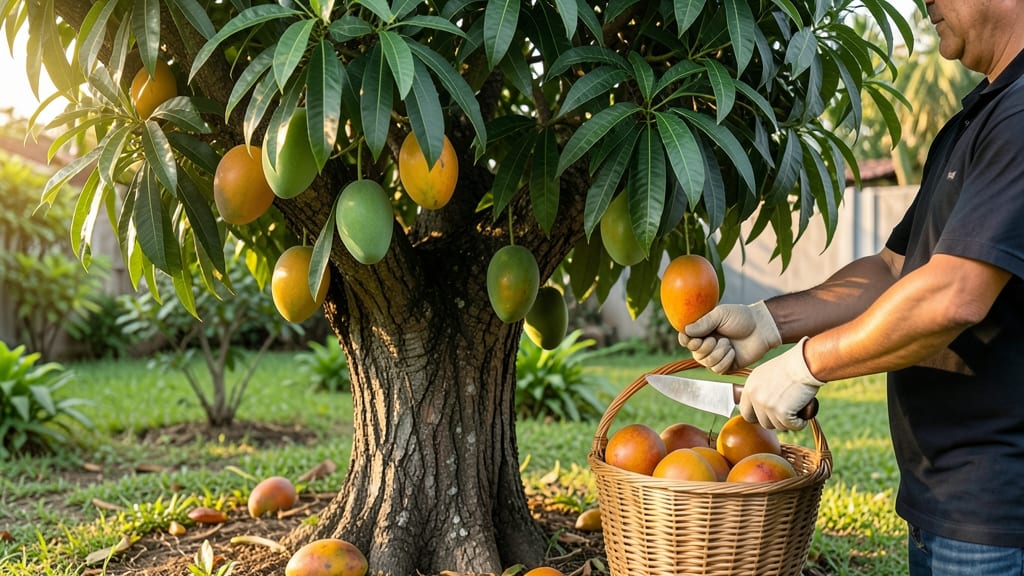
Harvesting a mango tree at the right time means the difference between a juicy, sweet reward and a mealy, disappointing bite.
Nothing beats the taste of a perfectly ripe mango straight from your own tree—but timing your harvest wrong can turn sweet victory into bitter disappointment. Whether you're in a tropical paradise or a subtropical zone, knowing when to pick is everything.
Most mango varieties reach peak ripeness in late summer to early fall, but the real secret lies in the fruit itself. Look for a deep, rich color, a slight give when pressed, and that unmistakable sweet aroma at the stem.
Miss these cues, and you might end up with fruit that's either too hard or overripe.
In this guide, I’ll walk you through the exact signs to watch for, how to handle your harvest like a pro, and even how to store those mangoes so they stay fresh longer. No more guessing—just perfect, homegrown flavor every time.


How to determine the perfect time to harvest mangoes
Harvesting mangoes at the ideal ripeness ensures peak flavor and texture, but timing is everything. Unlike store-bought mangoes—often picked green and gassed to ripen—homegrown fruit must be harvested at the perfect moment for the best results.
Understanding the visual, tactile, and olfactory cues will help you avoid the disappointment of underripe or overripe fruit.
Mango trees thrive in tropical and subtropical climates, but even within these regions, harvest windows vary by variety and local conditions. Some varieties, like Haden or Tommy Atkins, ripen earlier in the season, while others, such as Kent or Keitt, may hold on the tree longer.
Paying attention to color shifts, texture changes, and scent will guide you to the best harvest time for your specific tree.
🌱 Key Takeaway: Mangoes never ripen further once picked, so harvest at the right stage—too soon, and they’ll lack sweetness; too late, and they’ll be mealy or spoiled.
Start by examining the fruit’s color, which is the most obvious sign of ripeness. Most mango varieties develop a deep, vibrant hue—whether red, yellow, or green-yellow—when ready to harvest. For example, Haden mangoes turn a rich red, while Kent mangoes develop a golden-yellow color.
Avoid picking fruit that’s still pale or unevenly colored, as it won’t ripen properly off the tree.
Next, perform the texture test by gently pressing the mango near the stem. A ripe mango should have a slight give, almost like a ripe avocado. If the fruit feels rock-hard, it’s not ready yet.
Conversely, if it’s mushy or squishy, it’s overripe and past its prime. This test is crucial because mangoes won’t soften further once picked, so timing is critical.
Don’t overlook the scent test, which is often the most reliable indicator. A ripe mango emits a sweet, tropical aroma near the stem. If your mango lacks this fragrance, it’s not ready.
Pro tip: Place the fruit near your nose and take a deep sniff—you should detect a fruity, almost floral scent. If you smell nothing, wait a few days before checking again.
Climate plays a huge role in harvest timing. In tropical regions, mangoes may ripen year-round, while in subtropical zones, they typically ripen in late spring to early fall. For instance, Florida’s mango season peaks in June and July, whereas California’s harvest occurs from May to September.
Always monitor your local climate patterns and adjust your expectations accordingly.
If you’re unsure whether your mango is ready, use the "stem twist test". Gently grasp the stem and twist it side to side. If the stem separates cleanly from the fruit with minimal force, it’s a strong sign of ripeness.
This test works because the fruit naturally detaches as it matures, making it easier to harvest without damaging the tree.
For container-grown mango trees, harvest timing may differ slightly due to environmental factors like limited root space or wind exposure. These trees often produce fruit that ripens 1-2 weeks earlier than their in-ground counterparts.
Keep a close eye on your potted mango’s fruit and adjust your harvesting schedule based on the same ripeness cues mentioned above.
Finally, remember that patience is key. If your mangoes aren’t showing all the signs of ripeness, resist the urge to pick them early. Waiting an extra week can mean the difference between a blah, underripe mango and a bursting-with-flavor masterpiece.
Once you master these techniques, you’ll never second-guess your harvest timing again!
Best practices for storing freshly harvested mangoes
Once you've harvested your homegrown mangoes, proper storage is key to preserving their flavor and texture. Unlike many fruits, mangoes continue ripening after harvest, so storage methods depend on whether you want them to ripen further or stay firm for later use.
The ethylene gas they produce also plays a crucial role in how quickly they soften.
For immediate consumption, store mangoes at room temperature in a well-ventilated area. This allows them to ripen naturally over 2-5 days, depending on the variety. However, if you're dealing with a large harvest, you'll need strategies to slow ripening and extend shelf life without sacrificing quality.
Room Temperature Storage
- Pros: Natural ripening, best flavor
- Cons: Short shelf life (3-5 days)
Refrigerated Storage
- Pros: Slows ripening, extends life
- Cons: Alters texture, less sweet
Ethylene Exposure
- Pros: Speeds ripening naturally
- Cons: Can over-ripen nearby fruit
If you need to delay ripening, refrigeration is your best option—but there's a catch. Once cut, mangoes should never go back in the fridge, as temperature fluctuations damage cell walls.
For whole fruit, store them in the crisper drawer at 45-50°F to slow ethylene production and maintain firmness for up to 2 weeks.
For long-term preservation, consider freezing or dehydrating. Peel and slice mangoes before freezing in airtight containers with a splash of lemon juice to prevent browning. Dehydrating slices at 135°F for 6-8 hours creates chewy, shelf-stable treats that last months in sealed bags.
Ethylene gas is your biggest ally or enemy when storing mangoes. Grouping them with other ethylene-producing fruits like apples or bananas will speed up ripening, while isolating them from sensitive produce like leafy greens prevents premature wilting.
Use a paper bag with a few mangoes to trap ethylene and ripen them faster if needed.
To test ripeness during storage, gently press the mango's skin near the stem. A slight give indicates peak ripeness, while a hard surface means it needs more time. Overripe mangoes will feel mushy and may develop fermented odors—best used immediately for smoothies or baking.
Remember, the sooner you consume freshly harvested mangoes, the better their flavor. Even with proper storage, their natural sugars and aromatic compounds degrade over time, so enjoy them while they're at their juiciest! 🥭