
How To
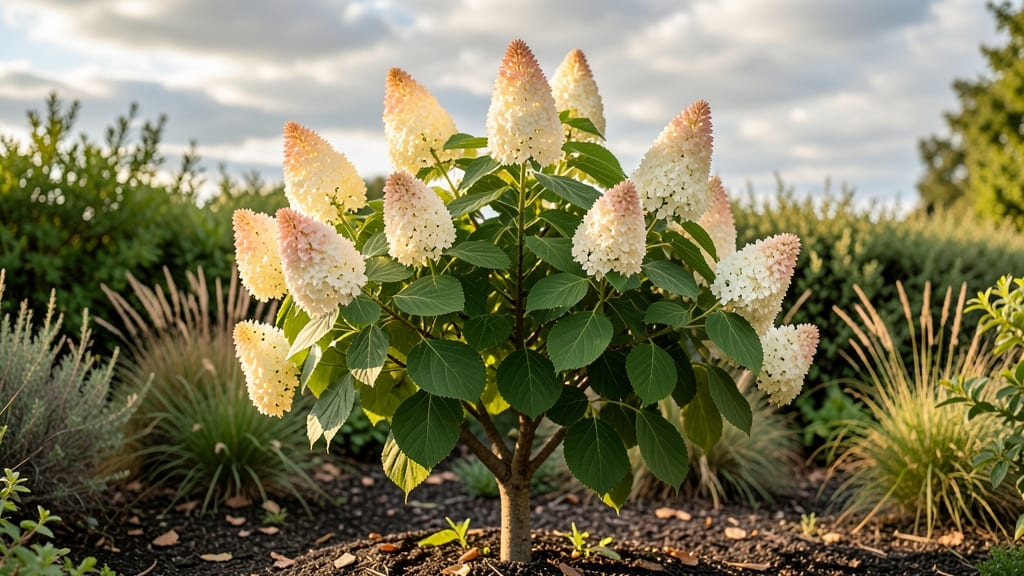
A hydrangea tree how tall do they grow can range from a modest 3 feet to a towering 15 feet, depending on the variety and growing conditions.
If you're eyeing one for your garden but worried about it outgrowing its space, you’re not alone—many gardeners hesitate before committing to these beauties.
Picture this: a 🌸 Hydrangea paniculata like 'Limelight' stretching toward the sky, while a dwarf variety like 'Little Lime' stays neatly contained in a pot. The difference isn’t just in aesthetics—it’s about long-term planning. Will it shade your patio? Block your view? Or simply add the perfect vertical accent?
Growth habits vary wildly, from slow-and-steady shrubs to fast-climbing trees. Pruning, sunlight, and soil all play a role, and choosing the right variety for your space is the first step to avoiding a 10-foot surprise in five years.
In this guide, I’ll break down the height ranges by variety, share pruning secrets to control growth, and help you pick the perfect hydrangea tree for your garden—whether you want a compact statement or a grand backyard centerpiece.


Hydrangea tree height by variety: dwarf to giant sizes explained
Choosing the right hydrangea tree depends entirely on your space and vision. Some varieties stay as compact as a 3-foot shrub, while others grow into 15-foot trees.
Understanding these differences helps you pick the perfect plant for your garden—whether you need a privacy screen, a container specimen, or a backyard focal point. Let’s break down the most popular types and their mature heights.
First, it’s important to distinguish between tree-like hydrangeas (like Hydrangea paniculata) and shrub varieties (like Hydrangea arborescens). Tree hydrangeas grow taller with a single trunk, while shrubs branch out from the base.
For example, the 'Limelight' hydrangea (paniculata) can reach 12 feet tall, while the 'Annabelle' (arborescens) stays around 3-5 feet. Your choice impacts everything from pruning needs to garden layout.
🌱 Visual Reference: Imagine a 'Limelight' hydrangea towering over a 6-foot fence, while a 'Little Lime' (paniculata) fits neatly in a large container. The difference isn’t just height—it’s also growth rate and maintenance requirements. Below, we’ll compare the most sought-after varieties so you can plan your garden with confidence.
| Variety | Type | Mature Height | Growth Rate | Spacing Needs |
|---|---|---|---|---|
| 'Limelight' (H. paniculata) | Tree-like | 10-12 ft | Fast (3-5 ft/year) | 8-10 ft apart |
| 'Grandiflora' (H. paniculata) | Tree-like | 8-10 ft | Moderate (2-4 ft/year) | 6-8 ft apart |
| 'Annabelle' (H. arborescens) | Shrub | 3-5 ft | Moderate (1-2 ft/year) | 3-5 ft apart |
| 'Little Lime' (H. paniculata) | Shrub | 3-5 ft | Slow (1 ft/year) | 3-4 ft apart |
| 'Oakleaf' (H. quercifolia) | Tree-like | 10-15 ft | Slow (1-2 ft/year) | 8-10 ft apart |
| 'Endless Summer' (H. macrophylla) | Shrub | 4-6 ft | Moderate (1-2 ft/year) | 4-5 ft apart |
If you’re working with limited space, dwarf varieties like 'Little Lime' or 'Annabelle' are game-changers. These stay under 5 feet tall and thrive in containers or small gardens. Their slower growth also means less pruning, making them ideal for low-maintenance landscapes.
On the other hand, if you’re aiming for a statement piece, 'Limelight' or 'Oakleaf' will deliver dramatic height and seasonal color changes.
Growth habits vary too—some hydrangeas grow upright and tall (like H. paniculata), while others spread widely and rounded (like H. arborescens). This affects how you space them in your garden.
For example, a 10-foot 'Limelight' needs 8 feet of clearance on all sides, while a 4-foot 'Endless Summer' fits snugly in a border or patio area. Always check the spacing requirements to avoid overcrowding.
Another key factor is growth rate. Fast growers like 'Limelight' can add 3-5 feet per year, while slower types like 'Oakleaf' take 5-10 years to reach maturity.
If you’re impatient for color, faster-growing varieties are your best bet—but they’ll need regular pruning to control their size. Slower growers, however, offer long-term stability with minimal upkeep.
For urban gardens or small yards, consider pruning techniques to keep taller varieties in check. Topping back '
How to control hydrangea tree height: pruning tips for compact growth
Hydrangea trees can grow 6 to 15 feet tall depending on the variety, but with the right pruning techniques, you can shape them to fit your garden perfectly. The key is understanding when and how to prune—whether you want a compact shrub or a taller specimen.
Pruning at the wrong time can stunt growth or even kill your plant, so timing matters more than you might think.
For most hydrangea trees, late winter or early spring is the ideal time to prune before new growth begins. This ensures you remove dead wood while encouraging healthy blooms.
If you’re dealing with a fast-growing variety like Hydrangea paniculata, you can also prune in summer to control height, but avoid heavy cuts after mid-summer to protect next year’s flowers.
Here’s a step-by-step guide to pruning for compact growth, including tools and techniques to keep your hydrangea tree manageable:
If you’re working with a young hydrangea tree, focus on structural pruning in the first few years to establish a strong framework. This means removing weak or crossing branches early to prevent future issues. For mature trees, prune lightly to maintain shape and encourage fuller blooms.
Remember, consistency is key. Prune your hydrangea tree once a year (or twice for aggressive growers) to keep it at your desired height.
With the right approach, you can enjoy a lush, manageable hydrangea that fits your garden perfectly—whether it’s a container-friendly dwarf or a taller backyard statement piece. 🌿✂️