
Planting
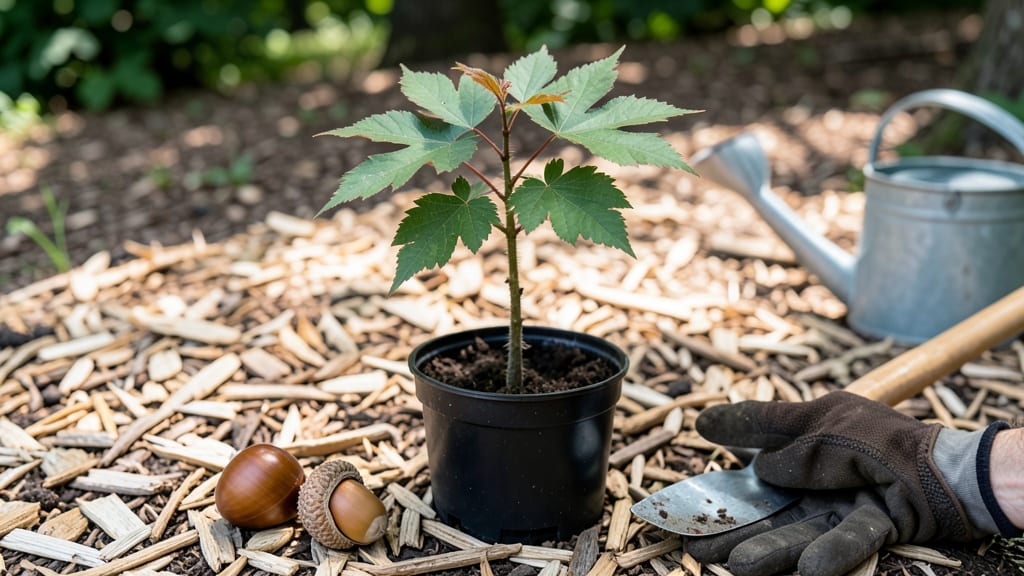
Planting an oak tree seed means investing in a 100-year relationship with nature. 🌳 The process starts with patience—oaks take 2-5 years just to sprout, but once they do, they’ll grow into towering shade providers for generations.
My first try with a white oak seedling taught me that timing, soil, and location are everything. You’ll need acorns from mature trees (not all oaks produce viable seeds), a deep hole, and well-draining soil.
Red oaks germinate faster than white oaks, but both require stratification—a cold period to break seed dormancy. I use a damp paper towel in the fridge for 3 months before planting, which mimics winter’s natural process.
When you’re ready, plant the seed 2 inches deep in loose soil, keeping it moist but not soggy. A sunny spot with room to grow is non-negotiable—oaks hate transplanting later. After planting, protect it from squirrels (they love acorns too!) and give it consistent water for the first year.
The real magic happens underground. Roots establish slowly, but once they do, your oak will outpace anything else in your yard. Think of this as a decades-long project—not a quick harvest. Every watering, every mulched layer, and every pruned branch is a step toward future shade and wildlife habitat.
📚 In This Guide
- What you need
- Instructions
- Tips and common mistakes
- Wrapping up and next steps
What you need
- ● Oak acorns: Fresh, plump acorns (preferably from Quercus robur or Quercus alba—avoid small, shriveled ones). Quantity: 10–20 for better germination odds!
- ● Stratification supplies: Moist peat moss or coco coir (1–2 cups)
- ● Plastic ziplock bag or airtight container
- ● Refrigerator (or cool, dark spot, ~34–40°F/1–4°C)
- ● Planting containers: Seedling trays (with drainage holes) OR
- ● Small pots (3–4 inches deep, 1–2 per acorn)
- ● Potting mix: Well-draining seed-starting mix (avoid garden soil—it’s too dense!)
- ● Watering can or spray bottle (gentle moisture is key!)
- ● Trowel or small shovel (for transplanting later)
- ● Sunlight access: A south-facing window or grow lights (12–16 hours/day)
- ● Grow light setup (if natural light is limited)
- ● Humidity dome or plastic wrap (to retain moisture during germination)
- ● Acorn cap (leave it on—it protects the seed!)
- ● Label markers (to track planting dates)
- ● Mulch (for outdoor planting later—think shredded bark or straw)
Step-by-Step instructions for planting oak tree seeds
Oak trees take patience, but these steps ensure your seeds get the right start for decades of growth.
🌱 Step 1: Collect and Prepare Acorns
Gather mature acorns from the ground in fall—they’ve already gone through nature’s stratification process. Look for plump, heavy acorns with no cracks or holes. I soak them in water for 24 hours to soften the shell, then place them in a damp paper towel inside a sealed plastic bag.
Store the bag in the fridge for 3 months—this mimics winter’s cold period and breaks seed dormancy. Check monthly for sprouting; you’ll see tiny white roots emerge first. This cold treatment is critical—skipping it means waiting years for germination.
🌿 Step 2: Plant Sprouted Seeds in Containers
Use 4-inch pots filled with a mix of 50% potting soil and 50% perlite for drainage. Plant each acorn 1 inch deep, with the pointed end up. I label each pot with the date to track growth. Keep the soil consistently moist but never soggy—acorns rot if overwatered.
Place pots in a bright, indirect light spot (like an east window) where temperatures stay between 65-75°F. You’ll notice the first true leaves—oval and smooth-edged—appear in 4-8 weeks. This is your signal the seedling’s root system is establishing.
☀️ Step 3: Transition to Outdoor Conditions
After 1 year, when seedlings reach 12-18 inches tall, harden them off by moving pots outside for 2 hours daily, gradually increasing time. Choose a sheltered, partially shaded spot to avoid sunburn. I’ve found shade cloth (50% coverage) helps young oaks adjust without stress.
Plant outdoors in spring or fall, digging a hole twice as wide as the root ball but no deeper. Water deeply to settle soil around roots. Oak seedlings need deep watering every 7-10 days—let the top 2 inches of soil dry between waterings to prevent root rot.
⏰ Step 4: Maintain Long-Term Growth
Fertilize lightly in early spring with a balanced 10-10-10 formula—oaks are sensitive to over-fertilizing. Mulch with 2 inches of wood chips to retain moisture and protect roots. You’ll see stronger branch growth by the second year if the tree gets full sun (6+ hours daily).
Monitor for pests like acorn weevils—remove infested acorns immediately. By year 5, your oak will need staking if winds cause leaning. Patience pays off: a well-started oak can live for centuries. I’ve watched mine reach 10 feet tall by their 10th year.
Tips & tricks for growing oak trees from seeds
Growing oak trees from seeds requires careful attention to detail—here's how to avoid common pitfalls and maximize success.
Timing is Everything: The 24-hour soak in Step 1 softens the acorn shell just enough to jumpstart germination without overhydrating. I’ve found that using lukewarm water (around 75°F) speeds up this process slightly—just enough to see tiny root hairs emerge faster. Avoid hot water, which can shock the seed.
Storage Wisdom: That 3-month cold treatment in the fridge isn't optional—it mimics winter conditions that break dormancy. I mark my calendar when I start this process so I don't forget to check for sprouting. If you notice mold developing on the damp paper towel after 2 weeks, discard the acorns and refresh the towel with clean, damp material.
Light and Temperature Balance: The 65-75°F range in Step 2 is crucial for consistent germination. If your home runs cooler, place pots on a seedling heat mat set to 70°F. Too much direct sunlight at this stage can scorch delicate sprouts—east-facing windows are ideal. I’ve seen seedlings develop leggy growth when light is too weak, so supplement with a grow light if needed.
Hardening Off Strategy: When increasing outdoor time in Step 3, I recommend adding 30 minutes to the daily session every 3-4 days. This gradual approach prevents shock. Watch for leaves curling or yellowing—this is your tree’s way of saying "too much sun too soon." A simple shade cloth (50% coverage) makes all the difference during those first few weeks outside.
Pro Tips for Plant An Oak Tree Seed
- Growing oak trees from seeds requires careful attention to detail—here's how to avoid common pitfalls and maximize success.
- Timing is Everything: The 24-hour soak in Step 1 softens the acorn shell just enough to jumpstart germination without overhydrating.
- Storage Wisdom: That 3-month cold treatment in the fridge isn't optional—it mimics winter conditions that break dormancy.
Frequently asked questions
Got questions about nurturing an oak tree from a tiny seed? You’re not alone—growing these majestic giants takes patience and know-how! Here are answers to the most common queries to set you up for success.
How long does it take for an oak seed to germinate?
Oak seeds are famously slow to germinate—often 1 to 3 months in ideal conditions (warmth, moisture, and stratification). Some species, like white oak, may take 6 months or longer. Patience is key! Keep the soil consistently moist and avoid disturbing the seed until sprouts appear.
Can I plant an oak seed directly in the ground, or should I start indoors?
Direct outdoor planting is best for acorns, as they thrive in natural conditions. However, if your climate has harsh winters, stratify the seed (mimic cold periods) for 2–3 months in a damp paper towel or refrigerate it before planting. Starting indoors is tricky—oak seedlings are delicate and often prefer outdoor conditions.
What’s the best time of year to plant an oak seed?
Fall (autumn) is ideal—plant acorns 2–3 months before your area’s first hard frost. This mimics their natural cycle, allowing them to stratify over winter. If planting in spring, stratify seeds first (see above). Avoid planting in extreme heat or drought, as young seedlings are vulnerable.
Why isn’t my oak seed sprouting? Troubleshooting tips!
Common culprits:
- Lack of stratification: Oak seeds need cold exposure to break dormancy. Try chilling them in a damp towel for 60+ days.
- Poor soil moisture: Keep soil consistently damp (not soggy) during germination.
- Shallow planting: Bury seeds 1–2 inches deep—too shallow = drying out; too deep = poor sprouting.
- Pests or fungi: If mold appears, replant in fresh, sterile soil.
How do I tell if my oak seed is viable before planting?
Test viability with the “float test”:
- Fill a bowl with water and drop acorns in.
- Viable seeds sink (they’re dense and full of life!).
- Floaters are likely empty or damaged—discard them.
Wrapping up and next steps
Planting an oak tree seed is a rewarding journey that blends patience with the joy of nurturing life. Remember, success hinges on proper stratification, a well-prepared growing medium, and consistent care—especially during those early, delicate stages. 🌱
Now that you’re armed with knowledge, take the next step: find your perfect spot and start planting! Whether you’re a seasoned gardener or a curious beginner, every seed has the potential to grow into a mighty oak—so get your hands dirty and watch nature’s magic unfold. 🌳✨