
How To
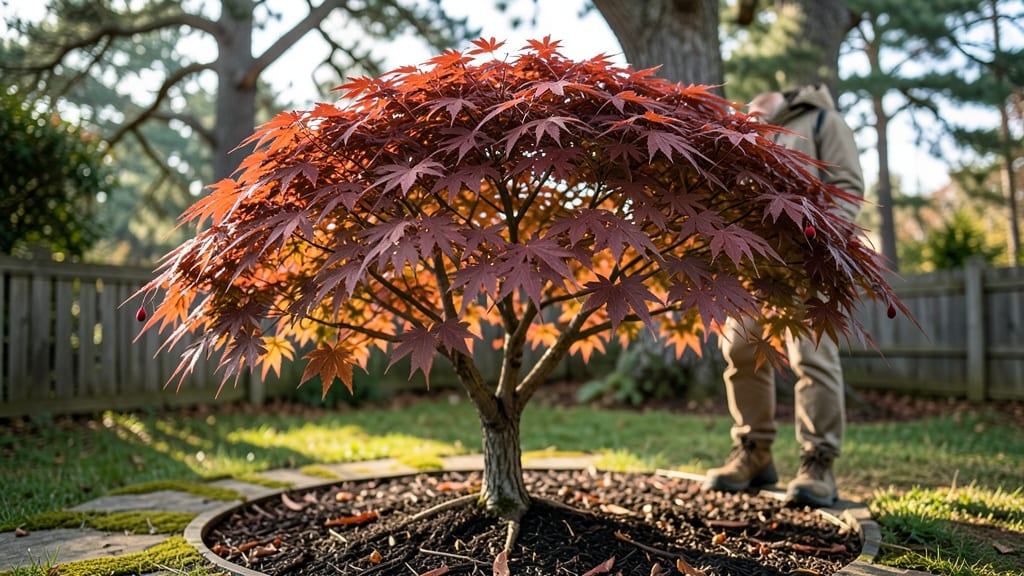
A Japanese Maple Tree can how tall it grows dramatically, ranging from a modest 8 feet to a towering 30 feet, depending on the variety and care you provide.
Wondering whether a Japanese Maple will dwarf your backyard or soar like a skyscraper? The height of these stunning 🌿 trees varies dramatically by variety—and proper care can accelerate or stunt their growth.
Some varieties stay compact, perfect for small gardens, while others grow tall enough to shade an entire yard. Whether you're planning a cozy patio spot or a grand landscape centerpiece, knowing the right variety and care tips is key.
In this guide, I’ll break down the height ranges by popular varieties, how sunlight, soil, and pruning affect growth, and how to manage size for your space—so you can choose the perfect tree for your vision.


Japanese maple tree height by variety: from dwarf to towering giants
Japanese maples are famous for their stunning foliage and graceful forms, but their mature heights can vary dramatically depending on the variety. Some stay compact enough for containers or small gardens, while others grow tall enough to shade an entire backyard.
Choosing the right variety for your space is key to maximizing their beauty without overpowering your landscape.
Understanding growth rates and spacing needs helps you plan for long-term success. For example, a dwarf variety like 'Dwarf Red Dragon' might stay under 10 feet, while a standard variety like 'Emperor I' can reach 25 feet or more.
Let’s explore the most popular varieties and their mature heights to help you make the perfect choice for your garden.
Here’s a quick comparison of Japanese maple varieties by height, including their growth habits and ideal spacing. This will help you visualize how each variety will fit into your landscape design.
If you’re working with limited space, dwarf varieties like 'Dwarf Red Dragon' or 'Shishigashira' are excellent choices. These stay under 10 feet and can even thrive in large containers with proper care. Their slower growth rates make them ideal for urban gardens or patios where space is at a premium.
For larger landscapes, varieties like 'Bloodgood' or 'Emperor I' will create stunning focal points. These trees can reach 20-25 feet, so plan for their mature size when planting. Always maintain at least 10-15 feet of clearance from structures to avoid future pruning headaches.
One common misconception is that Japanese maples grow quickly. In reality, their growth is moderate, with most varieties adding only 6-18 inches per year. This steady pace allows you to shape them over time, whether through pruning or
How care factors affect Japanese maple tree height growth
Your Japanese maple tree may reach its full height potential or stay stunted depending on how you care for it. Unlike many trees, Japanese maples respond dramatically to light exposure, soil conditions, and pruning habits.
Even two trees of the same variety can grow 10 feet apart in height if one receives full sun while the other sits in shade.
Let’s break down the key care factors that directly influence how tall your Japanese maple will grow—and how to optimize each for the height you desire. Whether you want a compact accent tree or a towering specimen, these adjustments will make all the difference.
- 1 Sunlight Exposure: 6+ hours of sun can add 3-5 feet to mature height vs. partial shade (10-15 feet).
- 2 Soil pH: Ideal acidic soil (5.5-6.5) boosts nutrient uptake; alkaline soil (pH 7+) stunts growth by 20-30%.
- 3 Pruning Technique: Structural pruning in early spring can limit height by 25%, while no pruning lets trees grow unrestricted.
- 4 Watering Schedule: Deep weekly watering in summer speeds growth; underwatering reduces height by 1-2 feet per year.
- 5 Seasonal Care: Fall mulching protects roots for spring growth; winter protection in cold zones (Zone 5 and below) prevents height loss from frost damage.
One of the biggest myths about Japanese maples is that their height is purely genetic.
While variety selection sets the baseline (e.g., 'Bloodgood' grows 20-25 feet, while 'Dwarf Red Dragon' stays under 10 feet), your daily care habits can push a tree 5 feet taller or keep it compact for decades.
For example, my 'Coral Bark' maple grew 12 feet in 5 years when planted in full morning sun, but a neighbor’s identical tree in deep shade only reached 8 feet after 7 years.
Let’s start with sunlight exposure, the single most powerful lever for controlling height. Japanese maples thrive in partial shade (4-6 hours of sun), but if you place yours in full sun, expect 20-30% faster vertical growth.
The trade-off? More sun means fewer vibrant leaves—the foliage may fade to pale green or yellow by midday. To balance both height and color, aim for morning sun only and afternoon shade.
Another often-overlooked factor is soil pH. Japanese maples are acid-loving plants, and soil with a pH above 7 can halve their growth rate. Test your soil’s pH before planting, and amend with sulfur or peat moss if needed.
I once had a 'Emperor I' maple that barely grew for 3 years because its soil was alkaline (pH 7.5). After adding pine bark fines to lower the pH to 6.0, it gained 3 feet in a single growing season.
Pruning isn’t just about shaping—it’s a height-control tool. If you want to limit height, prune in late winter or early spring before new growth begins. Focus on removing upward-growing branches and suckers at the base.
For maximum height, avoid pruning the central leader (main vertical stem) unless absolutely necessary. My 'Black Dragon' maple grew 4 feet taller in 2 years after I stopped pruning its top branches.
Finally, don’t underestimate the power of seasonal care. In summer, deep watering twice weekly during droughts can push growth by 1-2 feet per season. In fall, apply a 3-inch layer of mulch to retain moisture and protect roots. And in winter, wrap young trees in burlap in Zone 5 or colder to prevent frost damage, which can stunt future growth. These small adjustments add up—my 'Bloodgood' maple now stands 22 feet tall after 10 years of consistent