
How To
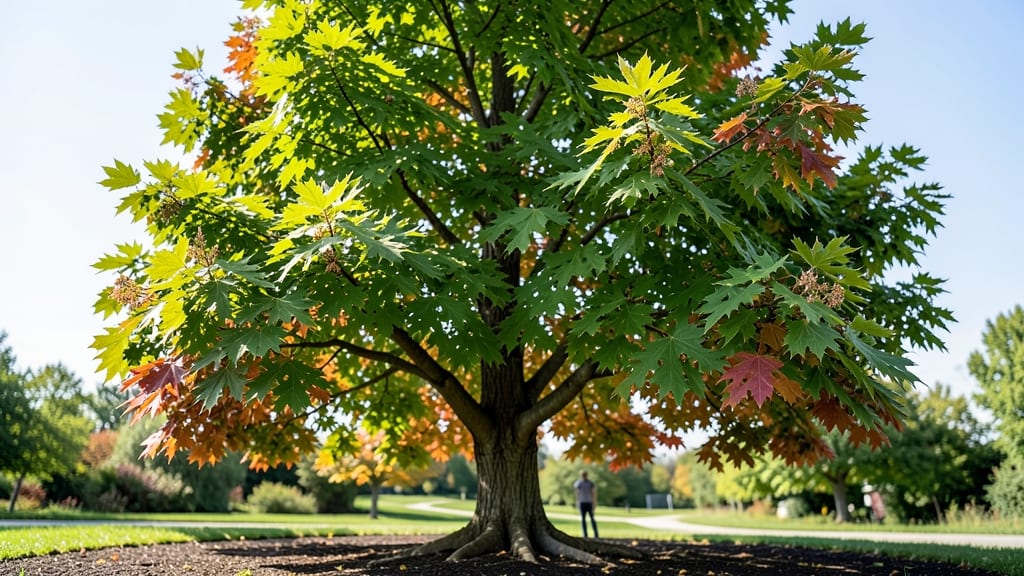
Maple trees grow to heights ranging from how tall does a maple tree grow?—dwarf varieties under 20 feet to towering giants over 120 feet—depending on the species and growing conditions.
Picture this: a tiny maple sapling in your yard, barely taller than a child’s reach, with the potential to become a shade-providing giant in just a few decades. That’s the magic—and the challenge—of planting a maple tree 🌳.
Whether you’re dreaming of a backyard canopy or a compact ornamental tree, knowing the exact height range for each variety is the key to planning your landscape.
The Sugar Maple, for example, can reach 75 to 100 feet at maturity, while a Japanese Maple might stay a modest 15 to 25 feet—perfect for smaller gardens.
But soil quality, sunlight, and even pruning practices can push a tree toward its upper limits or keep it in check. We’ll break down how to estimate your maple’s future height and the factors that shape its growth.
From urban yards to wild forests, maple trees adapt—but their final height depends on choices you make today. Learn how to predict, control, and celebrate the skyward reach of your maple, whether you want it to shade your patio or simply add seasonal color to your landscape.


Maple tree height by species: dwarf to giant varieties
Choosing a maple tree for your yard means deciding between sky-scraping giants and compact beauties that fit cozy spaces. The Sugar Maple and Red Maple often dominate landscapes with heights of 70-100 feet, while Japanese Maples remain delicate at just 15-25 feet.
Your selection determines whether you’ll need to plan for future shade or simply enjoy their foliage at eye level.
Understanding these differences helps you match the tree to your property size and sunlight conditions. Some varieties grow 3 feet per year in ideal conditions, while others take decades to reach maturity. Let’s explore the full range—from the smallest patio-friendly cultivars to the towering forest giants that define autumn landscapes.
🌳
| Species/Cultivar | Mature Height (ft) | Growth Rate (ft/year) | Ideal Climate (USDA Zones) | Key Features |
|---|---|---|---|---|
| Japanese Maple (Acer palmatum) | 15-25 ft | 6-12 inches | 5-8 | Dwarf varieties like 'Bloodgood' or 'Crimson Queen'; lace-like foliage |
| Dwarf Sugar Maple (Acer saccharum 'Monumentale') | 20-30 ft | 12-18 inches | 3-8 | Columnar shape; great for small yards |
| Autumn Blaze Maple (Acer rubrum 'Autumn Blaze') | 30-40 ft | 24-36 inches | 4-9 | Fast-growing; vibrant red fall color |
| Red Maple (Acer rubrum) | 40-60 ft | 12-24 inches | 3-9 | Adaptable; brilliant red foliage |
| Silver Maple (Acer saccharinum) | 50-80 ft | 24-36 inches | 3-9 | Fast-growing; silver underside leaves |
| Sugar Maple (Acer saccharum) | 70-100 ft | 12-24 inches | 3-8 | Iconic fall color; slow growth |
| Norway Maple (Acer platanoides) | 50-75 ft | 24-36 inches | 3-7 | Aggressive roots; glossy leaves |
| Boxelder Maple (Acer negundo) | 30-50 ft | 36+ inches | 2-9 | Fastest-growing; invasive tendencies |
| Amur Maple (Acer ginnala) | 15-25 ft | 12-18 inches | 3-8 | Cold-hardy; orange-red fall color |
| Tatarian Maple (Acer tataricum) | 20-30 ft | 12-18 inches | 3-7 | Drought-tolerant; yellow fall foliage |
| Paperbark Maple (Acer griseum) | 20-25 ft | 12 inches | 4-8 | Exfoliating bark; orange fall color |
| Giant Sequoia Maple (Acer buergerianum) | 40-60 ft | 18-24 inches | 6-9 | Unique weeping branches; slow growth |
If you’re working with limited space, Japanese Maples and Amur Maples are perfect for containers or small gardens, while Autumn Blaze offers a balance between manageable size and dramatic fall color.
For shade lovers, the Sugar Maple delivers unmatched height and canopy coverage—just be prepared for its slow growth and eventual towering presence.
Climate plays a huge role in height potential. Red Maples thrive in zones 3-9, while Sugar Maples prefer cooler zones 3-8. In warmer regions, growth rates accelerate, but pruning can help control height.
For example, a Silver Maple in Florida may grow 3 feet per year, while the same tree in Minnesota might only gain 1 foot annually.
🌿
For urban gardens, consider columnar cultivars like 'Monumentale' Sugar Maple, which grows straight up instead of outward. These varieties reach 30 feet but maintain a narrow profile, making them ideal for tight spaces.
Always check the mature height label before purchasing—some nurseries sell saplings without disclosing their full-grown size, leading to surprises down the road.
Pro tip: Measure your property’s height clearance before planting. A 70-foot Sugar Maple needs at least 50 feet of vertical space to avoid power lines and roof overhangs. Use a laser rangefinder or consult your local utility company for exact measurements.
🪴
Ready to plan? Start by sketching your yard’s layout and marking power lines, buildings, and other obstacles. Then, cross-reference the mature heights in the table above with your space. For example, a 20-foot Japanese Maple fits perfectly under a <
What determines a maple tree’s final height?
Maple trees are famous for their stunning foliage and towering stature, but their final height isn’t set in stone—it’s shaped by a mix of genetics and growing conditions. While some species naturally reach 120 feet, others stay compact at just 15 feet.
The key lies in understanding how soil quality, sunlight exposure, and pruning practices interact to influence growth. Even the same species can vary wildly in height depending on where and how it’s planted.
For example, a Sugar Maple in a forest might grow slowly due to competition, while the same tree in an open yard with rich soil could shoot up rapidly.
Climate also plays a role—maples in cooler zones (like USDA Zone 4) often grow taller than those in warmer climates (Zone 8+), where heat can stunt their growth. Let’s break down the three most critical factors that determine whether your maple will become a skyscraper or a shrub-like beauty.
Maples thrive in full sun (6+ hours daily), which fuels rapid vertical growth. Partial shade can reduce height by 30-50%, while deep shade may stunt growth entirely. Urban planting often limits sunlight, keeping trees shorter.
Well-draining, nutrient-rich soil (pH 6.0-7.5) encourages faster growth. Compacted or poor soil restricts roots, limiting height. Root space matters too—planting too close to structures or other trees can reduce mature height by 20-40 feet.
Structural pruning in early years directs energy upward, while crown thinning can reduce height by 10-20 feet. Over-pruning weakens the tree, slowing growth. Dwarf cultivars like 'Autumn Blaze' are bred for controlled height, but even they respond to pruning.
Climate zones also play a hidden role. Maple trees in cooler regions (like the Northeast) often grow taller because they have more time to photosynthesize before winter dormancy. In hotter climates (Zone 8+), growth slows due to heat stress, keeping trees shorter.
For instance, a Red Maple in Florida might max out at 50 feet, while the same tree in Maine could reach 70 feet.
If you’re planting a maple in a small yard, focus on dwarf or semi-dwarf varieties like 'Armstrong' (15-20 ft) or 'October Glory' (30-40 ft). These are genetically compact but still need proper care to stay within bounds.
For standard varieties, early pruning (before age 5) is key to managing height—cutting back 1/3 of the leader branch can reduce mature height by up to 30%.
Remember, even the tallest maples start small. A 1-year-old sapling might only be 2 feet tall, but with ideal conditions, it could add 2-3 feet per year for the first decade.
By understanding these factors, you can guide your maple’s growth—whether you want a backyard giant or a manageable shade tree.
🌳