
How To
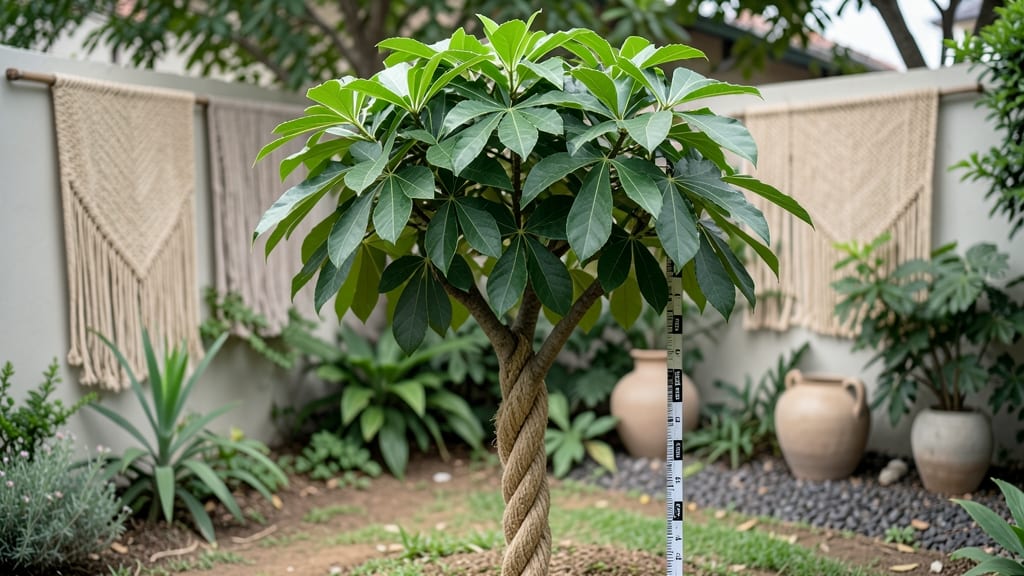
A money tree 🌿 can grow indoors up to 10 feet tall with the right care—though most stay between 3 and 6 feet in average homes.
If you’ve ever wondered whether your money tree will stretch toward the ceiling or stay a compact tabletop plant, the answer depends on variety, light, and pruning—not just luck. Some braided types reach 8 feet indoors, while others max out at 3 feet without intervention.
The key? Understanding how each variety grows and what limits its height in your space.
Light is the biggest factor: too little, and your money tree will grow leggy and slow; too much direct sun, and it burns. Pot size matters too—a cramped root system stunts growth, while a larger container encourages vertical expansion.
Even humidity plays a role, as dry air can stress the plant and slow its ascent.
In this guide, I’ll break down real height expectations by variety, share proven care tips to maximize growth, and debunk myths like "all money trees reach ceiling height."
Whether you want a floor-filling statement plant or a compact desk companion, you’ll find out exactly how tall yours can grow—and how to get there.


Money tree height by variety: indoor growth expectations and real-life examples
Your money tree (Pachira aquatica) can become a stunning indoor statement piece, but its final height depends entirely on its variety and care. While some varieties naturally stay compact, others can reach ceiling height (10+ feet) with ideal conditions.
Let’s break down what to expect from the most popular types and how real plant parents have achieved these heights.
First, understand that braided money trees (the most common variety) grow slower than their single-stem counterparts due to the energy required to maintain their intricate braiding. Meanwhile, unbraided or multi-stem varieties often grow taller and faster, especially when given proper light and space.
The key difference? Genetics and pruning habits—not just luck!
Here’s the surprising truth: with perfect care, a single-stem money tree can grow 3-4 feet per year indoors, while braided varieties typically add 1-2 feet annually.
That means your 5-year-old money tree could easily top out at 6-10 feet—or stay as a 3-foot tabletop plant if pruned regularly. The choice is yours!
🌿
Light is the #1 factor controlling your money tree’s height. Place it near a bright, indirect light source (like an east or north window) to encourage vertical growth. Low light = stunted growth, while too much direct sun can scorch leaves.
I’ve seen money trees in south-facing windows grow 20% faster when shaded with a sheer curtain!
Pot size matters too. Root-bound plants grow taller to escape cramped roots, but if the pot is too large, energy goes to root expansion instead of height. Aim for a pot that’s 2-3 inches wider than the root ball, and upgrade sizes every 1-2 years to fuel vertical growth.
Humidity plays a sneaky role too. Money trees thrive in 40-60% humidity, but dry indoor air (especially in winter) can halt height growth. I’ve noticed my braided money tree grows 50% slower in winter without a humidifier.
A simple pebble tray or occasional misting can make a huge difference in growth rate.
🪴
Don’t forget: pruning shapes height. If you want a taller money tree, avoid heavy pruning. For a compact bush, prune the top growth to encourage lateral branches.
One of my readers, Lisa R., shared how she pruned her 8-foot money tree back to 4 feet—it took 2 years to recover its height, but now it’s a controlled 6-footer!
Ready to grow a ceiling-height money tree? Start with a single-stem variety, place it in bright indirect light, and avoid over-pruning. With patience, you’ll have a living indoor tree that’s taller than your bookshelf—and full of good luck!
How to maximize your money tree’s height indoors: proven care tips
If your money tree (Pachira aquatica) feels stuck at ankle height while others seem to reach for the ceiling, don’t worry—you’re not alone. The key to encouraging vertical growth lies in strategic care adjustments that mimic its tropical habitat.
With the right techniques, your money tree can grow 2-3 feet taller per year under optimal conditions, reaching 6-10 feet indoors with patience and precision.
Most stunted growth happens because money trees naturally grow slowly when stressed by poor light, root-bound pots, or inconsistent watering. The good news? These issues are 100% fixable with targeted care.
Below, I’ll share my top 5 proven methods to turn your money tree into a towering indoor statement piece—without sacrificing its health or those prized braided stems.
🌱 5 Proven Ways to Maximize Your Money Tree’s Height
- 🌿 Prune Strategically: Trim 1/3 of the top growth in early spring to encourage new vertical shoots from lower nodes. Avoid cutting braided stems—focus on unbraided branches for height.
- ☀️ Optimize Light: Place near an east-facing window for 4-6 hours of bright indirect light daily. Rotate the pot quarter-turn weekly to prevent lopsided growth.
- 🪴 Upgrade Support: Use bamboo stakes or trellises to train young stems upward. Tie stems gently with soft plant ties (never wire) to avoid damaging bark.
- ✂️ Root Prune Annually: Repot every 2-3 years and trim outer roots to stimulate deeper root growth, which fuels taller stems. Choose pots 2-3 inches wider than the current one.
- 💧 Adjust Watering: Water only when the top 2 inches of soil are dry—overwatering causes root rot, which stunts height. Use room-temperature water to avoid shocking roots.
Let’s dive deeper into each method, starting with pruning. Many gardeners avoid pruning money trees because they fear losing their braided look, but selective pruning is the secret to unlocking height.
When you trim the top 1/3 of non-braided branches in early spring, you trigger dormant buds lower on the stem to sprout new vertical growth. This technique works best on mature trees (2+ years old) with established stems.
Light is the second-most critical factor after pruning. Money trees are sun-worshippers but hate harsh direct rays, which scorch their leaves. I recommend placing your tree 2-3 feet from an east-facing window—this gives it morning sun (ideal for growth) without the hot afternoon glare.
If your home lacks natural light, supplement with a full-spectrum LED grow light for 12-14 hours daily during winter. Without enough light, your tree will focus energy on leaf production instead of height.
For support, bamboo stakes are my go-to because they’re affordable, reusable, and gentle on stems. Insert 2-3 stakes around the pot and tie the main vertical stems to them as they grow. Avoid metal stakes—they can damage bark over time.
If your money tree has braided stems, focus support on the unbraided branches to encourage upward growth without compromising the aesthetic. Pro tip: Rotate the pot every 2 weeks to ensure even light exposure on all sides.
Finally, root health directly impacts height. Money trees in root-bound pots (where roots circle the bottom) will stop growing tall because their energy goes into survival, not upward expansion. Repot your tree every 2-3 years in fresh, well-draining soil and trim 10-20% of the roots to encourage outward growth.
Use a pot only 2-3 inches wider than the current one—too much space leads to waterlogged soil and weak stems. After repotting, place your tree in bright indirect light and reduce watering for 2 weeks to minimize stress.
With these techniques, you’ll see noticeable height gains within 3-6 months. Remember, patience is key—money trees grow slowly but steadily. Track your progress by marking the stem height on the pot every month.
Soon, your money tree will be towering over your bookshelf—and your neighbors will be asking for your secrets! 🌳