
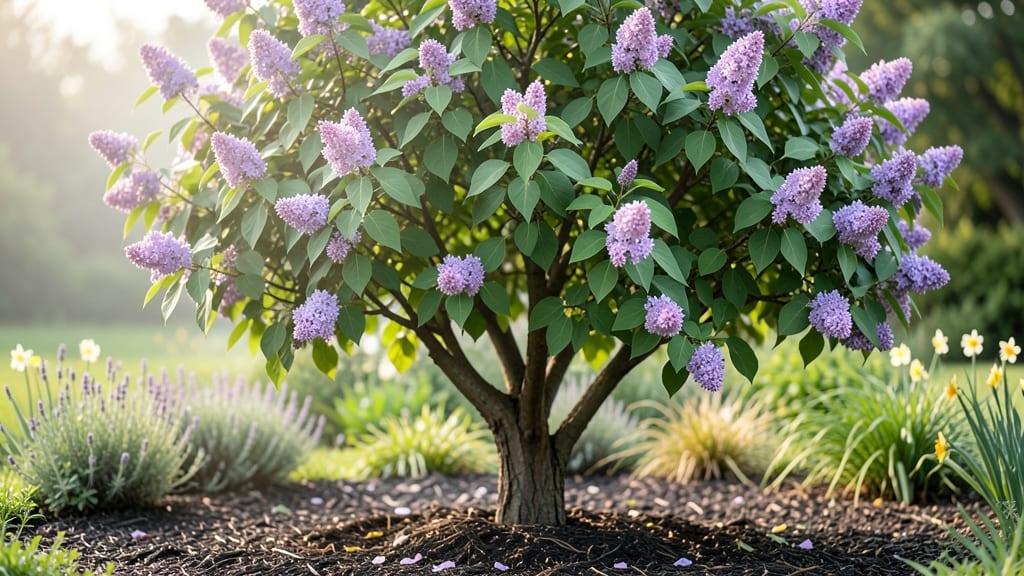
How Tall Do Lilac Trees Grow: Exact Heights by Variety and Growth Habits

Trees

How Tall Do Lilac Trees Grow: Exact Heights by Variety and Growth Habits

A lilac tree grows anywhere from 4 feet to towering 15 feet tall, depending on the variety and how you prune it.

Wondering if that fragrant lilac bush in your neighbor’s yard will soon tower over your two-story home? The height of lilac trees varies dramatically by variety—and knowing the exact growth habits can save you from pruning headaches or disappointed expectations.

For example, dwarf varieties like Syringa microphylla stay compact at 4–6 feet, perfect for small yards or containers, while standard types like Syringa vulgaris reach 8–15 feet in full sun.

Below, I break down the height ranges by popular cultivars, growth rates, and pruning tips to keep your 🌸 lilac tree at your ideal height—whether you want a fragrant hedge or a showstopping focal point.

📈 Lilac Tree Growth Timeline
2-3 ft
Year 1
4-6 ft
Year 2
6-8 ft
Year 3
8-15 ft
Mature

Lilac tree height by variety: exact growth ranges for common cultivars

Choosing the right lilac variety isn’t just about fragrance—it’s about space planning. Some lilacs stay compact enough for containers or small yards, while others become towering backyard landmarks.

The difference? Genetics and cultivation. Let’s break down the exact height ranges for popular cultivars so you can pick the perfect fit for your garden.

Lilacs fall into three main height categories: dwarf (under 6 ft), semi-dwarf (6-8 ft), and standard (8-15 ft). Your yard’s size, sunlight, and pruning habits will determine which thrives best.

For example, ‘Katherine Havemeyer’ can reach 12-15 feet, while ‘Palibin’ stays a modest 6-8 feet. Knowing these ranges helps you avoid overcrowding or underwhelming blooms.

Here’s the key: Mature height matters most for spacing, but growth rate affects how quickly you’ll enjoy those fragrant spring blooms. Some varieties grow 2-3 feet per year in ideal conditions, while others take 5+ years to reach their full potential.

Let’s compare the most popular lilac cultivars to help you decide.

🌸

Variety Mature Height Growth Rate (Annual) Space Needs Best For
Syringa vulgaris ‘Katherine Havemeyer’ 12–15 ft 12–24 in 10–12 ft radius Large yards, focal points
Syringa vulgaris ‘Mme. Lemoine’ 8–10 ft 12–18 in 8–10 ft radius Medium yards, hedges
Syringa meyeri ‘Palibin’ 6–8 ft 6–12 in 6–8 ft radius Small yards, containers
Syringa oblata ‘Charles Joly’ 10–12 ft 12–18 in 10 ft radius Large gardens, privacy screens
Syringa microphylla ‘Superba’ 4–6 ft 4–8 in 4–5 ft radius Containers, patios, small spaces
Syringa patula ‘Miss Kim’ 3–5 ft 3–6 in

How fast do lilac trees grow? Growth rates and pruning tips by height class

Lilacs are among the fastest-growing shrubs in the Lamiaceae family, but their annual growth rates depend entirely on the variety you choose. A standard lilac like 'Katherine Havemeyer' can shoot up 12-24 inches per year, while dwarf varieties like 'Miss Kim' grow just 6-12 inches annually.

Understanding these differences helps you plan your garden layout and pruning schedule to keep your lilac looking its best without overpowering your space.

One common mistake gardeners make is assuming all lilacs grow at the same pace. In reality, climate, soil quality, and sunlight exposure can double or halve these growth rates.

For example, a lilac in Zone 5 with poor drainage might grow only 3-6 inches per year, while the same variety in Zone 7 with rich, well-draining soil could reach 3 feet in a single season.

This is why knowing your specific variety’s growth habits is critical before planting.

  1. 1 Dwarf Lilacs (4-6 ft mature): Grow 6-12 inches per year—ideal for containers or small yards. Varieties like 'Miss Kim' or 'Little Lila' reach maturity in 3-5 years.
  2. 2 Semi-Dwarf Lilacs (6-8 ft mature): Add 12-18 inches annually. These, like 'Bloomerang,' mature in 4-6 years and are perfect for medium-sized gardens.
  3. 3 Standard Lilacs (8-15 ft mature): Can grow 24-36 inches per year in ideal conditions. Varieties like 'Katherine Havemeyer' may reach full height in just 5-7 years.
  4. 4 Pruning Window: Always trim right after flowering (late May-June) to shape your lilac without cutting off next year’s buds, which form in summer.
  5. 5 Signs of Overgrowth: Look for bare stems at the base or leggy branches—these mean it’s time for a rejuvenation prune to restore vigor.

Pruning isn’t just about controlling height—it’s also about encouraging bushier growth and longer-lasting blooms. If you notice your lilac’s branches becoming woody and sparse, it’s likely due to over-pruning in previous years or lack of sunlight.

The key is to prune selectively: remove only 1/3 of the oldest stems at a time to avoid shocking the plant. For standard lilacs, this might mean cutting back 3-5 main branches per year, while dwarf varieties need minimal pruning—just a light trim to shape.

One of my favorite tips for managing lilac growth is to mulch heavily around the base in early spring. A 3-inch layer of organic mulch helps retain moisture, regulates soil temperature, and discourages weeds—all of which contribute to healthier, faster growth.

Plus, mulch breaks down slowly, providing a steady supply of nutrients over time. Just be sure to keep the mulch 6 inches away from the trunk to prevent rot.

If your lilac seems stunted or struggling, check for these common issues: poor soil drainage, competing roots from nearby plants, or nutrient deficiencies. A simple soil test can reveal if your lilac needs phosphorus for blooms or potassium for root strength.

In most cases, a balanced 10-10-10 fertilizer applied in early spring will give your lilac the boost it needs to grow at its expected rate.

Remember, lilacs are low-maintenance once established, but their first few years are critical for setting the stage for future growth.

With the right variety, proper pruning, and a little TLC, your lilac will reward you with years of fragrant blooms—whether it’s a compact 4-foot dwarf or a towering 12-foot standard. 🌸

★★★★★4.7(6 reviews)
Categories Trees