
How To
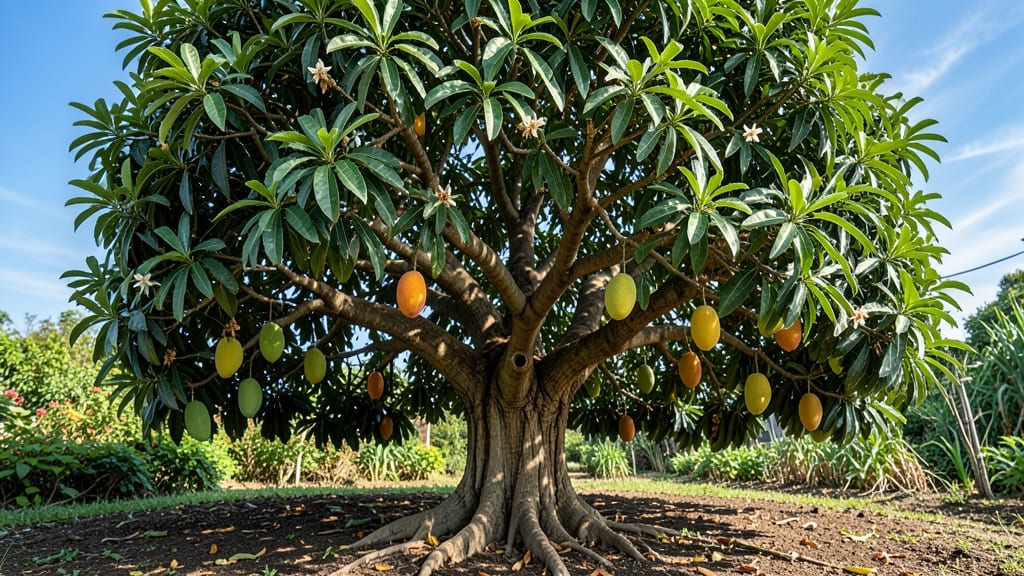
A mango tree can grow up to 100 feet tall in ideal conditions—imagine that towering over your backyard like a tropical skyscraper! 🥭
Dreaming of tropical shade and sweet rewards? Mango trees can reach staggering heights—some towering over 100 feet—but their growth depends on variety, climate, and care.
If you're wondering whether a dwarf variety fits your patio or a standard tree needs an acre, this guide breaks down the sky-high limits and how to nurture your own jungle giant—whether you want a compact shade tree or a full-sized fruit powerhouse.
You’ll learn how to control height through pruning, soil, and sunlight, plus the key factors that turn a sapling into a towering tropical legend.


Mango tree height by variety: from dwarf to giant varieties
Choosing the right mango variety can mean the difference between a 15-foot patio tree and a 100-foot jungle giant. If you're dreaming of tropical shade but lack the space for a skyscraper-sized tree, you'll love the dwarf varieties that stay compact.
For large estates or orchards, the standard varieties deliver maximum fruit production with their towering heights. Let's explore the height spectrum of popular mango trees to help you pick the perfect fit for your space.
Mango trees grow at different rates depending on their genetics. Some varieties like 'Irwin' grow just 2-3 feet per year in ideal conditions, while others like 'Keitt' can shoot up 4-6 feet annually when given plenty of sunlight and water.
Understanding these growth patterns helps you plan for future pruning and space management. Whether you're a city gardener with a container-grown mango or a rural farmer with acres to spare, knowing your tree's potential height is key to successful cultivation.
| Variety | Mature Height | Growth Rate | Best For | Fruit Size |
|---|---|---|---|---|
| 'Irwin' | 15-20 ft | 2-3 ft/year | Containers, small yards | Medium (12-16 oz) |
| 'Cogshall' | 20-25 ft | 3-4 ft/year | Urban gardens, patios | Large (20-24 oz) |
| 'Julie' | 25-30 ft | 3-5 ft/year | Medium yards, orchards | Medium (14-18 oz) |
| 'Keitt' | 60-80 ft | 4-6 ft/year | Large estates, commercial orchards | Large (24-30 oz) |
| 'Haden' | 70-90 ft | 5-7 ft/year | Tropical climates, large properties | Very Large (30-36 oz) |
| 'Kent' | 80-100+ ft | 6-8 ft/year | Commercial orchards, rural areas | Very Large (32-40 oz) |
If you're working with limited space, the 'Irwin' and 'Cogshall' varieties are excellent choices. These dwarf mango trees stay under 25 feet tall and can even thrive in large containers with proper care.
Their slower growth rates also make them easier to manage for urban gardeners who want to enjoy fresh mangoes without sacrificing their backyard for a jungle. Just remember, even dwarf varieties need regular pruning to maintain their size and encourage fruiting.
For those with ample yard space, varieties like 'Haden' and 'Kent' offer the ultimate tropical experience. These giant mango trees can grow over 100 feet tall and produce massive, sweet fruits that weigh over 3 pounds each.
If you're planting one of these varieties, consider its future canopy size when choosing a location—these trees need plenty of room to spread their branches and avoid shading out other plants.
One surprising fact about mango tree heights is how pruning impacts growth. While some gardeners assume pruning will stunt a tree's height, the opposite is often true. Regular pruning actually encourages stronger, more compact growth by directing energy toward fruit production rather than vertical expansion.
For tall varieties, strategic pruning can reduce height by 30-50% while maintaining a healthy tree structure. This technique is especially useful for urban homesteaders who want to grow large mangoes without sacrificing their property's aesthetics.
Climate plays a huge role in determining how tall your mango tree will grow. In tropical regions with year-round warmth, mango trees grow faster and taller
Climate and care factors that affect mango tree height
Your mango tree's height potential isn't just about genetics—it's heavily influenced by climate conditions and your care routine. In tropical zones (USDA 10-11), trees grow aggressively, while subtropical areas (USDA 9) may stunt growth without protection.
Even the soil composition plays a role: compacted or waterlogged soil restricts root expansion, limiting vertical growth.
Sunlight exposure is another critical factor. Mango trees crave 6+ hours of direct sun daily, but too much intense heat without shade can stress the tree, slowing its upward growth.
In urban environments, pollution and limited airflow might also reduce growth rates compared to rural orchards where trees can stretch toward the sky uninhibited.
Key Factors Affecting Mango Tree Height
- 🌡️ Climate: Tropical zones (10-11) enable 100+ ft growth; subtropical (9) may cap at 60-80 ft
- ☀️ Sunlight: 6+ hours daily fuels rapid growth; insufficient light stunts height
- 💧 Water/Soil: Well-draining, nutrient-rich soil supports 2-3 ft annual growth; poor soil slows expansion
- ✂️ Pruning: Regular pruning can reduce height by 30-50% while shaping canopy
Temperature swings also impact growth patterns. Mango trees thrive in consistent warmth (70-90°F), but sudden cold snaps—even below 50°F—can shock the tree, halting vertical growth.
In cooler subtropical zones, trees may grow more slowly, reaching 60-80 feet instead of the 100+ feet seen in tropical climates like Florida or Hawaii.
Wind exposure is another often-overlooked factor. Strong, consistent winds can physically stress a mango tree, causing it to grow lean or stunted as it bends away from the prevailing direction. In coastal areas, this can reduce height by up to 20% compared to sheltered inland locations.
If you're planting near the beach, consider a windbreak or choose a dwarf variety like 'Cogshall' to avoid disappointment.
Your soil preparation and fertilization strategy directly influence how tall your mango tree becomes. Trees planted in sandy, well-draining soil with regular potassium-rich fertilizer (like 8-3-9 NPK) can grow 2-3 feet per year in ideal conditions.
Neglect these needs, and growth may slow to just 1 foot annually, drastically affecting mature height.
Pruning techniques offer another way to control height. Structural pruning in early spring—removing 1/3 of the canopy—can reduce a tree's height by 30-50% while improving fruit production. For urban gardeners, regular pruning every 6 months is key to keeping trees manageable, even in small yards.
Just avoid heavy pruning in late summer, as new growth won't harden before winter.
Finally, consider your planting location. Rural orchards provide unrestricted growth, while urban containers limit roots, often capping height at 15-25 feet even for standard varieties.
If space is tight, choose a dwarf grafted variety on a semidwarf rootstock—these combinations can keep trees under 20 feet while still producing abundant fruit.
The right balance of care and climate can turn your mango tree from a 100-foot giant into a manageable shade tree—or anything in between.