
How To
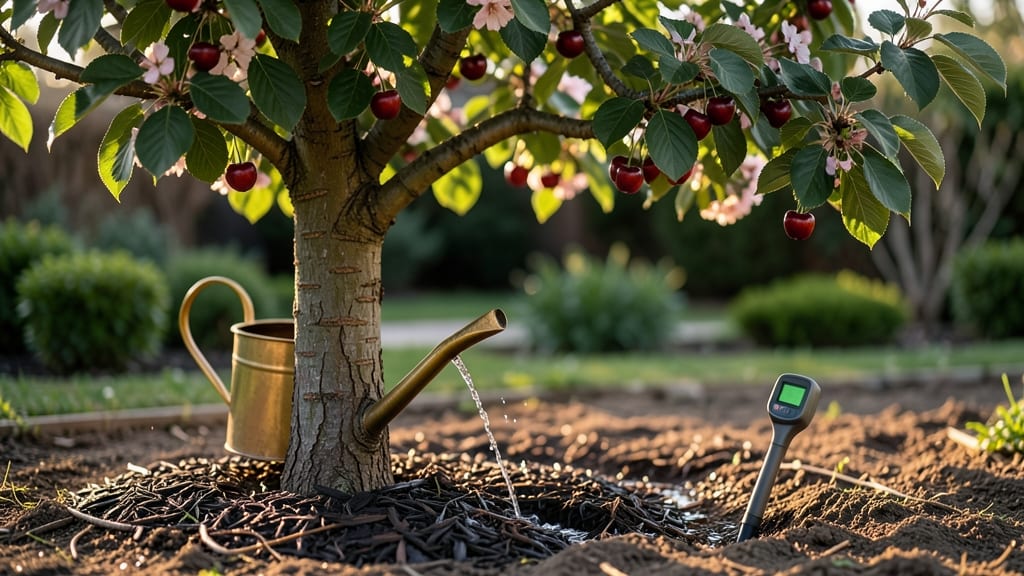
A cherry tree 🍒 needs about 1-2 inches of water per week during its first year, then adjusts to deeper, less frequent soaks as it matures—think 10-20 gallons every 10-14 days in summer.
Picture this: your 🍒 cherry tree wilts midday despite your best efforts, or its fruit stays tiny and tart. The fix isn’t more water—it’s smart watering. Too much drowns roots; too little stunts growth.
Below, I break down the exact schedule by season, soil type, and tree age so you never guess again.
Spring is all about establishing roots—water deeply every 5-7 days until leaves fill in. Summer demands bi-weekly deep soaks (morning is best), while fall tapers off as the tree preps for dormancy. Winter? A monthly check for soggy soil is all it needs.
Ready to master the balance? You’ll learn how to read your tree’s thirst cues, tweak for clay vs. sandy soil, and avoid the two biggest watering mistakes—overhead sprinklers and surface-level drips—that waste H₂O and invite disease.
Monthly water requirements for cherry trees by season (drought vs. rainy conditions)
Your cherry tree thrives on consistency—too little water stunts growth, while too much causes root rot. The key is understanding its monthly water needs, which shift dramatically between spring planting, summer fruiting, and winter dormancy.
A young tree (under 3 years) needs 10-15 gallons per week, while mature trees (5+ years) require 20-40 gallons during peak seasons. Climate matters too: in drought conditions, you’ll need to double your watering, while rainy seasons can cut needs in half.
First, check your soil moisture before watering—stick your finger 2-3 inches deep. If it feels dry, it’s time to water. For newly planted cherry trees, focus on soaking the root zone deeply to encourage root growth.
Avoid shallow watering, which leads to weak roots and fruit drop. In summer heat, water in the early morning to reduce evaporation and fungal risks.
Here’s the breakdown you need:
Spring planting (April-May) is critical—your cherry tree’s roots need to establish quickly. Water deeply 2-3 times per week for the first month, then taper to weekly deep soaks. Look for yellowing leaves or crispy edges as signs of underwatering. Overwatering shows as mushy stems or fungal spots on leaves. Mulch with 3 inches of wood chips to retain moisture and regulate soil temperature.
During summer fruiting (June-August), your cherry tree’s water needs peak. Aim for 1-2 inches of water per week, split between deep waterings. If your tree drops fruit prematurely, it’s thirsty—water immediately and check for pests like aphids, which also cause stress.
In drought conditions, increase watering to every 2-3 days and monitor soil moisture closely. Avoid wetting the foliage to prevent fungal diseases like powdery mildew.
As fall approaches (September-October), reduce watering gradually to prepare your tree for dormancy. Focus on root zone hydration rather than leaf watering. Overwatering now can lead to root rot before winter.
Prune dead or diseased branches and apply a 2-inch layer of mulch to insulate roots. Watch for early leaf drop, which may signal overwatering or nutrient deficiency.
Winter care (November-March) is minimal—your cherry tree enters dormancy and needs very little water. A monthly deep watering (5 gallons) keeps roots from drying out completely. In drought-prone areas, increase to bi-weekly waterings if soil remains bone-dry.
Avoid watering if the ground is frozen or snow-covered. Signs of winter stress include cracked bark or wilted buds in early spring.
Pro tip: Use a moisture meter or the finger test to avoid guesswork. Stick your finger 3 inches deep—if it feels dry, water thoroughly. For container-grown cherry trees, water every 3-5 days in summer, as pots dry out faster.
Adjust your schedule based on rainfall: skip watering if you’ve had
How soil type affects cherry tree watering: sandy vs. clay vs. loamy soil guide
Your cherry tree’s watering needs aren’t one-size-fits-all—they depend entirely on your soil type. Sandy soil drains like a sieve, while clay acts like a sponge, and loamy soil strikes the perfect balance. Misjudging your soil can mean root rot or wilting leaves, even if you’re watering consistently.
Let’s break down how each soil type demands a different approach to keep your 🍒 cherry tree thriving.
Sandy soil is the trickiest because it dries out in hours, forcing you to water twice weekly in summer. Clay soil, on the other hand, holds moisture so tightly that roots suffocate if overwatered—just once every 10 days may be enough.
Loamy soil? The gold standard, needing water every 5-7 days with minimal risk of extremes. Understanding your soil’s behavior is the key to avoiding both underwatering and overwatering.
Soil Type Watering Guide for Cherry Trees
- ✅ Pros: Drains fast, prevents root rot
- ✅ Cons: Dries out quickly, needs frequent watering
- ✅ Pros: Retains moisture, reduces frequent watering
- ✅ Cons: Suffocates roots, risks overwatering
- ✅ Pros: Balanced drainage, ideal for cherry trees
- ✅ Cons: Rare in pure form, often needs amendments
Before adjusting your watering schedule, test your soil’s drainage with this quick DIY checklist: Fill a jar halfway with soil, add water, and time how long it takes to drain. If water disappears in under 30 minutes, you’ve got sandy soil.
If it sits for hours or pools on top, it’s clay. For loamy soil, water drains in 2-4 hours. Amend sandy soil with compost or peat moss to retain moisture, while clay benefits from perlite or coarse sand to improve airflow.
Newly planted cherry trees in sandy soil need extra attention—water deeply every other day for the first month to help roots establish. In clay soil, avoid watering until the top 2 inches are dry to prevent soggy roots.
For loamy soil, a morning watering every 5-7 days keeps roots hydrated without waste. Mulching with 3 inches of organic matter (like wood chips) helps all soil types retain moisture and regulate temperature.
Watch for warning signs: Yellowing leaves signal overwatering (common in clay), while crispy edges mean underwatering (sandy soil’s telltale sign). Adjust your schedule based on these cues—your cherry tree’s fruit production and leaf health will thank you.
With the right soil amendments and watering routine, you’ll avoid both extremes and enjoy a bountiful harvest every season.
Pro tip: Use a moisture meter for precise readings, especially in clay-heavy soil. For sandy soil, consider drip irrigation to deliver water slowly and evenly. The goal? Mimic nature’s gentle rain—consistent, deep, and tailored to your soil’s unique quirks.