
Pruning
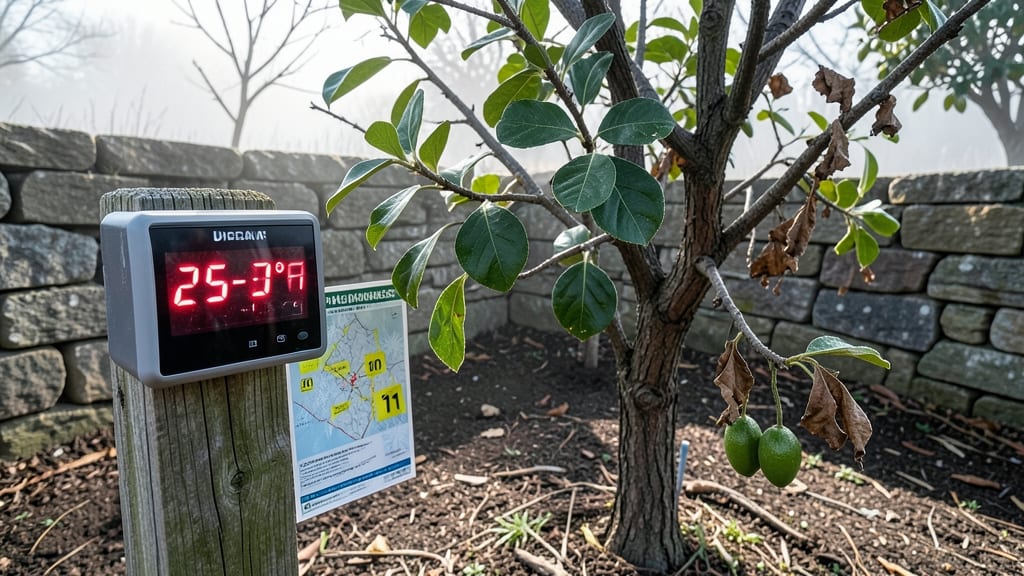
Guava trees show best cold hardiness in USDA Zones 9-11, enduring short cold snaps to 28°F (-2°C). Young trees or sudden dips below 25°F (-4°C) face severe damage, but mature specimens often bounce back with proper winter protection like mulching and windbreaks.
Understanding a guava tree's cold tolerance goes beyond just zone numbers—it's about how quickly frost damages different parts of the plant. 🌱 The leaves are the first to suffer, turning black within hours of temperatures dropping below 30°F (-1°C), while the wood can survive slightly colder bursts.
What's fascinating is how Mexican guava varieties tend to handle brief cold snaps better than their Brazilian counterparts, which need even more protection. The key to survival lies in preparing the tree's roots and trunk before winter hits, not just reacting after damage appears.
For gardeners in marginal zones, container growing offers a clever workaround—you can move potted guavas to sheltered spots during cold snaps. I've seen this work wonders in Zone 8 gardens where winter temperatures occasionally flirt with 20°F (-7°C).
The secret isn't just the container itself, but creating a microclimate around it with straw mulch and frost cloths. Even established trees benefit from a 4-6 inch mulch ring that insulates roots while allowing moisture to penetrate.
💡 In This Article
- USDA Zone Limits for Guava Tree Survival
- Winter Care Tips to Protect Guava Trees from Cold
USDA Zone limits for guava tree survival
The guava tree's cold tolerance varies dramatically between its native varieties, with Mexican guavas (like the common 'White' or 'Pink' types) generally handling 28-30°F (-2 to -1°C) for short periods, while Brazilian varieties often struggle below 32°F (0°C).
This difference comes down to their evolutionary adaptations—Mexican guavas developed in regions with occasional cold fronts, while Brazilian types evolved in more consistently warm climates. The science behind this lies in their cellular structure: frost-sensitive varieties have larger water-filled vacuoles that rupture more easily when ice crystals form.
In USDA Zone 9, where winters rarely drop below 20°F (-7°C), guava trees can thrive with minimal protection. However, Zone 8 gardeners face a different challenge—temperatures can plunge to 10°F (-12°C) or lower.
Here's where the 30-60 minute rule comes into play: guava trees can survive brief exposures to 25°F (-4°C) if the cold snap lasts less than an hour, but prolonged exposure leads to irreversible damage.
The bark is surprisingly resilient, often surviving 20°F (-7°C) if the roots stay insulated, while the canopy suffers first.
What most people don't realize is how wind exposure amplifies cold damage. A calm night at 28°F (-2°C) might cause only leaf burn, but the same temperature with 15 mph winds can freeze the entire plant. This is why windbreaks become essential in marginal zones.
The tree's dormancy period also matters—guavas don't enter true dormancy like fruit trees, so they remain metabolically active and vulnerable to cold stress throughout winter. This biological quirk explains why even established trees need protection in Zone 8.
For precise zone mapping, consider these temperature thresholds by variety:
- Mexican guavas: Can handle 28-30°F (-2 to -1°C) for short durations
- Brazilian guavas: Typically require 32°F (0°C) minimum
- Hybrid varieties: Often fall between 28-32°F (-2 to 0°C) depending on parentage
Visual damage signs appear in stages: first the leaves blacken (within hours), then buds and twigs die back (within 24 hours), and finally the bark may crack if the freeze penetrates deeply.
Interestingly, the roots often survive colder temperatures than the above-ground parts, which is why root insulation becomes critical during winter preparation. This root resilience explains why some trees appear dead after a freeze but regrow from the base in spring.
Here's a practical comparison: a 28°F (-2°C) night in Zone 9 might cause only cosmetic leaf damage, while the same temperature in Zone 8 with wind could kill 50% of the canopy.
The difference comes down to microclimate factors—Zone 9's milder winters allow for better recovery between cold snaps, while Zone 8's harsher conditions create cumulative stress. 🌡️