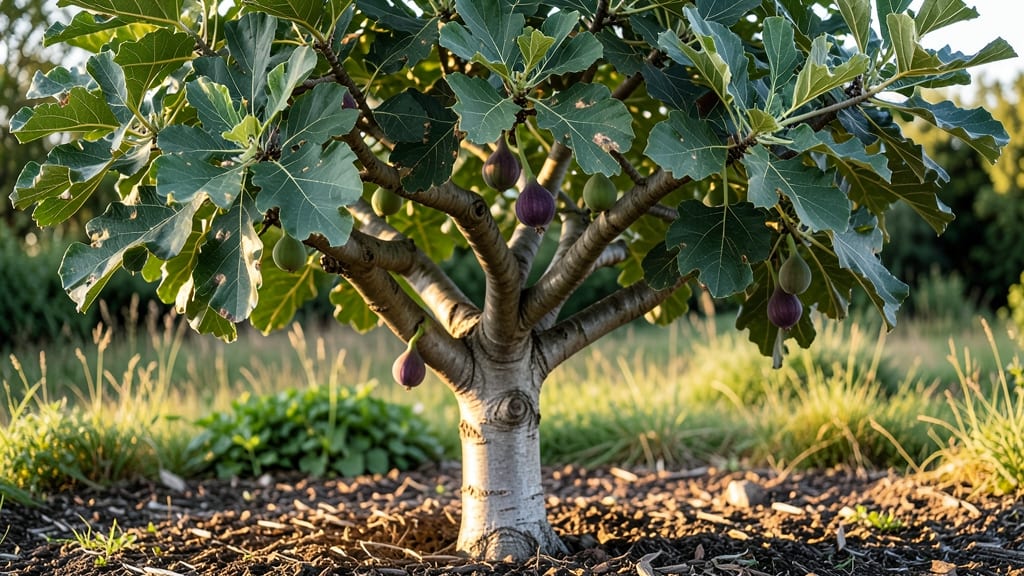
Understanding a fig tree’s mature height and width is the first step to placing it right in your garden or patio—because some varieties grow like shrubs while others reach for the sky.
If you're planning to grow a fig tree in your garden, knowing its mature height and width is crucial for proper placement and long-term care—but varieties vary dramatically. A Chicago Hardy might fit snugly in a large container, while a Desert King could stretch taller than your garage door.
This guide breaks down the exact dimensions of the most popular fig varieties, from dwarf types perfect for small spaces to sprawling giants that need room to breathe.
We’ll also cover how to control growth through pruning and training so you can shape your tree to your space—not the other way around.
Whether you’re designing a cozy patio corner or a sprawling orchard, you’ll learn how to space fig trees for optimal airflow, sunlight, and fruit production—plus tips for container gardening if you’re working with limited real estate.
Fig Tree Height Range
15 ftto30 ft
0 ft
3 ft
6 ft
9 ft
12 ft
🌱
Tall Tree
Fig tree height and width by variety: small vs. giant mature sizes
Choosing the right fig tree variety depends entirely on your space—some varieties stay compact enough for patio containers, while others grow into towering landscape staples.
The mature height and spread of a fig tree can differ by 20+ feet between varieties, so let's break down the spectrum from dwarf figs to giant sprawlers.
Understanding these dimensions helps you avoid overcrowding or underutilizing space. For example, a Chicago Hardy fig might fit perfectly in your backyard corner, while a Desert King could dominate your entire garden layout. Let’s explore the exact measurements and growth habits of 10 popular varieties.
Pro Tip: Always account for root spread, which can be 2-3x wider than the tree's canopy. Most figs develop a wide, shallow root system, so plan accordingly for mulching and water retention.
| Variety |
Mature Height (ft) |
Mature Width (ft) |
Growth Habit |
Best For |
| Chicago Hardy |
12–15 ft |
10–12 ft |
Upright, dense |
Cold climates, small yards |
| Brown Turkey |
15–20 ft |
12–15 ft |
Spreading, vigorous |
Large gardens, fruit production |
| Desert King |
20–30 ft |
15–25 ft |
Massive, sprawling |
Rural properties, shade trees |
| Little Miss Figgy |
6–8 ft |
5–7 ft |
Compact, bushy |
Containers, patios, urban gardens |
| Osborn Prolific |
10–12 ft |
8–10 ft |
Semi-dwarf, upright |
Small yards, fruit trees |
| Celeste |
12–15 ft |
10–12 ft |
Upright, cold-hardy |
Northern gardens, small spaces |
| Violette de Bordeaux |
15–20 ft |
12–15 ft |
Spreading, ornamental |
Landscaping, shade |
| Black Jack |
10–12 ft |
8–10 ft |
Compact, prolific |
Containers, patios, fruit |
How to control fig tree size: pruning and training techniques
Fig trees are fast-growing and can quickly outpace your garden space if left unchecked. Even dwarf varieties need guidance to maintain their compact form, while standard figs can sprawl up to 30 feet tall without proper training.
The key to managing their size lies in seasonal pruning and strategic training methods tailored to your space and variety.
Whether you're dealing with a container-grown fig on your patio or a sprawling tree in your backyard, understanding when and how to prune makes all the difference.
I’ll walk you through the best techniques—from structural pruning for young trees to espalier training for urban gardens—to keep your fig tree in check without sacrificing fruit production.
Step-by-Step Guide to Controlling Fig Tree Height & Width
-
1
Prune in late winter or early spring (before new growth starts) to shape the tree. Remove dead or crossing branches first, then thin out 20-30% of the canopy to improve airflow and sunlight penetration.
-
2
Train dwarf varieties by pruning new shoots to 6-8 inches in their first year to encourage a bushier form. Use a stake or trellis to guide growth if needed.
-
3
Use espalier for urban spaces: Train the tree flat against a wall or fence by pruning side branches to 3-4 main stems. This keeps the tree under 8 feet tall while maximizing fruit production in small areas.
-
4
Limit container growth by root-pruning every 2-3 years (dig up and trim roots) and repotting into a slightly larger container. Choose pots at least 2 feet wide for dwarf varieties to prevent root-bound stress.
-
5
Avoid heavy pruning in summer, as it can stress the tree and reduce fruit production. Instead, do light trimming to remove only overly vigorous shoots that disrupt the tree’s shape.
For container-grown figs, regular pruning is even more critical since root space is limited. I recommend trimming back 1/3 of the canopy annually to prevent the tree from becoming root-bound.
If you notice yellowing leaves or stunted growth, it’s a sign the container is too small—upgrade to a larger pot or consider ground planting.
Remember, fig trees are responsive to pruning and will quickly fill in any gaps you create. The goal isn’t to stunt growth completely but to guide it in a way that fits your garden’s layout.
With the right techniques, even a 30-foot giant can be tamed into a manageable size—whether you’re growing it in a backyard, patio container, or espaliered against a fence. 🌿
Start with light pruning in the first year to assess the tree’s growth habit, then adjust your approach based on how it responds. Patience and consistency are key—your fig tree will thank you with bountiful harvests and a well-managed form. ✂️
★★★★★4.6(5 reviews)