
Blooming
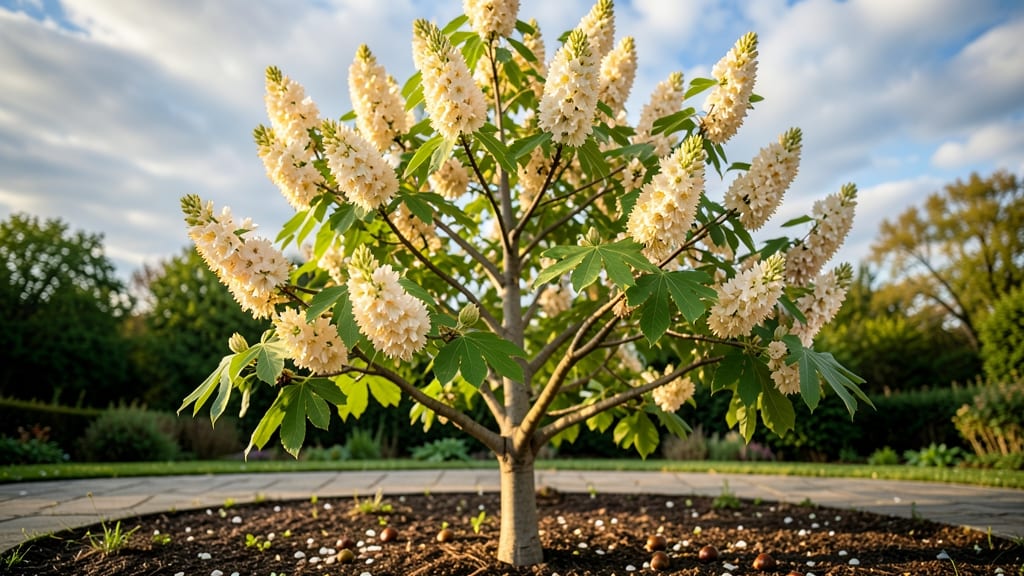
The chestnut tree blossom you’re waiting for each spring signals more than just beauty—it’s the first step toward a bountiful harvest and a thriving, healthy tree 🌳.
Picture this: delicate, candle-like flowers emerging in early spring, often before the leaves even appear. But if your tree skips this show or produces sparse blossoms, you might be missing key care steps that make all the difference.
In this guide, we’ll cover everything from identifying male and female blossoms to pruning techniques that boost flowering, soil needs that encourage abundance, and seasonal care to protect those blossoms from pests and disease.
Whether you’re growing sweet chestnuts for the table or admiring the ornamental display of horse chestnuts, these tips will help you turn a modest spring show into a spectacular one.
How to identify chestnut tree blossoms and their growth stages
Spring transforms your chestnut tree into a stunning display of blossoms, but not all flowers are created equal. Sweet chestnut trees (Castanea spp.) and horse chestnut trees (Aesculus hippocastanum) produce distinct blossoms, each with unique characteristics that signal their growth stage and future fruit potential.
Understanding these differences helps you care for your tree effectively and troubleshoot issues before they escalate.
Chestnut tree blossoms appear before leaves in early spring, typically between March and May, depending on your USDA hardiness zone. The male flowers, called catkins, resemble long, drooping spikes, while female flowers appear as shorter, upright spikes.
Recognizing these differences is key to predicting your tree’s productivity and health.
Sweet chestnut blossoms are often yellowish-green and less showy than horse chestnut flowers, which boast pinkish-white clusters. Horse chestnut trees also produce larger, more ornamental blossoms that attract pollinators like bees and butterflies. If your tree’s flowers are sparse or absent, it could signal nutrient deficiencies, disease, or poor pruning practices.