
Pests and Diseases
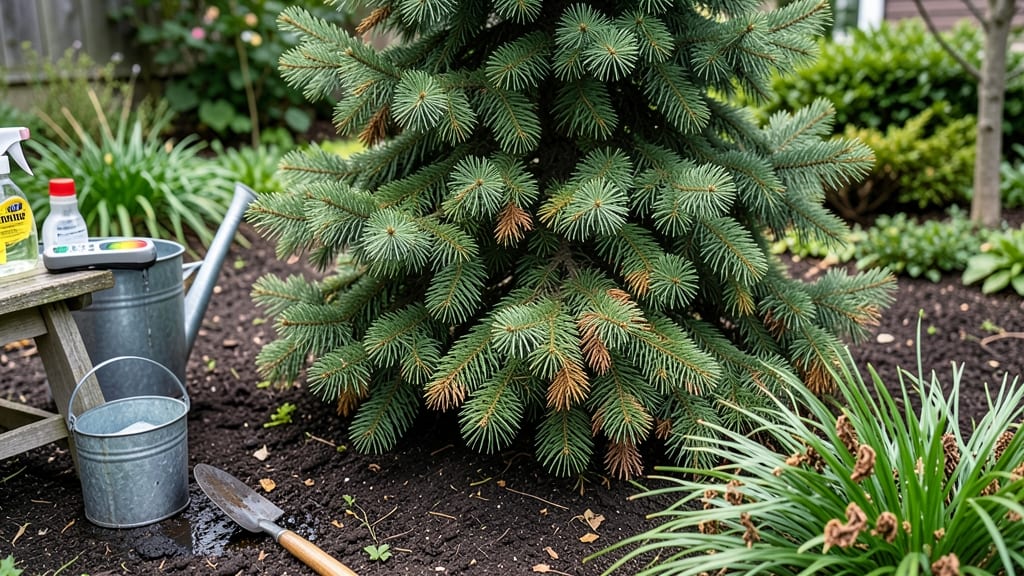
Your Canaan fir tree turning brown isn’t a death sentence—it’s a call for action. 🌲 I’ve nursed back several firs from this exact problem, and the fix starts with understanding whether you’re dealing with needle blight, environmental stress, or something sneaky like spider mites.
The most common culprit? Needle blight, where fungal spores hitch a ride on wet needles and turn them brown from the tips inward. But rule out pests first—check the undersides of branches for tiny webs (spider mites) or sawdust-like frass (bark beetles).
Overwatering or poor drainage can also suffocate roots, causing stress that manifests as browning.
Here’s the game-changer: prune infected branches 6 inches below browning to stop the spread, then apply a copper fungicide spray (like Bonide Copper Fungicide) every 2 weeks until new growth appears. Adjust watering—fir trees hate soggy feet—and mulch to keep roots cool.
With these steps, you’ll see fresh green needles in 4-6 weeks. The key is acting fast before the fungus or pests take over completely. Let’s get your fir back to its lush, dark-green glory.
Root Causes Behind Browning Needles
The Canaan fir (Abies balsamea var. phaneraea) is a stunning evergreen, but when its needles turn brown, it’s usually a cry for help from your tree. Understanding the why behind the browning is the first step to saving it.
Below, we break down the most common culprits—each with a clear scientific explanation and actionable insights to address them.
Canaan firs are hardy, but extreme temperatures can push them past their limits. Heat stress (especially in drought conditions) causes needles to lose moisture, leading to browning and crisping. On the flip side, freeze damage (below 10°F/-12°C) can rupture cell walls, turning needles black or brown.
- Signs to watch for:
- Needles browning from the tip downward (heat stress).
- Needles turning black or mushy (freeze damage).
- Soil pulling away from the trunk (indicating drought stress).
- What to do:
- Water deeply during heatwaves (1–2 inches per week).
- Mulch heavily (3–4 inches of organic mulch) to retain moisture and insulate roots.
- Avoid late-season fertilizing, which can make trees more susceptible to winter damage.
Needles browning can stem from both too little and too much water. Underwatering causes dehydration, while overwatering (or poor drainage) leads to root rot, cutting off nutrient flow.
- How to diagnose:
- Yellowing followed by browning = underwatering.
- Mushy, drooping needles + soggy soil = overwatering/root rot.
- Needles falling off easily = root stress.
- Fix it fast:
- Check soil moisture with your finger—if the top 2 inches are dry, water.
- Improve drainage by amending clay soil with compost or sand.
- Avoid waterlogging—ensure the planting site has slope or raised beds.
Fungal diseases like needle blight (Lophodermium spp.) and root rot (Phytophthora or Armillaria) are common in stressed Canaan firs. Needle blight causes banding (brown stripes) or blotchy browning, while root rot leads to sudden decline with brown, brittle needles.
- Red flags:
- Brown bands or spots on needles (needle blight).
- Needles browning in patches (fungal spread).
- Mushrooms at the base (root rot).
- Treatment steps:
- Prune infected branches (sterilize tools with 70% alcohol).
- Apply fungicide (copper-based or propiconazole) before bud break (spring) and after rain.
- Improve air circulation by thinning dense foliage.
Pests like spider mites (tiny, red/orange) and bark beetles (small holes in bark) weaken trees, making them vulnerable to browning.
- Spider mites:
- Symptoms: Fine webbing, stippled browning (like freckles).
- Fix: Spray with horticultural oil or neem oil (repeat every 5–7 days).
- Bark beetles:
- Symptoms: Sawdust-like frass at the base, sudden needle drop.
- Fix: Remove heavily infested trees (no chemical cure—prevention is key).
Browning can signal nutrient starvation, especially magnesium, nitrogen, or iron.
| Deficiency | Symptoms | Solution |
|---|---|---|
| Magnesium | Yellowing between veins (older needles first) | Apply Epsom salt (1 tbsp/gallon water) or magnesium sulfate. |
| Nitrogen | Overall yellowing + stunted growth | Slow-release fertilizer (10-10-10) in early spring. |
| Iron | Yellowing new growth (chlorosis) | Chelated iron supplement or acidify soil (sulfur). |
Pro Tip: 💡 Test your soil (pH 5.0–6.5 is ideal for firs)—alkaline soil locks out nutrients! Adjust with elemental sulfur (to lower pH) if needed.
Revive Your Canaan Fir Tree Now
Your Canaan fir’s brown needles might feel like a hopeless case, but with the right care, you can nurse it back to health—even if it’s already showing signs of stress. Below, we’ve mapped out targeted fixes based on the most common causes, from fungal infections to environmental neglect.
Each solution includes step-by-step action and prevention tips to keep your tree thriving long-term.
Symptoms: Brown, blighted needles with black or white fungal spots, often starting at the tips.
🔥 Step 1: Prune the Damage
- 👨🍳 Cut out infected branches at least 6–12 inches below the brown needles to remove the source of spores.
Use sterilized pruners (wipe with rubbing alcohol between cuts). - 🗑️ Bag and dispose of pruned branches in the trash (not compost)—fungal spores can survive in yard waste.
🍳 Step 2: Apply Fungicide
- 💡 Best options:
- Copper fungicide (e.g., Bonide Copper Fungicide) – Spray early morning or evening when needles are dry.
Reapply every 7–10 days for 2–3 weeks. - Neem oil (organic choice) – Mix 1 tbsp per quart of water + a drop of dish soap as a spreader-sticker. Spray every 5–7 days until new growth appears. - ⚠️ Avoid: Overwatering after treatment, as moisture encourages fungal spread.
🌡️ Step 3: Improve Airflow & Light
- 🌿 Thin out dense branches to allow sunlight and air to circulate.
- 🌞 Move the tree (if possible) to a spot with at least 6 hours of sunlight daily—shady, damp areas breed fungus.
🎯 Prevention Tips
- 💡 Space trees 6–10 feet apart to reduce humidity buildup.
- ✨ Mulch properly: Keep mulch 3–4 inches deep but 6 inches away from the trunk to prevent rot.
- 🌧️ Water at the base (not overhead) to keep needles dry.
Symptoms: Needles turn straw-colored or reddish-brown, often on the south or west side of the tree.
💧 Step 1: Deep Watering
- 👨🍳 Water slowly at the base of the tree (not the canopy) for 15–20 minutes, 2–3 times per week.
- 🌧️ Use soaker hoses or drip irrigation to avoid wetting needles.
- ⏰ Best time: Early morning (6–9 AM) to reduce evaporation.
🌿 Step 2: Provide Temporary Shade
- 🌳 Use shade cloth (30–50%) on the sun-exposed side for 2–4 weeks while the tree recovers.
- 🪴 Avoid plastic tarps—they trap heat and moisture.
🎯 Prevention Tips
- 💡 Plant Canaan firs in partial shade (4–6 hours of sun) if you live in a hot, dry climate.
- ✨ Group trees with other evergreens to create a microclimate with more stable humidity.
- 🌡️ Monitor soil moisture—stick your finger 3 inches deep; if dry, water immediately.
Symptoms: Needles yellow, then brown, with tiny eggs or webbing on new growth.
🔪 Step 1: Handpick or Blast Off Pests
- 👨🍳 For sawfly larvae: Blast them off with a strong stream of water from a hose.
- 🕷️ For spider mites: Spray with water to dislodge them (they hate humidity).
🍳 Step 2: Use Natural Pesticides
- 💡 Bt (Bacillus thuringiensis) – A bacteria-based spray safe for pets and kids.
Apply every 7–10 days until pests are gone. - 🌿 Insecticidal soap – Mix 1 tbsp per quart of water, spray directly on pests (avoid spraying in direct sun). - 🌡️ Horticultural oil – Apply in early spring to smother overwintering eggs.
🎯 Prevention Tips
- 💡 Install fine mesh netting around young trees to block adult sawflies.
- ✨ Encourage beneficial insects (ladybugs, lacewings) by planting dill, fennel, or marigolds nearby.
- 🌧️ Avoid over-fertilizing with nitrogen—soft new growth attracts pests.
No matter the cause, these basics will help your Canaan fir bounce back:
📊 Nutrient Boost
- 💪 Fertilize in early spring with a slow-release, balanced fertilizer (10-10-10 or 20-20-20).
- 🥗 Avoid high-nitrogen fertilizers (like lawn food) in summer—they stress the tree.
🌿 Mulch & Soil Health
- 🌳 Add 2–3 inches of organic mulch (pine bark or shredded leaves) to retain moisture.
- 🔥 Test soil pH—Canaan firs prefer acidic soil (pH 5.0–6.5). Amend with sulfur or peat moss if needed.
🌧️ Winter Prep (Critical!)
- ❄️ Water deeply before the first frost to prevent winter desiccation (needles drying out).
- 🪴 Wrap the trunk with burlap or tree guard in extreme cold zones (below 10°F).
💡 Pro Tip: If your tree is over 50% brown, it may not recover—but new growth can still sprout** from healthy buds. Stay patient and consistent with care! 🌿✨
Frequently asked questions
Why are my Canaan fir needles browning from the tips inward?
This is likely needle blight, a common fungal issue that thrives in damp conditions. The fungus spreads from infected needles, causing brown patches that expand inward. Check for black or white fungal spots—these confirm the diagnosis. Prune affected branches 6 inches below the browning and apply copper fungicide immediately.
Can I save my Canaan fir if half the needles are already brown?
Yes, but act fast! Healthy buds remain on the tree—focus on pruning dead branches, improving airflow, and treating any fungal/pest issues. With proper care, new growth should appear in 4-6 weeks. If over 70% brown, the tree may not recover, but you can plant a replacement nearby for full coverage.
How often should I water a Canaan fir with brown needles?
Water deeply 2-3 times per week (15-20 minutes per session) during dry spells, but avoid soggy soil. Use a soaker hose at the base—never overhead—to prevent fungal spread. Check moisture by sticking your finger 3 inches deep; if dry, water immediately. Mulch with 3-4 inches of organic material to retain moisture.
What's the difference between heat stress and fungal browning?
Heat stress causes uniform browning from the tip downward on sun-exposed sides, while fungal browning shows irregular patches with black spots. For heat stress: water deeply and provide afternoon shade. For fungus: prune infected areas and apply fungicide. Test both by checking needle undersides—fungus leaves visible spores.
Will my Canaan fir recover if I don't treat it immediately?
Some recovery is possible, but delays let fungi/pests spread faster. Without treatment, browning will worsen, and the tree may lose 20-30% of its needles annually. Act within 2 weeks of noticing symptoms for best results. Even if you miss that window, consistent care can still stimulate new growth over time.