
Planting
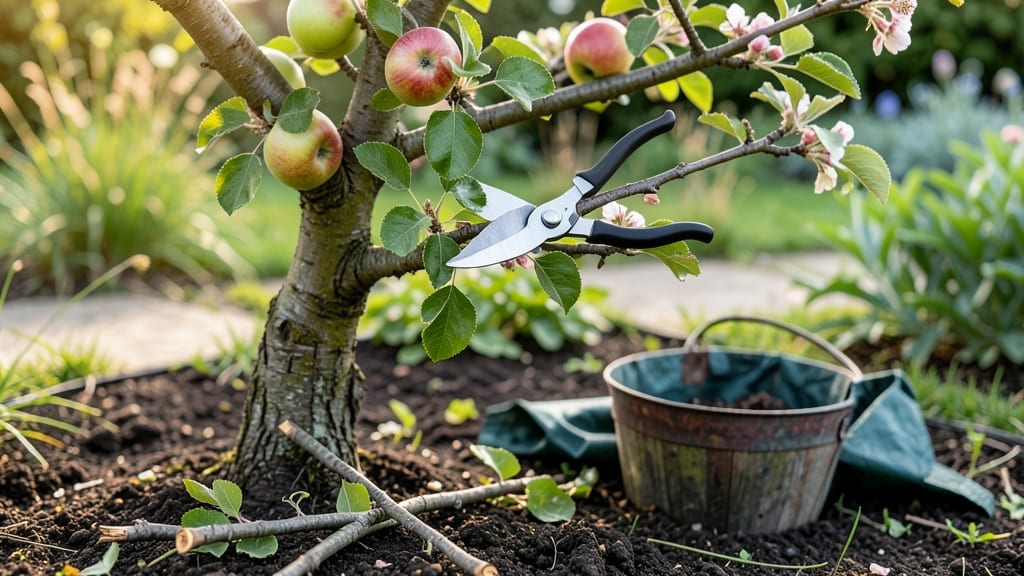
You can prune an apple tree in summer, but only for light shaping and removing water sprouts—never for major cuts. Heavy pruning in summer stresses the tree, increases disease risk, and disrupts fruit production. Always prioritize dead branches and suckers during warm months.
Summer pruning is a delicate balance because apple trees are already busy producing fruit and managing energy reserves. 🍎 When you make large cuts during active growth, you create open wounds that become inviting entry points for fungal infections like silver leaf fungus or bacterial diseases.
The tree's natural defenses are weakened, and sap flow disruption can lead to dieback. Even if you're just shaping the canopy, timing matters—early summer is safer than late summer when the tree is preparing for dormancy.
For safe summer pruning, focus on water sprouts (fast-growing vertical shoots) and dead or diseased branches—these are the only cuts that won't shock the tree.
Use sharp, sterilized pruners to make clean cuts just outside the branch collar, and avoid removing more than 25% of the canopy in one session. After pruning, water deeply and apply a 2-3 inch layer of mulch to protect roots and retain moisture.
Here's why this matters: apple trees produce auxin hormones that drive growth, and summer cuts can disrupt this process. A tree pruned correctly in summer will still enter dormancy well-prepared, while heavy summer pruning can delay or reduce next year's harvest.
Always err on the side of caution—when in doubt, wait until late winter or early spring.
💡 In This Article
- Summer Pruning Risks for Apple Trees: Disease and Growth Impact
- Safe Summer Apple Tree Pruning Techniques for Beginners
Summer pruning risks for apple trees: disease and growth impact
Summer pruning creates open wounds that act like open doors for pests and pathogens. Apple trees produce resin to seal cuts, but in warm, humid conditions, this process slows dramatically.
Fungal spores like Venturia inaequalis (apple scab) or Botryosphaeria (dieback) can infect these wounds within 24-48 hours, especially if pruned after rain or in late summer when fungal pressure peaks.
The tree's natural defenses are already taxed by fruit production, making it more vulnerable to infections that could spread systemically.
Timing within summer matters too. Early summer (June) is safer because the tree has recovered some energy from spring growth, but even then, avoid removing more than 10-15% of the canopy.
Late summer (August-September) is riskier because the tree is preparing for dormancy—new growth is more susceptible to frost damage, and wounds heal poorly. The phloem (food-conducting tissue) becomes less active, reducing the tree's ability to transport nutrients to healing cuts, which can lead to dieback.
Growth hormones play a critical role. Apple trees produce auxin (a growth hormone) that promotes elongation of shoots and roots. When you make summer cuts, you disrupt this hormonal balance, potentially causing epinasty (downward leaf curling) or stunted growth.
The tree may redirect energy to heal wounds instead of developing next year's fruit buds, reducing your harvest by 20-30% if pruned heavily. This is why professional arborists recommend waiting for dormancy when major structural pruning is needed.
Another hidden risk is sap flow disruption. Summer pruning can interfere with the tree's ability to transport water and nutrients, especially if cuts are made on the south or west sides (where sunlight intensifies stress).
The tree may develop sunburned bark or cankers (dead areas) where large branches were removed. Even small cuts can trigger excessive bleeding sap, which weakens the tree over time. 🌿
Consider this comparison: A 5-year-old apple tree with a 12-inch trunk can handle a 6-inch water sprout removal in summer, but removing a 3-foot branch would be catastrophic. The rule of thumb is: if the branch is thicker than your thumb, wait for winter.
For every inch of branch diameter removed, the tree loses 1-2 square feet of leaf surface area, directly impacting its ability to photosynthesize and produce fruit.