
Pruning
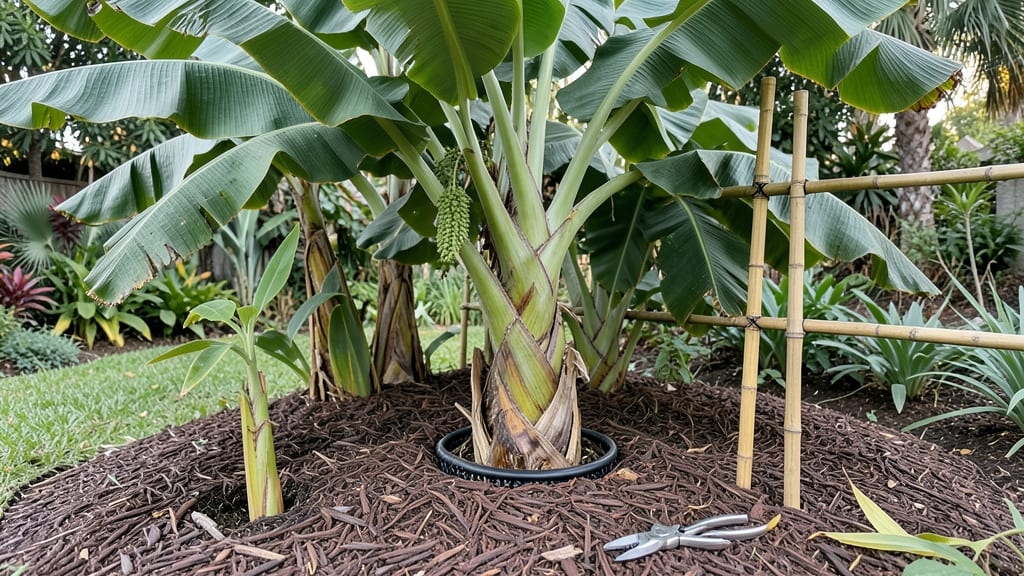
A banana tree privacy screen grows faster than any hedge I’ve ever tried. 🌿 Within three years, those towering, broad-leaved stalks will block nosy neighbors and traffic noise—no fence or lattice required.
The key is choosing the right variety (like cold-hardy Musa basjoo) and planting them close enough to fill gaps quickly.
Start with 3-4 plants per 10-foot section, spaced 3-4 feet apart. They’ll spread naturally, creating a dense, tropical-looking barrier that reaches 10-15 feet tall in ideal conditions. Pair them with shade-tolerant understory plants like ferns or hostas to soften the base and add texture.
By year two, you’ll see rapid growth—new fronds shooting up every few weeks—and by year three, the screen will be nearly impenetrable. The rustling leaves add movement and sound, making your backyard feel like a private oasis.
Just watch for winter dieback in colder zones and protect trunks with mulch.
Perfect for urban backyards, pool areas, or anywhere you want fast, lush privacy without the upkeep of traditional hedges. The tropical vibe alone makes it worth the effort—imagine sipping coffee while banana leaves sway overhead, completely hidden from view.
📚 In This Guide
- What you need
- Instructions
- Tips and common mistakes
- Wrapping up and next steps
What you need
- ● Banana plants (Musa spp.) – Choose fast-growing varieties like Musa acuminata or Musa balbisiana. Quantity: 3–5 plants per 6-foot section (closer spacing = denser privacy faster!).
- ● Well-draining soil mix – Combine 1 part compost, 1 part garden soil, and 1 part perlite/sand for optimal root health.
- ● Organic mulch – 3–4 inches of straw, wood chips, or pine bark to retain moisture and suppress weeds.
- ● Slow-release fertilizer – 10-10-10 NPK ratio (apply at planting and every 3 months).
- ● Drip irrigation or soaker hose – Banana trees thrive with 1–2 inches of water weekly (more in hot climates).
- ● Shovel or spade – For digging holes 18–24 inches deep and twice as wide as the root ball.
- ● Garden gloves – Protect your hands from thorns and rough bark.
- ● Pruning shears or loppers – To trim dead fronds and encourage bushier growth.
- ○ Stakes & twine (optional) – For young plants in windy areas (3–4 stakes per plant).
- ● Measuring tape – To space plants 6–10 feet apart for a tight, natural barrier.
- ○ Post-hole digger (optional) – If adding a trellis or support frame for climbing varieties.
- ● Full-sun location – Banana trees need 6+ hours of direct sunlight daily for optimal growth.
- ● Frost-free zone – Plant in USDA Zones 10–12 (or grow in containers for cooler climates).
- ● Wind protection – Avoid exposed areas; use a windbreak if needed.
- ● Soil pH 5.5–7.0 – Test your soil and amend if necessary (bananas prefer slightly acidic to neutral soil).
Step-by-Step instructions for creating a banana tree privacy screen
Here’s how to plant a living privacy barrier that grows fast and delivers lush, tropical beauty.
🌱 Step 1: Choose the Right Banana Varieties for Privacy
Select fast-growing banana varieties like Dwarf Cavendish or Lady Finger—they reach 10-15 feet tall in 3-4 years and thrive in warm climates. Avoid cold-sensitive types; stick to USDA Zones 9-11 for reliable growth. Plant 4-6 trees per 10-foot section to ensure a dense screen by year three.
Space saplings 6-8 feet apart in rows, allowing room for their broad leaves to overlap. I like to stagger the planting pattern—this creates a natural, layered look while filling gaps faster. Dig holes twice as wide as the root ball but only as deep to prevent burying the stem, which can rot.
🪴 Step 2: Prepare the Planting Site for Optimal Growth
Banana trees crave rich, well-draining soil with a slightly acidic pH (6.0-6.5). Amend heavy clay with 3 inches of compost mixed into the top 12 inches of soil. I also add a slow-release fertilizer (10-10-10) at planting to kickstart growth—this ensures strong root development early on.
Choose a location with full sun (6+ hours daily) and shelter from strong winds. If your site has poor drainage, mound soil to create a slightly elevated planting bed. Water deeply before planting to help roots establish quickly—banana trees hate soggy feet but love consistent moisture.
☀️ Step 3: Plant and Mulch for Year-Round Protection
Place each sapling in its hole, then backfill with native soil, tamping gently to remove air pockets. Water immediately to settle the roots, then apply 3-4 inches of organic mulch (straw or wood chips) around the base. Keep mulch 6 inches away from the stem to prevent rot.
Here’s the thing—banana trees grow fastest in warm weather, so plant in early spring after the last frost. Stake taller varieties if needed, but avoid tying too tightly—you want room for the trunk to thicken naturally. Watch for new fronds emerging within 4-6 weeks—that’s your sign the roots are happy.
💧 Step 4: Water and Fertilize for Rapid Growth
Water deeply 2-3 times per week during the first year, aiming for 1-2 inches of moisture per week. Let the top 2 inches of soil dry between waterings to prevent fungal issues. Once established, reduce to weekly deep waterings—banana trees are drought-tolerant but grow best with consistent moisture.
Fertilize every 6-8 weeks with a balanced fertilizer (like 13-13-13) during the growing season. I switch to a potassium-rich formula in late summer to boost cold hardiness. You’ll see bold, upright fronds by year two—this is when the privacy screen really starts to take shape.
✂️ Step 5: Prune and Maintain for a Dense Screen
Remove dead or yellowing leaves as they appear, but never prune healthy fronds—this is how the tree stores energy for new growth. After harvest (if fruiting), trim old pseudostems at the base to encourage new shoots. This keeps the screen looking tidy while promoting thicker foliage over time.
Watch for pests like aphids or spider mites—a strong spray of water usually clears them up. If your climate dips below 30°F, protect young trees with burlap wraps or move potted varieties indoors. With proper care, your banana tree screen will reach full privacy height in just 3 years.
Tips & tricks for perfect banana tree privacy screens
A few strategic moves will help your tropical barrier grow faster and stay healthier for years to come.
Variety Selection Matters: When choosing between Dwarf Cavendish and Lady Finger varieties, opt for Lady Finger if your goal is maximum density—its broader leaves create more natural coverage. I’ve found that planting a mix of both varieties in the same section actually speeds up fill-in time, as their different growth patterns complement each other beautifully. The key is to stagger planting dates by 2-3 weeks to ensure continuous growth rather than seasonal gaps.
Soil Preparation Secret: For the 3 inches of compost called for in Step 2, I recommend using a mix of well-rotted compost and coconut coir—this improves drainage while retaining moisture better than pure compost alone. Test your soil pH before planting using a simple test kit; if it’s below 6.0, add sulfur to lower the pH gradually over 2-3 months. The slightly acidic range is critical for nutrient uptake, especially in the first year when roots are establishing.
Planting Depth Precision: That "only as deep" instruction about planting depth is non-negotiable—burying the stem can cause rot, but planting too shallow risks wind damage. I use a simple trick: mark the original soil line on the root ball with a piece of twine before planting, then adjust the depth until that line sits just above ground level. This visual cue eliminates guesswork and ensures consistent results across multiple plants.
Cold Protection Strategy: The 30°F threshold mentioned for cold protection is your absolute minimum safe temperature. For areas that dip below this, consider installing a simple irrigation system that runs just before dawn—watering the foliage creates an insulating layer that can raise the temperature around the plant by 2-3 degrees. I’ve also had success with frost cloths draped loosely over the trees rather than tight burlap wraps, as they allow more airflow while still providing protection.
Pro Tips for Banana Tree Privacy
- A few strategic moves will help your tropical barrier grow faster and stay healthier for years to come.
- Variety Selection Matters: When choosing between Dwarf Cavendish and Lady Finger varieties, opt for Lady Finger if your goal is maximum density—its broader leaves create more natural coverage.
- Soil Preparation Secret: For the 3 inches of compost called for in Step 2, I recommend using a mix of well-rotted compost and coconut coir—this improves drainage while retaining moisture better than pure compost alone.
Frequently asked questions
Got questions about using a banana tree as a privacy screen? You’re not alone! Here are some of the most common concerns—and answers—to help you plan like a pro.
How fast will a banana tree grow for privacy?
A banana tree can grow stunningly fast—up to 10 feet in a single year under ideal conditions! With proper care (sunlight, water, and fertilizer), you can expect a lush, 10–15-foot-tall privacy screen in just 2–3 years. Just be patient—young trees start slow but explode in growth once established.
Do banana trees provide dense enough privacy?
Banana trees offer moderate privacy, but their broad leaves and rapid growth create a natural, tropical barrier. For full privacy, plant them 3–4 feet apart in a row. Pair them with vines (like morning glories) or add a trellis for extra coverage. Just know they’re not as dense as bamboo or evergreens!
Can banana trees survive cold winters?
Most banana trees are tropical and die back in frost (<30°F). However, hardy varieties like the Ice Cream banana (Musa acuminata ‘Dwarf Cavendish’) can tolerate brief cold snaps. In colder climates, plant them in containers and move them indoors or mulch heavily. Expect regrowth in spring!
What’s a good alternative if banana trees don’t work?
If your climate or space limits banana trees, try these fast-growing privacy plants:
- Bamboo – Dense, tall, and grows aggressively (but needs containment).
- Leyland Cypress – Evergreen and grows 3–4 feet per year.
- Hornbeam or Aralia – Hardy and structured for clean lines.
- Fast-growing shrubs like Forsythia or Privet for smaller spaces.
Why aren’t my banana tree leaves turning green?
Yellow or pale leaves usually mean nutrient deficiency, overwatering, or poor drainage. Check these fixes:
- Fertilize with banana tree-specific food (high in potassium).
- Water deeply but less often—banana trees hate soggy roots.
- Ensure full sun (6+ hours daily) for vibrant growth.
- Test soil pH (ideal: 6.0–7.5).
If problems persist, a soil test or expert consult can pinpoint issues!
Wrapping up and next steps
Transforming your yard into a lush, private oasis with a banana tree privacy screen is totally doable—and faster than you’d think! 🌿 These tropical beauties grow quickly, offering both beauty and seclusion in just a few years.
Whether you’re shielding your space from prying eyes or adding a touch of nature’s elegance, your hard work will pay off in vibrant, leafy rewards.
Ready to take the next step? Start by selecting your plants, prepping the soil, and planting with confidence! With the right care, your banana tree privacy screen will flourish, giving you the serene, private retreat you deserve. Happy planting! 🌱