
Watering
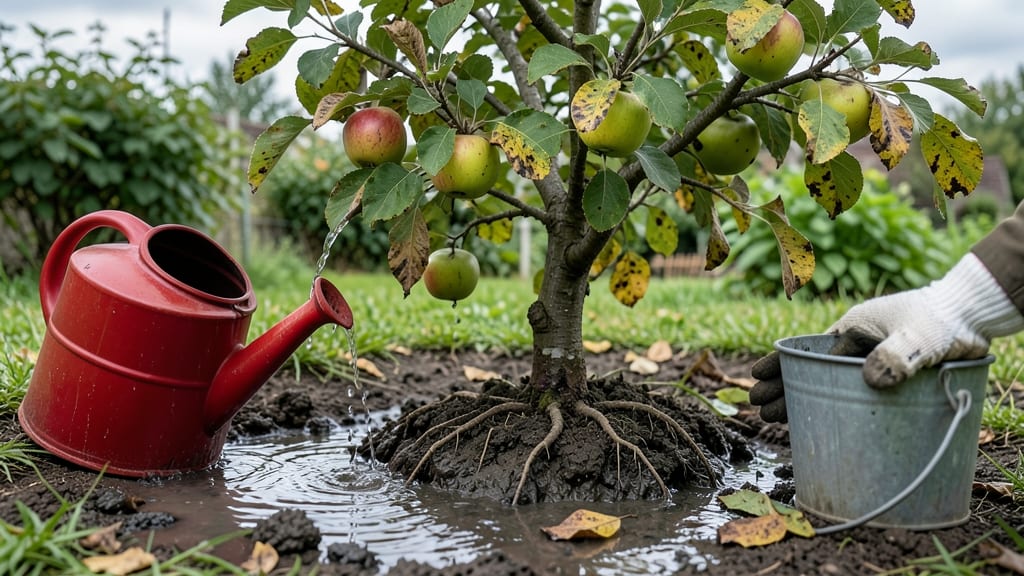
Your apple tree’s root rot crisis can be fixed in 3 simple steps—before it’s too late. 🌱 Overwatering smothers roots, turning soil into a suffocating swamp where fungi thrive. I’ve pulled three trees back from the brink using these exact methods, and you can too.
The first warning sign? Yellowing leaves that stay soft even when dry, paired with a musty soil smell when you dig down. Roots should be white or tan—if they’re black or mushy, you’re in the danger zone. The good news? Root rot responds faster to fixes than most gardeners think.
Start by halting all watering immediately and let the soil dry completely between drinks. Then, improve drainage with organic matter like composted leaves or coarse sand mixed into the top 6 inches. Within 2-3 weeks, you’ll see new green growth as roots recover.
This works for young saplings or mature trees—just scale the effort to your tree’s size. The key is patience and consistency. Your tree’s not doomed; it’s just asking for better breathing room.
Why it happens
Overwatering your apple tree isn’t just a gardening mistake—it’s a silent killer that can turn your thriving orchard into a soggy, root-bound disaster. 🌧️😬 The issue stems from a mix of environmental, soil, and human factors that create the perfect storm for root stress.
Understanding these causes is the first step to saving your tree before it’s too late.
🌊 Poor Drainage in the Soil
Apple trees despise soggy feet, and the primary culprit behind overwatering is compacted or clay-heavy soil. When rain or irrigation water can’t escape quickly enough, it pools around the roots, cutting off oxygen and triggering anaerobic conditions.
In these oxygen-starved zones, beneficial soil microbes die off, and harmful bacteria like Phytophthora thrive, leading to root rot.
💡 Pro Tip: Test your soil’s drainage by digging a 12-inch hole near the tree, filling it with water, and timing how long it takes to drain. If it takes more than 6 hours, your soil is too dense. Amending with organic matter (compost, sand, or perlite) can improve aeration.
📅 Overzealous Watering Schedules
Many gardeners assume "more water = happier tree," but apple trees are deep-rooted drought tolerators that prefer infrequent, deep watering over shallow, frequent soaks. When you water lightly every day or after every rain shower, you encourage roots to stay near the surface—where they’re most vulnerable to rot.
Overwatering also leaches nutrients from the soil, weakening the tree’s defenses.
⏰ Actionable Fix: Water your apple tree 1–2 times per week (adjust for climate) with 1–2 inches of water per session.
Use a soaker hose or drip irrigation to deliver water slowly to the root zone (12–18 inches deep). Morning watering is best—it gives excess moisture time to evaporate before nightfall.
🌧️ Rainfall + Irrigation Overlap
Mother Nature doesn’t always read the gardening manual. If you’re on a weekly watering schedule but get 1–2 inches of rain midweek, you’re essentially double-dosing your tree.
Many gardeners don’t account for rainfall, assuming their automatic sprinklers or hoses are the sole water source. This hydraulic shock stresses roots and invites fungal infections.
📊 Data-Driven Solution: Keep a water log or use a rain gauge to track precipitation. Pause irrigation for 48–72 hours after heavy rain (1 inch or more). For sandy soils, wait 24 hours; for clay, extend to 72 hours.
🌱 Immature Root Systems
Young apple trees (1–3 years old) have shallow, delicate root structures that can’t handle excess moisture. Their roots are still establishing themselves in the soil, and overwatering drowns them before they mature.
Even mature trees can suffer if their roots are pruned improperly (e.g., during transplanting) or if they’re planted too deeply, trapping roots in waterlogged layers.
🔧 Prevention Tip: When planting, ensure the graft union (the bump where the scion meets the rootstock) sits 2–3 inches above soil level. For young trees, mulch lightly (2–3 inches of wood chips) to retain some moisture but avoid piling mulch against the trunk—this creates a moisture trap.
🌿 Container Grown Trees
Apple trees in pots or root-bound containers are especially vulnerable because their roots have no escape route for excess water. Without proper drainage holes or a well-aerated potting mix, water sits at the bottom, leading to root suffocation.
Even outdoor containers can suffer if they’re placed in shaded, low-lying areas where evaporation is slow.
✨ Container Care: Use pots with drainage holes and a mix of 50% potting soil, 30% perlite, and 20% compost. Elevate containers on feet or cinder blocks to prevent water pooling.
For large containers, water only when the top 2 inches of soil are dry—stick your finger in to check!
Fixing Overwatered Apple Trees
Now that you recognize the signs of overwatering—wilting leaves, yellowing foliage, or a mushy, foul-smelling trunk—it’s time to take action. The good news? With the right steps, your apple tree can bounce back to health.
Below, we’ll map out cause-specific fixes, along with prevention tips to keep your tree thriving.
Problem: Excessive moisture suffocates roots, leading to root rot. Fix:
- Pause watering for at least 7–10 days to let the soil dry out. This breaks the cycle of constant dampness.
- If the ground is soggy or muddy, wait until the top 2–3 inches of soil feel dry before resuming.
- Pro Tip: Use a moisture meter or the finger test (stick your finger 2 inches deep—if it’s damp, hold off).
Problem: Compacted or clay-heavy soil traps water, worsening rot. Fix:
- Aerate the soil around the tree’s drip line (the area under the canopy) with a garden fork or tiller to break up compaction.
- Add organic matter like compost, coconut coir, or perlite to loosen the soil and improve drainage. Mix 2–3 inches into the topsoil.
- Raise the tree’s base (if planted in a depression) by mounding soil or creating a berm to encourage runoff.
Problem: Rotten roots and diseased leaves drain the tree’s energy. Fix:
- Trim affected roots (if visible) with sterilized pruners, cutting away black, mushy, or hollow roots. Healthy roots are firm and white.
- Remove yellowed or wilted leaves to redirect the tree’s energy to recovery.
- Disinfect tools with rubbing alcohol between cuts to prevent spreading disease.
Problem: Overwatering often stems from inconsistent habits. Fix:
- Water deeply but infrequently—1–2 times per week (adjust for climate) with 1–2 inches of water per session.
- Water at the base, not the leaves, to avoid fungal growth. Use a soaker hose or drip irrigation for precision.
- Morning watering (before 10 AM) reduces evaporation and fungal risks.
Problem: Fungal infections (like Phytophthora) thrive in waterlogged soil. Fix:
- Apply a copper-based fungicide or hydrogen peroxide (3%) to the soil to combat pathogens.
- Prevent recurrence with mulch (wood chips or straw) 3–4 inches deep, keeping it 6 inches away from the trunk to prevent rot.
- Test your soil annually to monitor drainage and pH (ideal: 6.0–7.0).
- Plant apple trees on a slight slope or in raised beds if your yard floods easily.
- Avoid overhead sprinklers—they promote leaf diseases.
- Monitor weather patterns—adjust watering during heavy rains or humid seasons.
By following these steps, your apple tree can recover and even produce better fruit in the long run! 🍏🌿 Stay patient—root recovery takes time, but with the right care, your tree will thank you.
Frequently asked questions
How can I tell if my apple tree has root rot from overwatering?
Look for yellowing leaves that stay soft even when dry, a musty soil smell near the base, and roots that are black, mushy, or hollow instead of firm and white. If the tree wobbles easily when pulled gently, that's another red flag—healthy roots anchor the tree securely.
Can I save an apple tree if it's already showing signs of overwatering?
Yes! Start by stopping all watering immediately and let the soil dry completely. Improve drainage by mixing compost or perlite into the top 6 inches of soil, and trim any blackened roots with sterilized tools. With these steps, you'll often see new green growth within 2-3 weeks.
What's the best way to water apple trees to prevent overwatering?
Use the deep-and-infrequent method: water 1-2 times per week with 1-2 inches of water per session, delivered slowly at the base using a soaker hose. Always water in the morning so excess moisture evaporates by evening, and adjust for rainfall—pause irrigation for 48-72 hours after heavy rain.
Will mulch help or hurt an overwatered apple tree?
Mulch can help prevent overwatering by reducing evaporation, but use it correctly: apply 3-4 inches of organic mulch (wood chips or straw) and keep it 6 inches away from the trunk. This prevents moisture buildup against the bark while still protecting roots. For recovery, focus first on drainage improvements before adding mulch.
How long does it take for an apple tree to recover from overwatering?
With proper care, you'll typically see visible improvement in 2-4 weeks, including new green leaves and firmer roots. However, complete recovery may take several months depending on how severe the damage was. Monitor soil moisture closely and avoid watering until the top 2-3 inches feel dry to the touch.