
Pruning
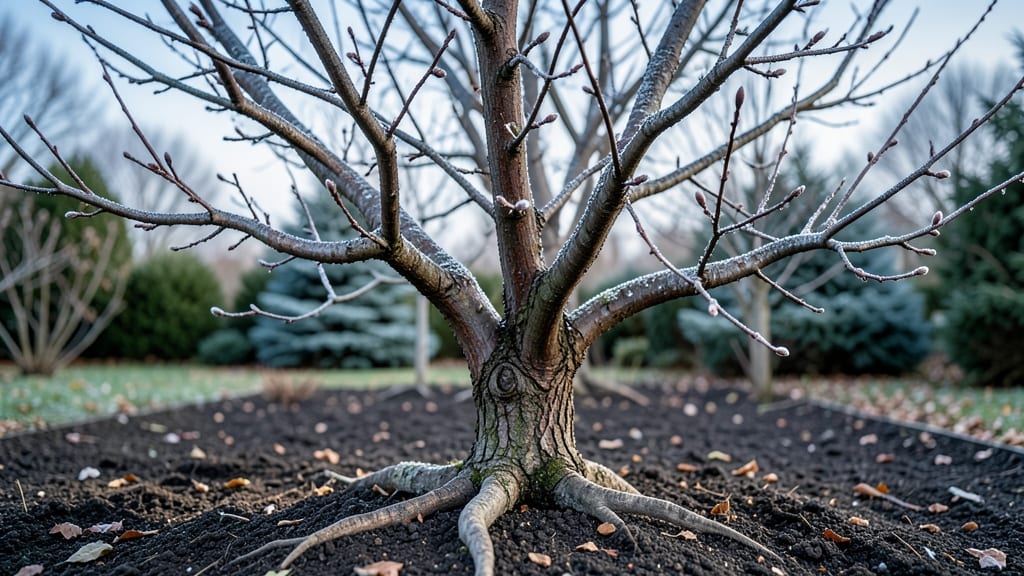
Winter pruning your almond tree is the secret to stronger branches and bigger harvests next year. ✂️ I learned the hard way—skipping dormant-season cuts left my tree with weak limbs and fewer nuts.
The key is timing: prune when the tree is fully dormant but before new growth starts, usually between January and early March in most climates.
You’ll need sharp pruning shears, a ladder (for taller trees), and a clear day to avoid spreading disease. The goal is to remove dead, crossing, or diseased branches first, then thin out crowded areas to improve airflow.
This isn’t about heavy cutting—just strategic shaping to encourage energy into fruit production, not just leafy growth.
After pruning, mulch the base with 2-3 inches of wood chips to protect roots from freezing and retain moisture. Water lightly if your winter is dry, but avoid overwatering—soggy soil can invite rot.
By spring, you’ll see fresh green shoots where you made cuts, signaling your tree is ready for a productive season.
This method works for young trees just as well as mature ones, though larger trees may need a second year of gradual pruning. Regional adjustments matter: in colder zones, delay pruning until after the last hard frost.
The payoff? A tree that recovers faster, resists pests better, and rewards you with healthier nuts come harvest time.
📚 In This Guide
- What you need
- Instructions
- Tips and common mistakes
- Wrapping up and next steps
What you need
- ● Pruning shears: Sharp, bypass shears (20–24 inches) for medium branches. Pro tip: 💡 Clean blades with rubbing alcohol after use to prevent disease spread.
- ● Loppers: 1–2 pairs (20–24 inches) for thicker branches (up to 2 inches in diameter). Look for ratcheting or bypass styles.
- ● Pruning saw: A curved-tooth saw (16–20 inches) for branches over 2 inches thick. Pro tip: 🔥 Avoid straight-tooth saws—they can tear wood.
- ● Ladder: A sturdy, extension ladder (16–24 feet) with non-slip feet. Safety first: ✨ Always have a spotter or secure the ladder on three sides.
- ● Gloves: Heavy-duty, cut-resistant gloves (e.g., Mechanix or leather) to protect hands from thorns and rough bark.
- ● Disinfectant: A 10% bleach solution (1 part bleach to 9 parts water) or rubbing alcohol (70%+) to sterilize tools between cuts.
- ○ Twine or zip ties: For temporarily securing branches during pruning (optional but helpful for large trees).
- ○ Pruning sealant: Optional for sealing large cuts (over ½ inch) to prevent disease. Use a wound dressing like Tanglefoot Tree Wound Pruning Sealer.
- ● First-aid kit: Bandages, antiseptic wipes, and tweezers (just in case of thorn pricks or minor cuts).
- ● Work clothes: Long sleeves and pants to protect against scratches and sun exposure.
- ● Water & snacks: Pruning can take hours—stay hydrated! 💧
- ● Weather check: Plan for dry, calm conditions. Avoid pruning if rain or wind is forecasted.
- ● Know your almond tree variety and its typical growth habits (e.g., 'Nonpareil' vs. 'Carmel').
- ● Review your tree’s current structure—sketch a rough map of branches if needed.
- ● Check local pruning regulations (some areas restrict large-scale tree work).
- ○ Optional: A pruning guide or app (like iTree) for visual reference.
Step-by-step guide to winter pruning your almond tree
Here's how to give your almond tree the perfect winter haircut for next year's bounty.
🌱 Step 1: Choose the Right Time and Tools
Prune your almond tree during late winter when it's still dormant but before new growth begins—typically February through early March in most climates. You'll need sharp pruning shears and loppers for thicker branches, plus a disinfectant solution (1 part bleach to 9 parts water) to clean tools between cuts.
I always prune on a dry, sunny day when the tree isn't wet—this helps prevent disease spread. If you live in a warmer region where almond trees break dormancy earlier, aim for 2-3 weeks before buds swell. Watch for tiny green buds forming along branches—that's your cue to stop pruning.
✂️ Step 2: Remove Dead, Diseased, or Weak Wood
Start by scanning the entire tree for dead branches (brown, brittle wood that snaps easily) and diseased wood (discolored, oozing sap, or fungal growth). Cut these out first—they drain energy from healthy growth. Make clean cuts at a 45-degree angle just outside the branch collar, the swollen area where the branch meets the trunk.
Next, look for weak, crossing, or rubbing branches—these compete for sunlight and nutrients. I always remove the smaller of two crossing branches to maintain an open center. Thin out crowded areas to improve airflow, which prevents fungal diseases like brown rot. Never remove more than 25% of the tree's canopy in one season—this stresses the tree and reduces fruit production.
☀️ Step 3: Shape for Light Penetration and Airflow
Almond trees thrive with an open vase shape that lets sunlight reach the center. Step back and visualize how light will move through the tree after pruning. Remove suckers (vigorous shoots growing from the base or trunk) and water sprouts (fast-growing vertical shoots) to redirect energy to fruit production.
Focus on scaffold branches—the main limbs that form the tree's structure. Aim to space them 8-12 inches apart along the trunk. Cut back any branches growing inward to create a rounded, open canopy. This encourages even fruit distribution and makes harvesting easier. I like to leave 3-5 main scaffold branches on young trees, increasing to 6-8 on mature trees.
🪴 Step 4: Thin Out Overcrowded Fruit Spurs
Almond trees produce fruit on spurs—short, stubby branches with clusters of buds. In winter, you'll see these as small, woody knobs along the branches. Thin out overcrowded spurs by removing every second or third spur along a branch, leaving the healthiest ones spaced 4-6 inches apart. This ensures each spur gets enough light and air to produce high-quality nuts.
Look for weak or dying spurs (brown, shriveled, or without buds) and prune them completely. Avoid cutting back healthy spurs more than one-third of their length—this reduces next year's crop. I like to leave 2-3 strong buds on each spur to encourage new growth while maintaining fruit-bearing capacity.
⏰ Step 5: Clean Up and Apply Protective Measures
After pruning, rake up and remove all debris from under the tree—this prevents fungal spores from overwintering. Disinfect your tools again with the bleach solution to avoid spreading disease to other trees. If your area has late frosts, consider wrapping the trunk with tree guard to protect it from sunscald and gnawing pests like rabbits.
Apply a 2-3 inch layer of mulch (like wood chips) around the base, keeping it 6 inches away from the trunk to prevent rot. Water deeply but avoid overwatering—the goal is to keep roots moist but not soggy. Your tree is now ready for spring growth, with a strong framework for next year's harvest.
Tips & tricks for perfect almond tree winter pruning
Winter pruning sets the stage for a bountiful almond harvest—here's how to avoid common mistakes and maximize your tree's potential.
Timing is Everything: The 2-3 week window before buds swell is your sweet spot for pruning. I learned this the hard way after pruning too early and accidentally removing flower buds. Check daily in late winter—when you see those tiny green buds forming, it's time to put the shears away. A quick trick: rub a bud between your fingers; if it feels firm and slightly sticky, you've waited too long.
Tool Prep Prevents Problems: Disinfect your pruning shears between cuts using that 1:9 bleach-to-water solution—this stops disease spread better than you'd think. I keep a small spray bottle of the solution nearby and give tools a quick wipe after every 3-4 cuts. Also, sharpen your blades before starting; dull shears tear wood, creating larger wounds that invite pests and disease. A clean, sharp cut heals faster and looks professional.
Visualize the Open Canopy: Step back and imagine sunlight streaming through your tree after pruning. The goal is an open vase shape with branches spaced 8-12 inches apart. I find it helpful to sketch a rough outline on paper first—this prevents over-thinning in one area while leaving too many branches in another. Remember, you can always remove more later, but you can't put branches back once they're gone.
Spur Pruning Strategy: When thinning overcrowded spurs, focus on removing every second or third spur along a branch. Leave the healthiest spurs with 2-3 strong buds
Pro Tips for Almond Tree Winter
- Winter pruning sets the stage for a bountiful almond harvest—here's how to avoid common mistakes and maximize your tree's potential.
- Timing is Everything: The 2-3 week window before buds swell is your sweet spot for pruning.
- Tool Prep Prevents Problems: Disinfect your pruning shears between cuts using that 1:9 bleach-to-water solution—this stops disease spread better than you'd think.
Frequently asked questions
Got questions about winter pruning your almond tree?
You’re not alone! Here are some of the most common concerns—and straightforward answers—to help you prep for a thriving spring.
When is the exact best time to prune an almond tree in winter?
Prune your almond tree after the ground freezes but before active growth resumes—typically between late December and early March in most U.S. climates. Avoid pruning during extreme cold snaps (<15°F) or when buds are swelling. Pro tip: Check your local frost dates for precision!
Can I prune an almond tree if it’s already dormant but still has leaves?
Yes! If your tree hasn’t shed all its leaves yet (a sign of late dormancy), it’s still safe to prune. However, remove any dead or diseased wood first—healthy leaves indicate the tree is conserving energy, so limit heavy cuts. Wait until full dormancy (bare branches) for major shaping.
What if I miss winter pruning? Can I prune in spring instead?
While winter is ideal, light pruning in early spring (before buds burst) is better than nothing. Avoid heavy cuts after bloom, as it stresses the tree and reduces fruit yield. If you skip winter pruning, prioritize removing dead wood and thinning crowded branches in late winter to prevent disease.
My almond tree has blackened or oozing cuts after pruning—what’s wrong?
This is likely bacterial canker or sap oozing from fresh cuts. To prevent it:
- Use sterilized tools (rubbing alcohol or bleach solution).
- Avoid cutting into wet wood (prune on dry days).
- Seal cuts with pruning sealant (optional but helpful for large wounds).
Should I fertilize my almond tree right after winter pruning?
Not immediately! Wait 4–6 weeks after pruning to fertilize, as fresh cuts are vulnerable to salt burn from fertilizers. Use a balanced, slow-release fertilizer (e.g., 6-6-6 or 8-3-9) in early spring once new growth starts. Pro tip: Test soil pH first—almonds prefer slightly acidic to neutral (6.0–7.5).
Wrapping up and next steps
Winter is the perfect time to give your almond tree the care it needs to thrive! By pruning during dormancy, you’re setting the stage for healthier branches, better airflow, and a bountiful harvest come spring.
Remember, patience and precision are key—take your time, follow the right techniques, and soon you’ll see your tree flourish.
Ready to get started? Mark your calendar for late winter (just before buds swell) and grab your tools—your almond tree’s future growth depends on it! 🌱✂️