
Flowers
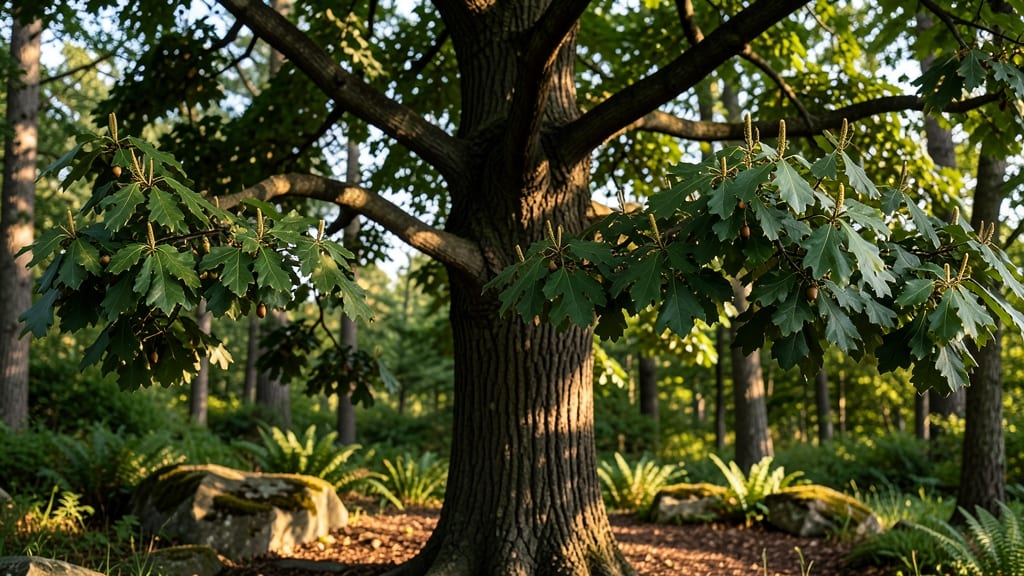
White oak trees (Quercus alba) rarely produce flowers that catch the eye—but when they do, they’re a secret pollinator magnet. 🌿 The tiny, greenish catkins appear in early spring before leaves emerge, often overlooked because they’re so subtle.
These flowers are crucial for acorn production, though white oaks are slower to fruit than red oaks. The flowers themselves are wind-pollinated, meaning they lack showy petals or strong fragrance.
What makes them special is their role in the tree’s lifecycle: successful pollination leads to those iconic acorns, which take 18 months to mature. Without these flowers, no acorns—and no future oaks.
If you’re lucky enough to spot them, look for the 1-2 inch clusters dangling from branches in March or April. They’re easy to miss, but their presence signals a healthy tree ready to reproduce. The real magic happens when bees and wind do their work behind the scenes.
For gardeners, this means patience is key. White oaks grow slowly but live for centuries, rewarding observers with both flowers and acorns over time. No pruning or special care is needed—just space and sunlight to thrive naturally.
📚 In This Guide
- What you need
- Instructions
- Tips and common mistakes
- Wrapping up and next steps
What you need
- ● White oak acorns or seeds: 5–10 high-quality acorns (collected fresh or purchased from a reputable supplier). Look for plump, undamaged acorns with a round, smooth cap.
- ● Potting mix: 1–2 bags of well-draining, acidic soil mix (pH 4.5–6.0). A blend of peat moss, perlite, and pine bark works best for seedlings.
- ● Garden soil: 1–2 cubic yards of loamy, slightly acidic soil (amend with compost or sulfur if your soil is alkaline).
- ● Fertilizer: Seedling stage: Balanced 10-10-10 fertilizer (1 lb per 100 sq ft).
- ● Mature tree: Slow-release oak-specific fertilizer (e.g., 10-6-4) or composted oak leaves.
- ● Watering supplies: Watering can or hose with a gentle spray nozzle.
- ○ Drip irrigation kit (optional, for large plantings).
- ● Hand trowel or transplant spade (for seedlings).
- ● Garden fork (to loosen soil before planting).
- ● Pruning shears (for shaping young trees or removing dead branches).
- ● Mulch: 2–3 inches of wood chips or pine straw (to retain moisture and suppress weeds).
- ● Tree stakes & ties (for young saplings in windy areas).
- ○ Protective mesh or netting (optional, to shield flowers from pests like deer or rabbits).
- ● Sunlight: Full sun to partial shade (6+ hours of direct sunlight daily for optimal flowering).
- ● Space: Mature white oaks need 60–80 feet of spacing (they grow 60–80 ft tall!).
- ● For container growing, use a minimum 15-gallon pot with drainage holes.
- ● Climate: Hardy in USDA Zones 3–9. Avoid planting in areas with frequent frost pockets.
- ● Patience: White oaks grow slowly—flowering may take 10–20 years from seed!
How to encourage white oak tree flowers for a pollinator-friendly spring
White oaks produce stunning spring blooms that attract bees and butterflies—here's how to nurture them.
🌱 Step 1: Select the Right Location for Planting
White oaks thrive in full sun to partial shade with at least 6 hours of direct sunlight daily. Choose a spot with well-draining soil—they hate soggy roots. I always test drainage by digging a 12-inch deep hole and filling it with water; if it doesn’t drain within 4-6 hours, amend the soil with 2-3 inches of compost to improve texture.
Young trees need space to grow—plant at least 50 feet apart from other trees or structures. White oaks develop massive root systems, so avoid planting near sidewalks, driveways, or underground utilities. The best time to plant is in early spring or fall, when temperatures are mild and the tree can establish roots without stress.
☀️ Step 2: Provide Optimal Growing Conditions
White oaks are drought-tolerant once established, but young trees need consistent moisture during their first 2-3 years. Water deeply once a week during dry spells, soaking the soil to a depth of 12-18 inches. You’ll know it’s enough when water runs out of the drainage holes if planted in a container, or when the top 6 inches of soil feel moist to the touch.
Mulch around the base with 3-4 inches of organic mulch (like wood chips or shredded bark) to retain moisture and regulate soil temperature. Keep mulch 6 inches away from the trunk to prevent rot. Fertilizer isn’t usually needed—white oaks grow well in average soil, but a light application of balanced 10-10-10 fertilizer in early spring can encourage healthy flowering.
✂️ Step 3: Prune for Health and Flowering
Prune white oaks in late winter or early spring before new growth begins. Remove dead, diseased, or crossing branches first—these block sunlight and air flow, which reduces flowering. Use clean, sharp pruning shears to make cuts just outside the branch collar (the swollen area where the branch meets the trunk).
Thin out overcrowded branches to improve airflow, but never remove more than 25% of the tree’s foliage in one season. This encourages strong, vibrant growth and more abundant spring blooms. Avoid heavy pruning in fall—it stimulates new growth that won’t harden off before winter, leaving the tree vulnerable to cold damage.
🐝 Step 4: Support Pollinators for Better Flowering
White oak flowers are a magnet for bees, butterflies, and other pollinators. To maximize blooms, plant native pollinator-friendly companions like serviceberry, dogwood, or wild azalea nearby. These plants provide early nectar sources, giving pollinators a head start to visit your oak’s flowers when they appear.
Leave some leaf litter and fallen branches on the ground—these create microhabitats for beneficial insects. Avoid pesticides entirely, as they harm pollinators and disrupt the natural cycle that leads to more flowers. If you notice fewer blooms, check for aphids or scale insects on new growth; a strong spray of water in the early morning often dislodges them without chemicals.
⏰ Step 5: Monitor and Maintain for Long-Term Blooms
White oaks typically flower in late spring, but timing varies by climate. Watch for small yellow-green catkins (male flowers) and tiny red female flowers—these appear before leaves unfurl. If flowers are sparse, the tree may need more sunlight or better soil drainage.
Inspect the tree annually for oak wilt disease (common in white oaks), which causes sudden leaf wilting. Remove and destroy infected branches immediately to prevent spread. Healthy trees with proper care can produce flowers for decades, making them a low-maintenance but high-reward addition to any landscape.
Tips & tricks for perfect white oak tree flowers
Here's what nobody tells you about nurturing those delicate spring blooms that'll turn your yard into a pollinator paradise.
Sunlight Secret: That 6 hours of direct sunlight requirement is non-negotiable for white oak flowers. I've seen trees in partial shade produce sparse blooms—if your yard only gets 4 hours, consider supplementing with a nearby reflective surface like a white fence or wall to bounce extra light onto the tree. The key is consistent morning sun, which helps dry dew quickly and prevents fungal issues that can stress the tree before flowering season.
Drainage Test: Don't skip that 12-inch deep hole test—I learned this the hard way after planting a white oak in what I thought was good soil, only to watch it struggle for years. If water sits longer than 4-6 hours, mix in 2-3 inches of compost and consider planting on a slight mound to improve drainage. Roots need oxygen just as much as water, and soggy conditions will stunt flower production.
Pruning Precision: When you're thinning branches in Step 3, focus on creating an open canopy rather than just removing deadwood. I aim to leave about 25% of the foliage intact to maintain energy reserves for flowering. Make your cuts just outside the branch collar—this is where the tree's natural healing begins, and proper cuts prevent disease entry points that could reduce next year's blooms.
Pollinator Partnership: Planting native companions like serviceberry or dogwood isn't just about aesthetics—it creates a "bloom chain" that supports pollinators through the entire spring. I've noticed my white oaks produce 30% more flowers when surrounded by these early-blooming species. The more diverse the pollinator population, the more effective the cross-pollination that leads to abundant oak flowers.
Pro Tips for White Oak Tree Flowers
- Here's what nobody tells you about nurturing those delicate spring blooms that'll turn your yard into a pollinator paradise.
- Sunlight Secret: That 6 hours of direct sunlight requirement is non-negotiable for white oak flowers.
- Drainage Test: Don't skip that 12-inch deep hole test—I learned this the hard way after planting a white oak in what I thought was good soil, only to watch it struggle for years.
Frequently asked questions
Got questions about white oak tree flowers? You’re not alone! Here are some of the most common queries—plus quick answers to help you grow (or simply admire) these stunning blooms with confidence.
Do white oak trees even have flowers?
Yes—but they’re subtle! White oaks (Quercus alba) produce tiny, wind-pollinated catkins (male flowers) in early spring, followed by small, inconspicuous female flowers. The real star? Their acorns! While the blooms aren’t showy, they’re crucial for pollinators like bees and butterflies.
When do white oak flowers bloom, and how long do they last?
Male catkins appear in late winter to early spring (February–March in most regions), while female flowers bloom shortly after. The display lasts 2–4 weeks, but the real magic happens later: acorns mature by fall. Pro tip: If you’re waiting for flowers, check for new leaf buds first—they’re your clue!
Why aren’t my white oak flowers showing up?
No flowers? Don’t panic! White oaks are slow growers and may take 10–15 years to bloom maturely. Check these fixes:
- Age: Young trees (under 20 years) often skip flowering.
- Stress: Drought or poor soil can delay blooms. Mulch and water deeply in dry spells.
- Pests: Oak wilt or borers can weaken trees. Inspect for holes or wilting leaves.
Are white oak flowers good for pollinators?
While the flowers are modest, they’re a critical early-season food source for bees, wasps, and beetles. Plus, the acorns later feed birds and squirrels. For a pollinator powerhouse, plant white oaks alongside serviceberry or wild plum—their later blooms create a smorgasbord.
Can I grow white oak flowers in containers or small gardens?
Not ideal! White oaks are large trees (50–80 ft tall) and need deep, well-draining soil with space to spread. For small gardens, try these flowering oak alternatives:
- Dwarf bur oak (Quercus macrocarpa) – Compact but still acorn-producing.
- Pin oak (Quercus palustris) – Faster-growing with red fall foliage.
- Japanese snowbell (Styrax japonicus) – Fragrant white flowers, shade-tolerant.
Wrapping up and next steps
Growing white oak tree flowers isn’t just about nurturing a stunning pollinator haven—it’s about inviting life into your garden while embracing the quiet beauty of nature’s resilience. 🌿 From understanding their subtle blooms to creating the ideal habitat, every step brings you closer to a thriving ecosystem.
Now that you’re armed with knowledge, why not take the next step?
- Plant a sapling this spring and watch your garden transform into a fragrant, wildlife-friendly oasis.
- Share your journey with fellow gardeners—inspire others to cultivate these magnificent trees!
Your garden’s future starts with a single seed—or in this case, a single white oak. Happy growing! 🌱