
Propagation
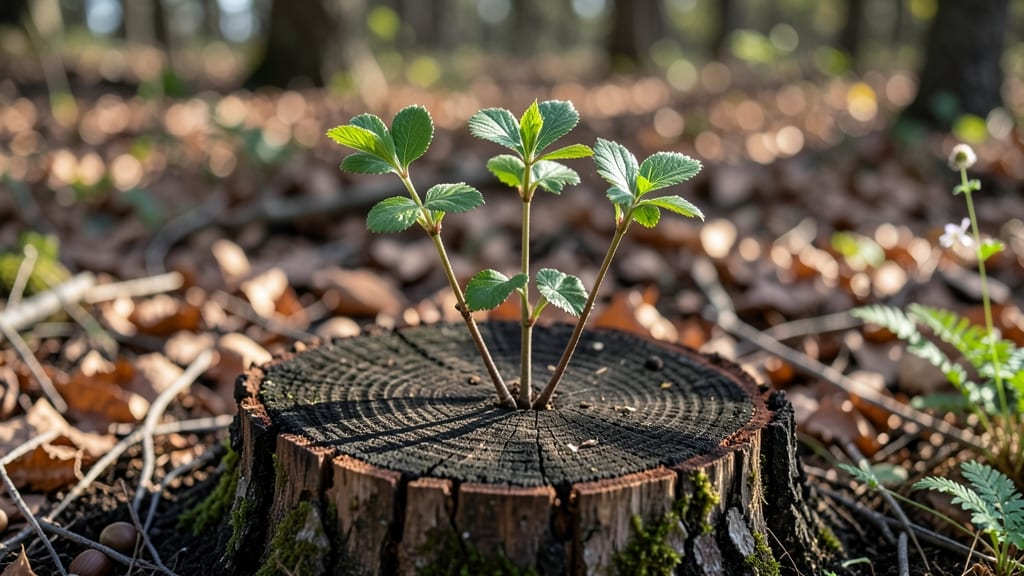
That stubborn little shoot at your tree’s base isn’t just stubborn—it’s biology. 🌱 When a tree sprouts from its base, it’s often trying to replace lost growth, spread its genes, or even recover from damage.
I’ve seen these "stump pups" pop up after pruning, storms, or even just old age, and they’re usually a sign of a tree’s resilience, not a problem.
The good news? You can work with this natural behavior. For fruit trees, these sprouts often produce better-quality fruit than the parent tree, while ornamental trees might just add extra foliage.
The key is timing—prune them back in late winter or early spring when the tree is still dormant, and you’ll avoid stressing it during active growth.
In just 6 weeks, you can turn that wild base growth into something manageable. Cut them down to 6 inches tall, and the tree will focus its energy on stronger, healthier branches. It’s like giving your tree a fresh start—without the guilt of chopping it down completely.
Works for almost any tree, from apple orchards to maple shade trees. The trick is consistency—check those sprouts every few weeks, and soon you’ll have a tree that’s both productive and tidy. Let’s get growing!
Rooted Stump Revival Explained
When a tree stump sprouts new growth from its base, it’s not just a random act of nature—it’s a survival strategy rooted in biology and environmental cues.
Understanding why this happens helps gardeners and landscapers manage it effectively. Here’s a breakdown of the key triggers behind this phenomenon, backed by science and actionable insights.
Many trees store dormant buds in their roots and stumps, waiting for the right conditions to sprout. These buds, called adventitious buds, are genetically programmed to regenerate the tree if the top is damaged or removed.
When a tree is cut down, the hormonal signals that once suppressed these buds (like auxin, a growth-regulating hormone) are disrupted. Without the tree’s canopy to produce auxin, the buds receive the "all-clear" to grow.
Why it matters: This is why even a stump that’s been sitting for years can suddenly burst with new shoots. The buds remain viable for decades, biding their time until conditions are favorable.
A freshly cut stump is a nutrient goldmine. When a tree is removed, its roots continue to absorb water and minerals from the soil, but without the leaves to consume them, excess nutrients accumulate in the stump and surrounding soil.
This creates a fertile environment that encourages rapid cell division and sprout growth.
Key factors:
- 💧 Moisture retention: Stumps act like sponges, holding water that fuels new growth. In dry climates, this can be a double-edged sword—too little moisture stunts sprouts, while too much (like after heavy rain) can trigger a sprout explosion.
- 🌱 Root system resilience: Even if the top is gone, the roots often remain intact, providing a steady supply of energy to the emerging shoots.
Pro tip: If you’re dealing with a stubborn stump, reducing water access (e.g., by diverting irrigation or applying mulch sparingly) can weaken sprout development. Conversely, in drought-prone areas, targeted watering can accelerate sprouting—useful if you’re intentionally propagating a new tree!
Light and warmth are the spark that turns dormant buds into active shoots. When a tree is cut down, the stump is suddenly exposed to sunlight, which signals the buds to break dormancy.
Additionally, temperature fluctuations—especially warm spring or summer days—stimulate metabolic activity in the roots, pushing energy toward new growth.
Science in action:
- 🌞 Photomorphogenesis: Sunlight reduces the levels of abscisic acid (a hormone that inhibits growth), allowing buds to emerge.
- 🌡️ Thermal cues: Soil temperatures above 50°F (10°C) kickstart enzymatic activity in the roots, priming them for sprout production.
What you can do: If you’re trying to prevent sprouts, shading the stump with cardboard or mulch can delay or suppress growth. For encouraging sprouts (e.g., for propagation), ensure the stump gets 6+ hours of direct sunlight and keep the soil warm.
Don’t underestimate the role of soil microbes and fungi! The roots of a tree host a complex ecosystem of beneficial (and sometimes competitive) organisms. When a stump is cut, these microbes can:
- 🔄 Break down stored starches: Fungi like Armillaria or Heterobasidion can decompose the stump’s inner tissues, releasing sugars that fuel sprout growth.
- 🛡️ Stimulate root hormones: Certain bacteria produce cytokinins, hormones that promote cell division in buds.
Controversial but true: In some cases, too much fungal activity can weaken the stump, making it more prone to rot and encouraging aggressive sprouting. Conversely, mycorrhizal fungi (beneficial root partners) can strengthen the stump’s ability to support new growth.
Actionable tip: To slow down microbial-driven sprouting, apply a copper-based fungicide to the stump’s surface. For accelerating growth, mix compost or mycorrhizal inoculant into the soil around the base.
Some tree species are hardwired to regenerate from stumps. For example:
- 🌳 Fast regenerators: Trees like willows, poplars, and maples are notorious for sprouting prolifically from stumps because their genetics prioritize survival over form.
- 🌲 Slow or reluctant regenerators: Species like oaks or pines may produce fewer or weaker sprouts due to their growth habits.
Why it matters: If you’re dealing with a willow stump, expect a sprout army within weeks. For oaks, you might only see 1–2 shoots per year. Knowing your tree’s species helps you set realistic expectations for management.
Pro tip: Cross-reference your tree with a USDA plant database to check its sprouting tendency before committing to removal or propagation.
Understanding these triggers doesn’t just explain why stumps sprout—it empowers you to control the process, whether you’re aiming to eliminate unwanted growth or harness it for a new tree. Next up: Practical steps to manage or encourage stump sprouts in just 6 weeks.
Revive or Remove Stump Sprouts
Now that you understand why unwanted sprouts emerge from tree stumps, it’s time to take action! Whether you want to encourage growth (if propagating) or eliminate it (if unwanted), these practical solutions will help you regain control in just six weeks—or less.
Below, we’ve mapped common causes to effective fixes, along with prevention tips to keep your yard sprout-free long-term.
If you’re intentionally growing a new tree from a stump, these steps will boost healthy regrowth while preventing disease or pests.
🔥 Stimulate Stronger Sprouts
- Prune Strategically 🌿✂️ Trim back wild, tangled sprouts to 2–3 inches above the stump. This redirects energy to fewer, stronger shoots instead of a chaotic tangle.
Use sterilized pruners to avoid spreading bacteria. - Pro Tip: 💡 Best time to prune is early spring (before new growth) or late fall (after leaf drop).
- Apply Root Hormone 🧪🌱 Dip cuttings in rooting hormone powder (like Clonex or Dip ‘N Grow) to double growth speed. For stumps, lightly dust the top of the stump where sprouts emerge to encourage thicker, faster regrowth.
- Fertilize Lightly 🌱💪 Use a balanced, slow-release fertilizer (10-10-10 ratio) around the base. Avoid over-fertilizing—this can burn tender new shoots. A handful sprinkled 6 inches from the stump is enough.
If those sprouts are weeds in disguise or you’re clearing space, these methods will kill them for good—without harsh chemicals (unless needed).
🔪 Physical Removal (Best for Small Stumps)
- Smother with Cardboard/Mulch 📄🌳 Cover the stump with 3–4 layers of wet cardboard (no tape/glue) topped with 4–6 inches of mulch.
This blocks sunlight, starving the sprouts of energy. Replenish mulch every 2–3 weeks until growth stops (usually 4–6 weeks).
- Solarize the Stump ☀️🔥 For sunny climates, use clear plastic sheeting (like a greenhouse cover) to trap heat. Secure edges with rocks or soil. Check weekly—if condensation forms inside, the stump is cooking itself from within. Works best in summer heat.
- Dig Out the Roots 🕳️💦 Use a shovel or mattock to expose and sever the root crown (the thick, woody base where sprouts emerge). Soak the area first (helps loosen soil). Bonus: This prevents future regrowth from hidden roots!
💥 Chemical Solutions (For Stubborn Cases)
- Glyphosate (Roundup) Application 🧪🚫 Mix glyphosate herbicide with water (follow label rates) and paint it directly onto cut stump surfaces or sprouts. Reapply every 7–10 days until no new growth appears. ⚠️ Warning: Avoid spraying on windy days or near desired plants.
- Vinegar + Salt Spray 🧂🍶 (DIY Alternative) Mix 1 gallon white vinegar + 1 cup salt + 1 tbsp dish soap in a spray bottle. Spray liberally on sprouts every 3–4 days until they wilt and die. Best for small, frequent sprouts—not deep stumps.
Once you’ve dealt with the current batch, keep them from coming back:
- ✅ Grind the Stump 🪓🌲 Rent a stump grinder to reduce the stump to 2–3 inches below soil level. This removes the energy source for future sprouts.
- 🌿 Plant Over the Area Fast-growing ground covers (like clover, creeping thyme, or ornamental grasses) outcompete new sprouts for sunlight and nutrients.
- 🔄 Mulch Heavily & Regularly Apply 6+ inches of wood chips or straw mulch directly over the stump area. Refresh annually to suffocate any dormant buds.
- 🌞 Solarization + Smothering Combo For large stumps, combine plastic sheeting (3+ months) with mulch for a two-pronged attack on root energy.
| Method | Time to See Results | Long-Term Effectiveness |
|---|---|---|
| Smothering (Mulch/Cardboard) | 4–6 weeks | High (if maintained) |
| Solarization | 6–8 weeks (summer) | Medium (climate-dependent) |
| Glyphosate | 1–2 weeks (reapply) | High (but chemical) |
| Physical Root Removal | Immediate | Very High (permanent) |
| Stump Grinding | Permanent | 100% (no regrowth) |
Final Pro Tip: 🎯 Monitor weekly—new sprouts can pop up even after treatment. Stay vigilant, and you’ll have a sprout-free zone in no time!
Frequently asked questions
Why do some trees sprout from their base while others don't?
It depends on the tree species and its genetic traits. Fast-growing trees like willows, poplars, and maples are natural regenerators, often producing multiple shoots from their base when damaged. Slower-growing species like oaks or pines typically have fewer or weaker sprouts. The key difference lies in their root systems and how aggressively they produce adventitious buds.
Can I turn these base sprouts into a new tree?
Many gardeners intentionally grow new trees from stump sprouts. Simply prune back the strongest shoots to 2-3 inches above the stump in early spring, apply root hormone, and fertilize lightly. Within 6 weeks, you'll have a healthy new tree with minimal effort. Fruit trees often produce better-quality fruit from these sprouts than from the parent tree.
What's the fastest way to stop unwanted base sprouts?
For immediate results, use a combination of physical removal and smothering. First, cut the sprouts back to the stump with sterilized pruners. Then cover the area with 3-4 layers of wet cardboard topped with 4-6 inches of mulch. This blocks sunlight and starves the remaining buds of energy. Replenish the mulch every 2-3 weeks until no new growth appears.
Will vinegar kill tree base sprouts permanently?
Vinegar can kill existing sprouts, but it won't provide permanent results. The mixture of 1 gallon white vinegar + 1 cup salt + 1 tbsp dish soap works well for small, frequent sprouts by dehydrating them. However, the root system may still produce new shoots. For long-term control, combine vinegar treatments with physical removal methods like mulching or stump grinding.
How long can tree stumps remain dormant before sprouting?
Dormant buds in tree stumps can remain viable for decades in some species! The exact timeline varies by tree type—willow stumps might sprout within weeks, while oak stumps could stay dormant for years. Environmental factors like soil moisture, temperature fluctuations, and sunlight exposure trigger the buds to break dormancy when conditions become favorable.