
Pruning
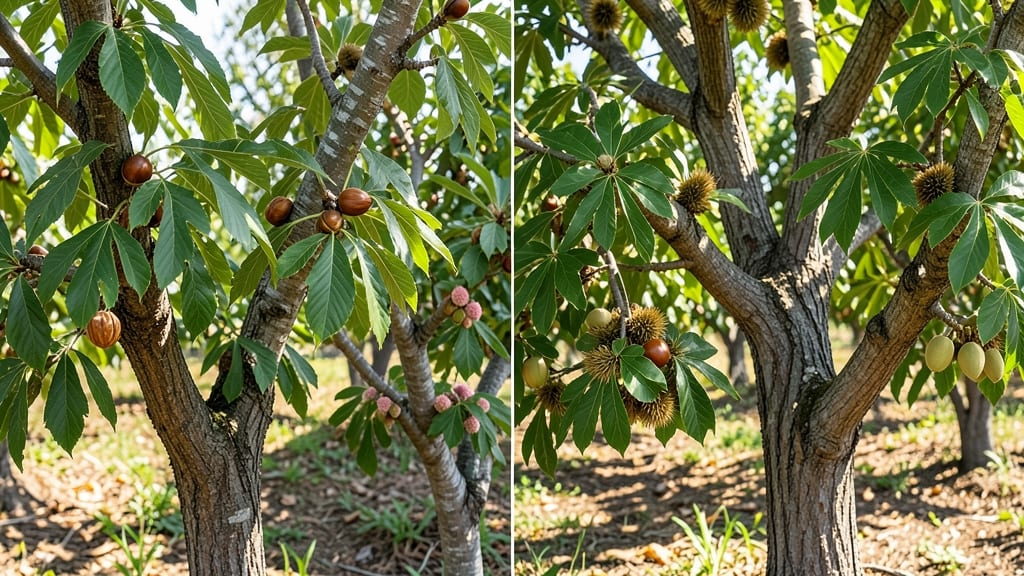
Spotting a tree nut in your backyard using this tree nut identification chart could mean free snacks—or a future grove. 🌳 My first walnut tree started as a mystery seedling, and I learned to identify it by its jagged leaves and heavy, wrinkled husks before I ever saw a single nut.
The key to telling your hickory from your hazelnut lies in those small details: leaf shape, bark texture, and how the nuts grow.
This chart breaks down 20 common species by their most reliable traits—like the smooth, gray bark of black walnuts or the spiky husks of chestnuts. You’ll also see which nuts thrive in your zone, what soil they crave, and whether they’re messy (looking at you, walnut juglone sensitivity).
No more guessing whether that oddball tree is a pecan or a hickory.
By the end, you’ll confidently ID trees in your neighborhood—and maybe even start your own nut orchard. Imagine harvesting pounds of fresh pecans or crunchy hickory nuts straight from your yard. The chart even flags allergens and toxic look-alikes so you stay safe while you explore.
Perfect for homesteaders, urban foragers, or anyone curious about the wild (or cultivated) trees around them. Grab a notebook and let’s get identifying!
📚 In This Guide
- What you need
- Instructions
- Tips and common mistakes
- Wrapping up and next steps
What you need
- ● Printed or digital reference guide: A high-quality tree nut identification chart (print or use a tablet/phone with a clear display).
- ● Magnifying glass (3x-10x): For inspecting fine details like leaf veins, bark texture, or nutlet patterns.
- ● Field notebook or app: To jot down observations (e.g., Notion, Evernote, or a simple spiral notebook).
- ● Ruler or measuring tape: For recording nut/shell sizes (inches or centimeters).
- ● Small collection bags: Mesh or breathable bags (2–3) to store samples without crushing them.
- ○ Camera (optional but helpful): A smartphone with a macro mode or a compact camera for close-up shots.
- ● Field guidebook: A physical book like “Nuts of the World” or “The Forager’s Guide to Edible Trees” for cross-referencing.
- ● GPS device or app: To log locations (e.g., Gaia GPS) for future reference.
- ● Drying rack or paper towels: For preserving samples if you plan to press leaves or nuts.
- ● Safety gear: Gloves (if handling spiky husks) and a first-aid kit for minor scrapes.
- ● Color-coded labels: Sticky notes or tags to organize samples by species.
Visual guide to tree nut identification: key traits and field markers
Here's how to distinguish 20 common tree nuts using just a few standout features.
🌿 Step 1: Examine the Leaf Shape and Arrangement
Start with the leaves—they're your first clue. Walnut leaves grow in pairs with serrated edges and a glossy finish, while hickory leaves have 5-7 leaflets arranged alternately. Pecan leaves resemble walnut but are slightly longer and more lance-shaped. I always check for compound leaves first—if the leaf is divided into smaller leaflets, it's likely a hickory or pecan.
Black walnut leaves have a distinctive odor when crushed, almost like wintergreen. This scent is unique and helps separate it from other nuts. For almonds, the leaves are simple and oval-shaped, growing in a spiral pattern along the branch. Notice how the texture varies: some leaves feel fuzzy (like hazelnut), while others are smooth (like filbert).
☀️ Step 2: Observe the Nut's Shell and Size Characteristics
The shell tells you everything. Walnuts have a deeply ridged, wrinkled shell that feels rough to the touch, while pecans are smoother with a more oval shape. Hickory nuts are encased in a thick, four-sided husk that splits open when mature. I always compare the nut's size to my thumb—walnuts are roughly the size of a golf ball, while pecans are slightly larger and flatter.
Almond shells are hard and smooth, often with a pointed tip. Hazelnuts (filberts) have a round, almost spherical shell that feels lighter in weight. The key is to look at the shell's surface texture: some are glossy, others matte, and a few have visible veins. Black walnut shells are so tough they require cracking with a hammer, while English walnuts split more easily with a nutcracker.
🌱 Step 3: Check the Tree Bark and Branch Patterns
Bark is your next best friend. Walnut trees have dark, deeply furrowed bark that looks almost like cracked leather. Pecan trees have lighter, scaly bark with a more uniform pattern. Hickory bark is similarly furrowed but often has a more diamond-shaped texture. I run my hand along the trunk to feel these patterns—it's a tactile way to confirm what my eyes see.
Almond trees have smooth, gray bark that peels in long strips, while hazelnut shrubs have a more rugged, knobby appearance. The way branches grow also helps: walnut branches are sturdy and spread outward, while hickory branches often grow at sharper angles. Pay attention to the branch's color—young growth is often lighter and more vibrant than mature wood.
⏰ Step 4: Note the Seasonal Clues and Nut Ripening Time
Timing matters. Walnuts ripen in late fall, usually around October to November, when the husk turns brown and splits open. Pecans are ready slightly earlier, around September to October, and their husks turn a rich, golden color. Hickory nuts stay on the tree longer, often until late fall or early winter, when the husk becomes dry and papery.
Almonds are harvested in late summer, when the hulls turn brown and split naturally. Hazelnuts (filberts) ripen in late fall, but the outer husk remains green until it dries out completely. I always check the ground for fallen nuts—if you see them littering the base of the tree, that's your signal they're ready for collection. The scent of ripe nuts is another clue: walnuts have a strong, earthy aroma, while almonds smell slightly sweet.
🔍 Step 5: Verify with Additional Field Markers
Look for secondary clues like flower types. Walnut trees produce yellow-green catkins in early spring, while hickory trees have smaller, less noticeable flowers. Pecan trees bloom with long, drooping catkins that turn into the nuts we harvest. I always check for these flowers in early spring—it's a dead giveaway for identifying the tree before the nuts even appear.
Finally, consider the tree's overall shape. Walnut trees grow tall and straight, with a rounded canopy. Pecan trees are wider and more sprawling, while hickory trees often have a more irregular, multi-stemmed growth habit. If you're still unsure, take a photo of the leaves, bark, and nuts together—comparing them side by side with a reference chart often reveals the missing piece of the puzzle.
Tips & tricks for mastering tree nut identification
These field-tested techniques will help you confidently distinguish nuts in the wild or at the market.
Leaf Texture and Arrangement: Pay close attention to how leaves feel—some nuts like hazelnuts have fuzzy leaves, while others like filberts are smooth. I learned this the hard way after mistaking fuzzy leaves for walnut; always crush a leaf between your fingers to check texture. For compound leaves (like hickory), count the leaflets—5-7 is typical, while walnut leaves grow in simple pairs.
Shell Surface and Size: The shell's texture is your best clue. Walnut shells feel rough and deeply ridged, while pecans are smoother with subtle veins. I keep a reference nut collection to compare sizes—walnuts are about the size of a golf ball, while pecans are flatter and slightly larger. Black walnut shells are so tough they require a hammer, while English walnuts crack easily with a nutcracker.
Bark and Branch Patterns: Run your hand along the trunk to feel bark texture—walnut bark is deeply furrowed like cracked leather, while pecan bark is lighter and scaly. Notice how branches grow: walnut branches spread outward, while hickory branches often grow at sharper angles. This tactile approach helps when visual clues are unclear.
Seasonal Timing: Harvest timing varies dramatically—walnuts ripen in October-November, while almonds are ready in late summer. I always check the ground for fallen nuts as a reliable indicator. For hazelnuts, wait until the outer husk turns completely brown before harvesting, even if it's late fall.
Pro Tips for Tree Nut Identification Chart
- These field-tested techniques will help you confidently distinguish nuts in the wild or at the market.
- Leaf Texture and Arrangement: Pay close attention to how leaves feel—some nuts like hazelnuts have fuzzy leaves, while others like filberts are smooth.
- Shell Surface and Size: The shell's texture is your best clue.
Frequently asked questions
Got questions about identifying tree nuts? You’re not alone! Here are some of the most common queries—plus quick answers to help you master the art of nut recognition in no time.
How do I tell the difference between walnuts and hickory nuts?
Walnuts have a smooth, wrinkled shell and a round, brain-like seed inside. Hickory nuts, on the other hand, have a deeply ridged, four-sided shell and a sweeter, more rectangular kernel. Check the shell texture first—walnuts are softer, while hickory shells are tougher!
When is the best time to harvest tree nuts for identification?
Harvest nuts when they’re fully mature but before they fall naturally (usually late summer to early fall). Look for these clues: shells should be hard, husks may split open, and nuts should rattle when shaken. Pro tip: Morning is ideal—dew keeps nuts fresher for handling.
What if I can’t find a tree nut chart in person? Are there good digital alternatives?
Use apps like iNaturalist or PictureThis to upload photos for instant ID. Websites like the USDA Forest Service or University Extension programs also offer free downloadable guides. Need a quick cheat sheet? Our interactive tree nut ID chart breaks it down visually.
Can I identify tree nuts from fallen leaves or bark alone?
Not reliably! Leaves and bark give hints (e.g., walnut trees have compound leaves with serrated edges), but nuts are the gold standard for ID. Pair visuals with location clues—black walnuts thrive in wet areas, while pecans love dry, sandy soil. When in doubt, snap a photo and compare it to a chart.
What should I do if I think I’ve found poisonous nuts (like buckeye or box elder)?
Never eat unknown nuts! Buckeye and box elder seeds are toxic. If you suspect a dangerous find, research local flora or consult a wildlife expert. When handling, wear gloves—some nuts (like black walnuts) stain skin and can cause rashes. When unsure, leave it be!
Wrapping up and next steps
Mastering tree nut identification opens doors to better gardening, foraging, and even culinary adventures! 🌳🥜 With this tree nut identification chart, you’ve got the tools to confidently recognize 20 common species by their shells, leaves, and growth habits.
Start by practicing with a few nuts you find—then challenge yourself to spot new ones in parks or orchards!
Ready to dive deeper? Grab a field guide or app to expand your knowledge, or share your discoveries with fellow plant enthusiasts. Happy identifying! 🌟