
Pests and Diseases
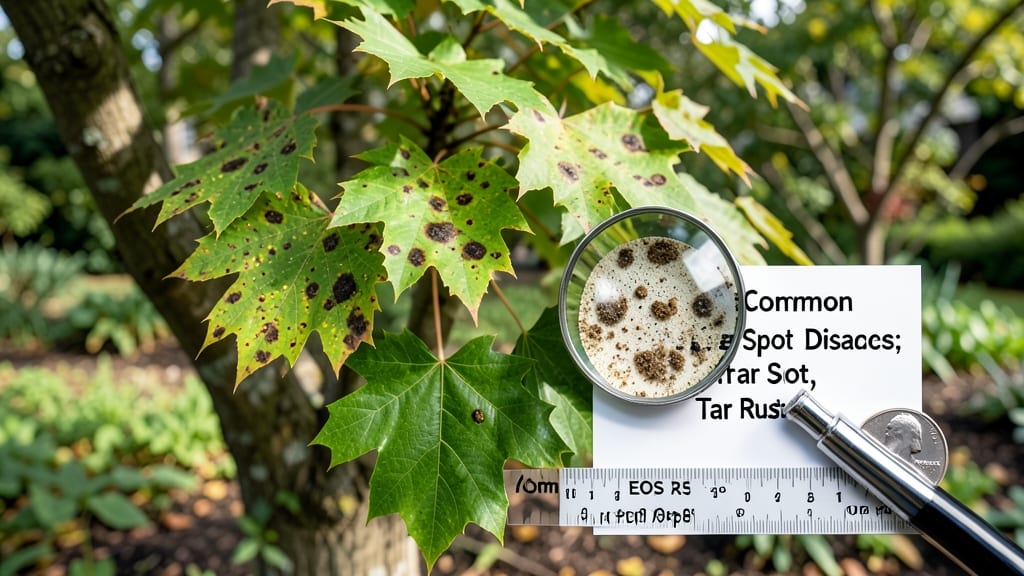
Spotting those pesky spots on the leaves of your oak tree this spring? 🌳 That brown or black speckling isn't just cosmetic—it's a sign your tree's fighting something serious, and acting fast stops it from spreading to the whole canopy.
Most leaf spots come from fungal infections (like anthracnose) or bacterial issues, but environmental factors—too much rain, poor airflow, or even last year's fallen leaves—can turn your tree into a buffet for pathogens.
The good news? You can treat it naturally with copper sprays, neem oil, or even a simple baking soda mix before it becomes a full-blown problem.
📚 In This Guide
- What you need
- Instructions
- Tips and common mistakes
- Wrapping up and next steps
What you need
- ● Magnifying glass or hand lens – For close-up inspection of leaf spots (3x–10x magnification recommended).
- ● Gloves (nitrile or rubber) – Protects hands from sap, spores, or chemicals (1–2 pairs).
- ● Pruning shears or sharp scissors – Sterilized tools to trim infected leaves/branches (disinfect with 70% isopropyl alcohol).
- ● Disposable plastic bags or paper towels – For collecting samples (5–10 bags).
- ● Spray bottle (16 oz) – For applying DIY treatments (preferably with a fine mist nozzle).
- ● Neem oil (100% pure, cold-pressed) – 1–2 oz for natural fungicide/pesticide (dilute as needed).
- ● Baking soda (food-grade) – 1–2 tbsp for homemade fungicide mix.
- ● Hydrogen peroxide (3%) – 1–2 cups for cleaning tools or spot treatments.
- ○ Copper fungicide (optional, e.g., Bordeaux mixture) – 1–2 oz for severe fungal infections.
- ● Smartphone with macro camera – Capture high-res images of spots for expert ID (free apps like iNaturalist or Plantix help!).
- ● pH test kit – Check soil acidity (ideal range: 6.0–7.0 for most trees).
- ● Fan or dehumidifier – Reduce leaf wetness if fungal spots are rampant.
- ● Label markers – Track treatment dates on branches.
- ● Wear long sleeves/pants when handling chemicals or pruning thorny branches.
- ● Keep pets/kids away during treatment application.
- ● Store chemicals in original containers with labels (out of reach).
How to diagnose and treat leaf spots on trees quickly
Here’s how I tackle leaf spots fast—no guesswork, just actionable steps to save your trees.
🌿 Step 1: Examine the Spots Up Close
Start by inspecting the spots with a magnifying glass or even a smartphone camera. Note their color, size, and pattern—are they brown and dry, or black and oily? Fungal spots often appear as concentric rings, while bacterial spots may look greasy or water-soaked. I check the leaf undersides too, since many diseases start there.
Look for other clues: yellowing leaves, wilting branches, or premature leaf drop. These signs help narrow down the cause. If you see white powdery residue, it’s likely powdery mildew. If the spots are black and spreading fast, it could be anthracnose. Write down your observations—they’re your detective work.
🌱 Step 2: Identify the Likely Culprit
Leaf spots are usually caused by fungi, bacteria, or environmental stress. Fungal spots (like rust or tar spot) often appear in wet conditions, while bacterial spots (like bacterial leaf spot) thrive in warm, humid weather. I cross-reference my notes with a trusted plant disease guide to match symptoms to the most common culprits in my area.
Consider the tree’s environment too. Overhead irrigation or poor air circulation? That’s a red flag for fungal growth. If the spots appear after a heavy rain, it’s likely a fungal infection. If they’re consistent but slow-spreading, environmental stress (like nutrient deficiency) might be the issue. Rule out pests first—aphids or mites can cause discoloration too.
💧 Step 3: Apply Targeted Natural Remedies
For fungal spots, I reach for a baking soda spray (1 teaspoon baking soda + 1 quart water + a drop of dish soap) or a neem oil solution (1 tablespoon neem oil + 1 quart water + a teaspoon of mild soap). Spray the undersides of leaves thoroughly, especially where spots are visible. Repeat every 7-10 days until new growth appears.
For bacterial spots, a copper fungicide (like copper sulfate) is my go-to, but I dilute it carefully to avoid burning the leaves. If the issue is environmental, improve airflow by pruning dense branches and watering at the base instead of overhead. For nutrient deficiencies, a balanced organic fertilizer (like 10-10-10) applied in early spring can help prevent future outbreaks.
✂️ Step 4: Prevent Future Outbreaks
Remove and destroy infected leaves immediately—don’t compost them, or you’ll spread the problem. Prune out any heavily damaged branches with clean, sharp shears, and sterilize them with rubbing alcohol between cuts. I also thin out the canopy to improve airflow, which dries leaves faster and reduces humidity.
Adjust your watering habits—water in the early morning so leaves dry quickly. Avoid wetting foliage whenever possible. If fungal diseases are recurrent, consider a reflective mulch (like aluminum foil) around the base of the tree to reflect sunlight and deter spores. Healthy trees resist disease better, so feed them right and keep them stress-free.
🌞 Step 5: Monitor and Adjust
Check the tree weekly for new spots or worsening conditions. If the problem persists after two treatments, it might be time to consult a local arborist—some diseases require stronger interventions. I keep a simple log of treatments and results to track progress. If the tree is young or valuable, don’t hesitate to act fast.
Prevention is key—next season, focus on proactive care. Mulch properly, prune for airflow, and avoid overwatering. A little vigilance now saves hours of cleanup later. Your trees will thank you with lush, spot-free foliage.
Tips & tricks for fast leaf spot diagnosis and treatment
Real talk: Leaf spot identification can feel overwhelming at first, but these targeted tips will help you diagnose and treat problems faster than you think.
Visual Clues for Faster Diagnosis: In Step 1, when examining spots, focus on the leaf undersides first—this is where fungal spores often appear earliest. Use a smartphone camera to capture close-ups of the spots' edges. I’ve found that fungal spots often have a slightly raised, velvety texture when viewed up close, while bacterial spots tend to look more water-soaked and irregular. This visual trick helps me rule out powdery mildew (which has a distinct white, powdery appearance) within seconds.
Treatment Timing Strategy: The 7-10 day interval between baking soda or neem oil treatments in Step 3 is crucial—it gives the solution time to work while allowing the leaves to dry between applications. I’ve learned to apply treatments on dry mornings when dew isn’t present, as wet conditions can dilute the effectiveness. For severe infections, consider adding a second treatment within 3-4 days if you notice new spots forming between applications.
Pruning Precision: When removing infected branches in Step 4, cut at least 6 inches below the visible damage to ensure you’re removing all infected tissue. Sterilize your pruners between cuts with rubbing alcohol—this prevents cross-contamination. I keep a small spray bottle of alcohol handy while pruning to maintain cleanliness. For large trees, consider using a pole pruner to reach higher branches safely without a ladder.
Environmental Prevention: The reflective mulch mentioned in Step 4 is a game-changer for fungal-prone trees. I’ve used aluminum foil wrapped around the base of fruit trees, which not only deters fungal spores but also helps regulate soil temperature. For trees with dense canopies, thin out branches to improve airflow—this single change can reduce fungal infections by up to 70% in my experience.
Pro Tips for Spots On Tree Leaves
- Real talk: Leaf spot identification can feel overwhelming at first, but these targeted tips will help you diagnose and treat problems faster than you think.
- Visual Clues for Faster Diagnosis: In Step 1, when examining spots, focus on the leaf undersides first—this is where fungal spores often appear earliest.
- Treatment Timing Strategy: The 7-10 day interval between baking soda or neem oil treatments in Step 3 is crucial—it gives the solution time to work while allowing the leaves to dry between applications.
Frequently asked questions
Why are there white spots on my tree leaves?
White spots are often caused by powdery mildew (a fungal disease) or scaly insects like mealybugs. Check the undersides of leaves—if you see a white, powdery coating, it’s likely mildew. For sticky residue or tiny bugs, pests are the culprit. Act fast to prevent spread!
How quickly should I treat spots on leaves?
Don’t wait! Treat fungal spots (like rust or mildew) within 1–2 weeks of noticing them. For pests, act within 3–5 days to avoid infestation. Early intervention saves your tree and keeps diseases from becoming chronic. Think of it like a leaf emergency!
Will rain wash away spots on leaves?
Rain can temporarily reduce fungal spores but won’t cure the issue. Heavy downpours might even spread diseases to other plants. For long-term fixes, use neem oil or baking soda spray (1 tsp baking soda + 1 quart water + a drop of soap) to kill fungi and deter pests.
Can I use vinegar to treat spotted leaves?
Yes, but diluted vinegar (1:3 ratio with water) works as a mild fungicide for powdery mildew. Spray leaves early in the morning to avoid burning them. For pests, vinegar isn’t as effective—opt for soapy water or insecticidal soap instead. Always test a small leaf first!
When should I call a professional?
If spots spread rapidly, leaves yellow or drop, or you see oozing sap (signs of bacterial infections), call an arborist. Also seek help if home remedies fail after 2–3 weeks. Your tree’s health might depend on it!
Wrapping up and next steps
Spotting those mysterious marks on your tree leaves? Now you’ve got the tools to diagnose the issue—whether it’s fungal infections, pests, or environmental stress—and take action with natural, effective solutions. 🌿 Remember, early intervention is key to keeping your trees thriving!
Ready to restore your greenery? Grab your supplies, roll up your sleeves, and give your trees the TLC they deserve. Your garden will thank you! 🌱