
Pruning
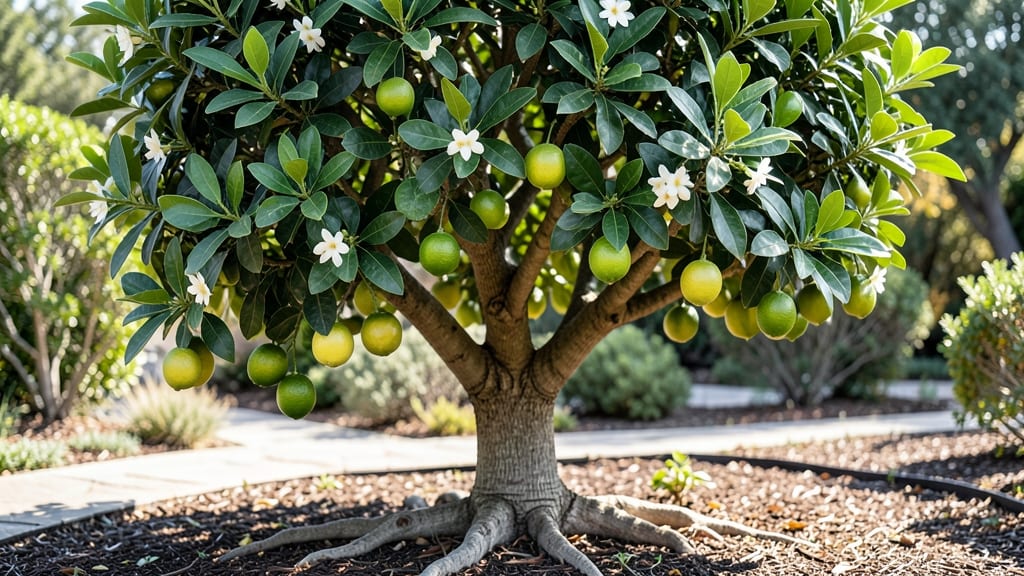
Your large lime tree won’t grow into an unruly giant if you prune it right—year-round. 🌿 I’ve wrestled with towering canopies that blocked sunlight and weighed branches dangerously low, but these simple techniques keep them strong, productive, and manageable.
The key is timing: aggressive cuts in late winter and light shaping after harvest to encourage airflow and fruit production.
You’ll need sharp pruning shears, a ladder (for those high branches), and a clear day to avoid spreading disease. Focus on removing water sprouts (those fast-growing vertical shoots) and thinning crowded branches by one-third to let sunlight penetrate.
For 'Bearss' or 'Persian' limes, prioritize branches that produce fruit—these varieties reward precision pruning with bumper harvests.
By summer, your tree will reward you with denser foliage and easier access to those high-hanging limes. The secret? Never cut more than 25% of the canopy in one session, and always prune just outside a bud to encourage outward growth.
Frost-sensitive varieties like these need extra care—cover young trees if winter temps dip below 28°F.
This method works for both backyard trees and larger orchards, adapting to your space. Start small, and you’ll avoid the heartbreak of a snapped branch—or worse, a tree that outgrows its welcome. Let’s get those branches under control before they outgrow your patience.
📚 In This Guide
- What you need
- Instructions
- Tips and common mistakes
- Wrapping up and next steps
What you need
- ● Pruning shears: Bypass pruners (for cuts up to ¾ inch) – 1 pair (look for sharp, ergonomic handles for comfort).
- ● Loppers: Bypass or anvil type (for cuts up to 2 inches) – 1 pair (pivot-jointed for leverage).
- ● Pruning saw: Curved-tooth (for branches 2+ inches thick) – 1 saw (avoid rust; carbon steel or high-carbon blades preferred).
- ● Extension pole: 10–15 ft telescoping – 1 unit (with pruning saw attachment for high branches).
- ● Safety gear: Heavy-duty work gloves (cut-resistant, like mechanics gloves).
- ● Safety goggles (ANSI-rated for debris protection).
- ● Non-slip steel-toe boots or closed-toe shoes.
- ● Cleaning supplies: Rubbing alcohol (70% isopropyl) or bleach solution (1 part bleach to 9 parts water).
- ● Paper towels or lint-free rags.
- ● Disposal bag: Heavy-duty contractor bag (30+ gallon) – 1–2 bags (for debris; check local composting rules for lime tree clippings!).
- ● Ladder: Sturdy, 3-section extension ladder (20–24 ft) – 1 ladder (ensure it’s rated for your weight + tools).
- ○ Tree wound dressing: Pruning sealant (optional; controversial—skip unless treating a large wound >2 inches).
- ● Marking twine or flags: For tagging branches to remove (useful for year-round planning).
- ● First-aid kit: Bandages, antiseptic wipes, and tweezers (for splinters or minor cuts).
Step-by-Step guide to pruning large lime trees
Here’s how I maintain my towering lime trees—keeping them healthy, productive, and perfectly shaped year-round.
✂️ Step 1: Assess the Tree’s Structure and Identify Priority Cuts
Begin by examining the tree from all sides, looking for branches that cross, grow inward, or rub against each other. These are your first targets—they create wounds that invite disease and compete for energy. I also scan for dead, diseased, or broken limbs, which should be removed immediately to prevent further damage. Use a pair of sharp bypass pruners to make clean cuts just outside the branch collar, the swollen area where the branch meets the trunk.
Next, focus on the tree’s natural shape. Lime trees grow upward aggressively, so I prioritize thinning the canopy to allow sunlight and air to reach the lower branches. Aim to remove no more than 25% of the tree’s foliage in a single session—this prevents shock and maintains productivity. If the tree has overgrown limbs extending beyond its intended shape, mark those for reduction cuts, which should be made just above a lateral branch or bud.
✂️ Step 2: Prune for Airflow and Sunlight Penetration
Step back and visualize the tree’s interior. Dense foliage traps moisture, creating ideal conditions for fungal diseases like anthracnose. I target clusters of branches that block light from reaching the center of the tree, cutting back the thickest growth first. For larger branches, use loppers or a pruning saw, making cuts at a 45-degree angle just outside the branch collar. Seal larger wounds with pruning sealant to minimize sap loss and infection risk.
Pay special attention to the lower canopy. Lime trees often develop a bare trunk as they mature, but you can encourage new growth by selectively pruning back some of the upper branches. This redirection of energy stimulates lower branches to fill in. Avoid removing more than one-third of the foliage in any single pruning session—this ensures the tree remains resilient and continues producing fruit.
✂️ Step 3: Shape the Tree for Balance and Aesthetic Appeal
Now’s the time to refine the tree’s silhouette. Lime trees have a natural upright growth habit, but without guidance, they can become top-heavy and structurally weak. I focus on creating a balanced, pyramid-like shape, gradually reducing the height of the upper branches while allowing the lower limbs to spread outward. For upward-growing branches, make a heading cut just above a lateral bud to encourage outward growth.
To maintain symmetry, alternate cuts between the left and right sides of the tree. Avoid over-pruning one side, as this can lead to uneven regrowth. If the tree has a dominant central leader (the main upward-growing branch), I often reduce its length by one-third to promote lateral branching. This creates a fuller, more stable canopy that’s easier to manage in future years.
⏰ Step 4: Time Pruning for Optimal Recovery and Fruit Production
The best time to prune lime trees depends on your climate and goals. In mild winter (USDA Zones 9-11), I prune lightly in late winter or early spring before new growth begins. This removes dead wood and shapes the tree before the growing season. In cooler climates, wait until late winter or early spring when the tree is still dormant but buds are swelling—this timing minimizes stress and encourages vigorous new growth.
For summer pruning, focus on light maintenance—removing only water sprouts, suckers, or branches that interfere with airflow. Avoid heavy pruning in summer, as this can stimulate excessive new growth that won’t harden off before winter. If you notice excessive fruiting reducing tree health, prune after harvest to redirect energy into next year’s crop. Always sterilize your tools with rubbing alcohol between cuts to prevent spreading disease.
🌿 Step 5: Post-Pruning Care to Ensure Tree Health
After pruning, inspect the tree for any signs of stress, such as wilting leaves or excessive sap leakage. Water the tree deeply to help it recover, ensuring the soil remains moist but not waterlogged. Apply a balanced fertilizer (10-10-10 or similar) in early spring to support new growth, following the package instructions for application rates. Avoid over-fertilizing, as this can encourage soft, disease-prone growth.
Monitor the tree closely in the weeks following pruning. If you notice new growth emerging from the wrong places (like water sprouts along the trunk), remove them promptly to maintain the desired shape. Mulch around the base of the tree with 2-3 inches of organic mulch, keeping it 6 inches away from the trunk to prevent rot. This helps retain moisture, regulate soil temperature, and suppress weeds—all of which contribute to a healthier, more resilient tree.
Tips & tricks for large lime tree pruning
Here's what I've learned after years of shaping my own towering citrus giants—these details make all the difference between a healthy, productive tree and one that struggles to recover.
Tool Selection Matters: Never use dull pruners—they crush branches instead of making clean cuts. I invest in high-quality bypass pruners for small branches and loppers with sharp blades for thicker limbs. For branches over 2 inches thick, a pruning saw with a fine-tooth blade prevents tearing. Always sterilize tools between cuts with rubbing alcohol to prevent spreading disease. This step alone has saved my trees from multiple infections over the years.
Branch Collar Awareness: In Step 1, when making cuts just outside the branch collar, resist the urge to cut flush with the trunk. The collar contains healing tissues that protect against decay. If you accidentally cut into it, the wound will heal poorly and may become infected. Look for that swollen area where the branch meets the trunk—your cut should be just beyond it, leaving a small stub. This might seem counterintuitive, but it's what professional arborists swear by.
Seasonal Nuances: The timing in Step 4 isn't just about when to prune—it's about understanding your tree's growth cycle. In mild climates, that late winter/early spring window gives the tree time to heal before summer heat stress. But if you're in a cooler zone, wait until buds are just starting to swell—this signals the tree is ready to respond to pruning without shock. I've learned to check for bud swell by gently pressing a fingernail against a branch; if it leaves a slight impression, it's time to prune.
Post-Pruning Recovery: After your cuts, don't just walk away. The care in Step 5 is where many people drop the ball. I've seen trees that looked perfect after pruning but struggled because they weren't given proper recovery time. Water deeply for at least two weeks post-pruning, and consider applying a thin layer of pruning sealant to larger wounds immediately after cutting. This creates a protective barrier against pathogens while the tree focuses its energy on healing rather than fighting infection.
Pro Tips for Lime Tree Large
- Here's what I've learned after years of shaping my own towering citrus giants—these details make all the difference between a healthy, productive tree and one that struggles to recover.
- Tool Selection Matters: Never use dull pruners—they crush branches instead of making clean cuts.
- Branch Collar Awareness: In Step 1, when making cuts just outside the branch collar, resist the urge to cut flush with the trunk.
Frequently asked questions
Got questions about keeping your large lime tree in tip-top shape? Here are some of the most common concerns—plus quick answers to help you prune like a pro!
When is the best time to prune a large lime tree?
The ideal time is late winter or early spring (before new growth starts), but you can do light pruning year-round for safety or shape adjustments. Avoid heavy pruning in fall—it can stress the tree and leave it vulnerable to pests or disease. For tropical lime trees, prune after harvest to encourage fruit production.
How much can I trim without harming my lime tree?
Never remove more than 25% of the canopy in one session—this prevents shock and ensures the tree can recover. For large lime trees, focus on selective thinning (removing inward-growing or crossing branches) rather than aggressive cuts. If you’re unsure, start small and monitor the tree’s response over a few weeks.
Why are my lime tree’s leaves yellowing after pruning?
Yellowing leaves can signal over-pruning or nutrient stress. If it happens right after trimming, you may have cut too aggressively. Check for sap oozing from cuts (a sign of damage) and ensure you’re using clean, sharp tools. Fertilize lightly with citrus-specific food and water deeply to help recovery.
Can I shape my lime tree into a standard (like a small tree with a single trunk)?
Yes! Start when the tree is young (under 5 years old) by removing lower branches to encourage a single trunk. For mature trees, thin out competing leaders and support the main trunk with stakes if needed. Be patient—this takes 2–3 years of careful pruning. Avoid heavy shaping in one go to prevent stress.
How do I prevent pests after pruning?
Pruning creates entry points for pests like aphids or scale insects. Sterilize tools with rubbing alcohol between cuts, and seal larger wounds with pruning sealant (optional for citrus). Remove and dispose of pruned debris promptly. If pests appear, treat with neem oil or insecticidal soap—citrus trees are tough but benefit from proactive care!
Wrapping up and next steps
Pruning your large lime tree isn’t just about keeping its canopy in check—it’s an investment in its health, beauty, and future fruitfulness! 🌿 With the right tools, timing, and techniques, you can shape a stunning, sky-reaching tree while ensuring it thrives year after year.
Whether you’re trimming for safety, aesthetics, or productivity, consistency is key.
Ready to take the next step? Start small—pick one section to prune this season, then gradually expand your efforts. Before you know it, your lime tree will be the showstopper of your landscape! 🌳✨