
Pruning
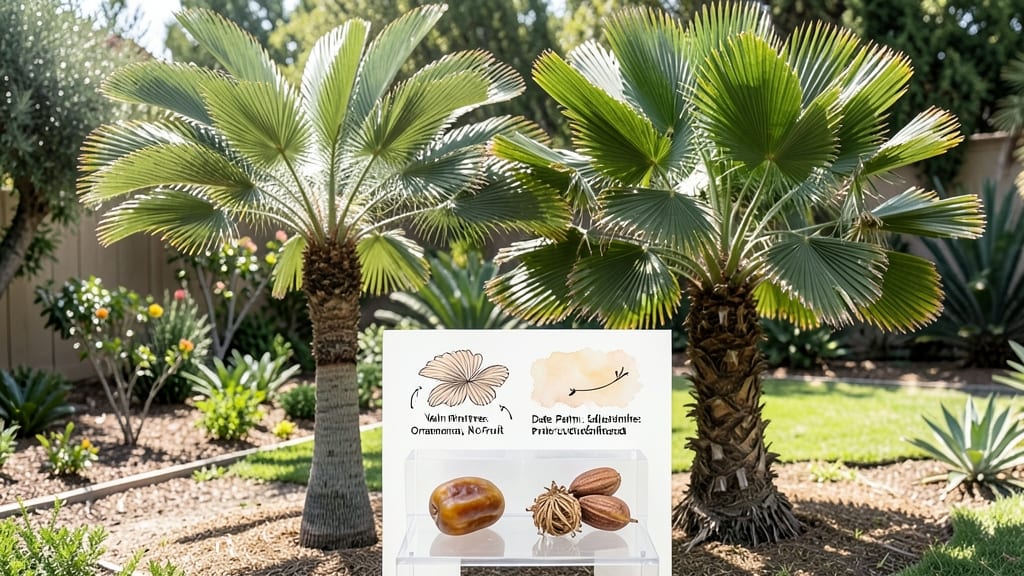
Palm trees and date trees aren't the same: date palms (Phoenix dactylifera) are one specific species known for their edible fruit, while 'palm tree' refers to over 2,500 tropical species with varied growth patterns and typically inedible fruit.
While both belong to the palm family, date palms are just one type of palm tree—like comparing apples to the entire fruit category. 🌴 The key difference lies in their purpose: date palms are cultivated for their sweet, nutrient-rich fruit, while most other palms serve ornamental or ecological roles.
For example, coconut palms produce coconuts, while royal palms add tropical beauty to landscapes without bearing edible fruit. This distinction affects everything from cultivation needs to how you'd use them in your garden.
Date palms thrive in arid climates with well-draining soil, while many ornamental palms prefer tropical humidity. Their growth habits also differ: date palms develop a single trunk with a crown of fronds, whereas some palms grow in clusters.
Understanding these differences helps you choose the right palm for your space—whether you're after fruit or foliage.
💡 In This Article
- Botanical Differences Between Date Palms and General Palm Trees
- Growing and Harvesting Date Palms vs Ornamental Palm Trees
Botanical differences between date palms and general palm trees
The most fundamental difference lies in their scientific classification. Date palms belong to the genus Phoenix, specifically Phoenix dactylifera, while the term "palm tree" encompasses over 2,500 species across 180+ genera within the Arecaceae family.
This means date palms are just one specialized branch of the palm family tree. 🌿 For comparison, coconut palms (Cocos nucifera) belong to a completely different genus, highlighting how diverse the palm family truly is.
Leaf structure offers another clear distinction. Date palms develop fan-shaped fronds with 100-150 leaflets arranged in a precise pattern, while many ornamental palms like the palmately compound species (such as Chamaedorea) have more delicate, divided fronds.
The fronds grow in a spiral pattern along the trunk, but date palms' fronds can reach 15-20 feet long, whereas most ornamental palms stay under 6 feet. This size difference affects their visual impact and maintenance needs significantly.
Trunk characteristics set date palms apart too. Date palms develop a single, straight trunk that can grow 65-100 feet tall with a diameter of 1-2 feet, topped by a crown of fronds.
In contrast, many ornamental palms like clumping palms (Thrinax) produce multiple trunks in a dense cluster, creating a bushier appearance.
The trunk texture also differs: date palms have a rough, fibrous surface from old leaf bases, while smooth-barked palms like traveler's palms (Ravenala madagascariensis) offer a sleeker look.
Root systems reveal another key difference. Date palms develop a deep taproot system that can extend 10-15 feet deep, allowing them to thrive in arid conditions by accessing groundwater. Most ornamental palms, however, have shallow, fibrous root systems that spread widely but don't penetrate as deeply.
This adaptation explains why date palms survive with 50% less water than many tropical palms that need consistent moisture.
The fruit itself provides the most obvious botanical distinction. Date palm fruit develops in clusters of 100-1,000 dates per bunch, with each date containing a single seed.
In contrast, most ornamental palms produce non-edible fruit—often small, hard, or toxic berries—that serve ecological purposes like feeding wildlife rather than human consumption. The date's unique fleshy pericarp (fruit wall) surrounds the seed, creating the sweet, chewy texture we recognize.
Consider these key botanical contrasts when identifying palms:
- Genus: Date palms = Phoenix; most ornamental palms = different genera
- Frond size: Date palms = 15-20 feet; ornamental = typically under 6 feet
- Trunk structure: Date palms = single, fibrous; ornamental = single or clustered, often smoother
- Root depth: Date palms = 10-15 feet deep; ornamental = shallow, spreading
- Fruit: Date palms = edible, sweet; ornamental = usually inedible, small