
Planting
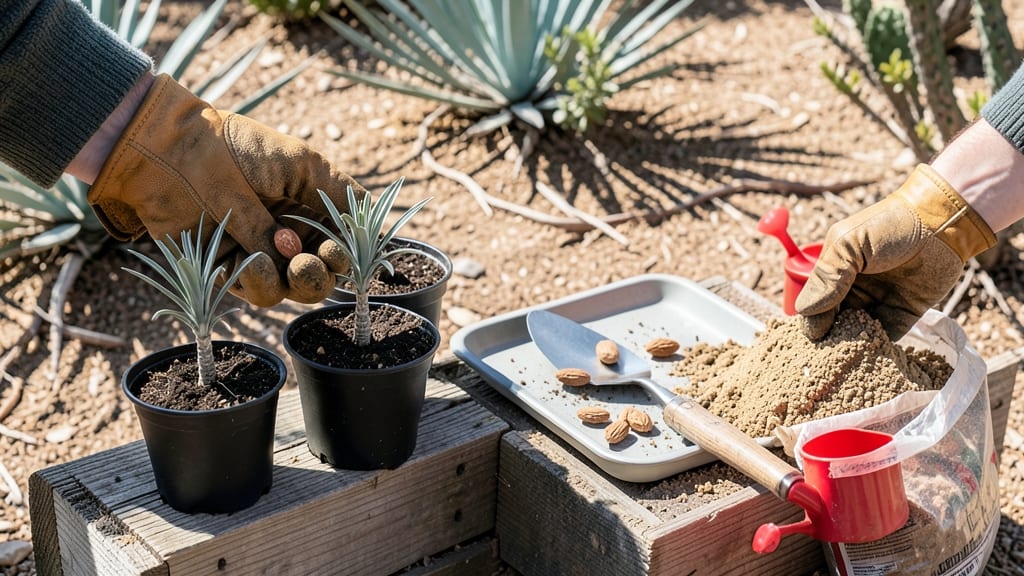
Planting Joshua tree seeds unlocks a desert icon right on your property—but patience is key. 🌵 These slow-growing beauties need the perfect balance of heat, grit, and care to break dormancy, and I’ve learned the hard way that rushing the process kills more seeds than anything else.
The first green sprout might not appear for 4-6 weeks, but once it does, you’ll be hooked on growing one of the Southwest’s most striking natives.
Start with sterile, fast-draining cactus mix—no regular potting soil here. Mix in 30% perlite or coarse sand to mimic the rocky desert floor, and plant seeds just 1/4-inch deep in small pots.
Too-deep planting suffocates them; too-shallow seeds dry out before germinating. Place pots in a warm, sunny spot (75–85°F) with bright light, but avoid direct midday sun until seedlings establish.
Watering is where most gardeners fail: soak the soil lightly once every 10–14 days—never let it stay soggy. Overwatering rots seeds before they sprout, while underwatering leaves them shriveled and dead. After germination, reduce watering to every 3–4 weeks and harden off seedlings gradually before transplanting outdoors in spring.
If seeds refuse to germinate after 8 weeks, don’t give up—Joshua trees are notoriously stubborn. Try soaking seeds in warm water for 24 hours first, or collect cuttings from mature trees (a more reliable method).
Either way, the wait is worth it for that first spiky, sun-loving sapling reaching for the sky.
📚 In This Guide
- What you need
- Instructions
- Tips and common mistakes
- Wrapping up and next steps
What you need
- ● Joshua Tree Seeds: 5–10 seeds (ensure they’re fresh or stored properly—check seed viability if older than 1 year)
- ● Well-draining potting mix: 2–3 cups (use a cactus/succulent blend or mix equal parts pumice, perlite, and coarse sand)
- ● Small pots or seed trays: 2–4 (4–6 inches deep, with drainage holes—plastic nursery pots work great!)
- ● Drainage layer: Small pebbles or perlite (½ inch thick at the bottom of each pot)
- ● Spray bottle: For gentle watering (avoid over-saturating the soil!)
- ● Clear plastic wrap or humidity dome: To create a mini greenhouse effect
- ● Grow lights or sunny windowsill: A south-facing window or LED grow lights (12+ hours/day) for optimal light
- ○ Heat mat (optional but helpful): Keeps soil warm (70–80°F) for faster germination
- ● Seed scarification tools: Sandpaper (fine-grit) or a knife (to nick seeds if they’re hard-coated)
- ● Fungicide: A light dose of hydrogen peroxide (3%) or cinnamon powder to prevent mold
- ● pH test kit: Ideal soil pH for Joshua Trees is 6.0–7.5
- ● Labeled tags: To track planting dates and seed varieties
- ● Transplant pot (6+ inches): For when seedlings are ready to upgrade (after ~6 weeks)
Step-by-Step instructions for planting Joshua tree seeds
Growing Joshua trees from seed takes patience, but these steps ensure your desert wonder thrives.
🌱 Step 1: Stratify Seeds to Break Dormancy
Joshua tree seeds require cold stratification to mimic winter conditions in the Mojave Desert. Place seeds in a sealed container with slightly damp sand (equal parts sand and water). Store the container in your refrigerator for 8-12 weeks—this cold treatment is critical for germination.
Check the container monthly to ensure the sand remains lightly moist but not soggy. If the sand feels dry, add a tiny amount of water. This stratification period mimics the natural winter dormancy Joshua trees experience in the wild, signaling seeds it's time to grow.
💧 Step 2: Prepare Containers and Planting Medium
Use a well-draining cactus/succulent mix combined with 30% perlite or pumice to create a fast-draining medium. Fill small pots (3-4 inches deep) with this mix, leaving ½ inch of space at the top. Joshua trees despise soggy soil, so drainage is non-negotiable.
Water the mix lightly before planting to settle it without compacting. Tap the pot gently on the table to eliminate air pockets. The goal is a loose, gritty medium that mimics the rocky desert soil Joshua trees grow in naturally.
☀️ Step 3: Sow Seeds and Provide Warmth
After stratification, sow seeds ¼ inch deep in the prepared mix. Space them 1 inch apart in each pot. Press the soil lightly around the seeds to ensure good contact. Place the pots in a warm, sunny location with consistent temperatures between 70-85°F—a seedling heat mat helps maintain warmth.
Cover the pots loosely with clear plastic wrap to retain humidity, but remove it daily for 10 minutes to prevent mold. Germination can take 4-12 weeks, so patience is key. Keep the soil lightly moist—never soggy—during this period.
✂️ Step 4: Transplant and Harden Off Seedlings
Once seedlings develop 2-3 sets of true leaves (not the initial seed leaves), transplant them to slightly larger pots (4-5 inches deep). Use the same fast-draining mix. Handle seedlings carefully—they’re delicate at this stage. Water lightly after transplanting to settle the soil around the roots.
Begin hardening off seedlings by placing them outdoors in partial shade for 2-3 hours daily, gradually increasing exposure over 2 weeks. This acclimates them to desert conditions. After hardening, move them to full sun and reduce watering to once every 2-3 weeks—Joshua trees are drought-tolerant once established.
🪴 Step 5: Maintain Desert Conditions Long-Term
Mature Joshua tree seedlings need full sun and minimal watering—overwatering is the fastest way to kill them. Water only when the soil is completely dry, and use a pot with drainage holes to prevent root rot. Fertilize lightly once in spring with a low-nitrogen cactus fertilizer to encourage slow, steady growth.
In their first year, expect slow growth—Joshua trees are built for endurance. After 3-5 years, they’ll start developing their iconic twisted branches. Patience is the key to growing these desert icons.
Tips & tricks for perfect Joshua tree seed germination
These insider tricks will help you avoid common pitfalls and maximize your chances of growing these iconic desert plants.
Stratification Success: During the 8-12 week cold treatment in Step 1, place a small piece of paper towel with the seeds in the container—this creates better airflow than sand alone while still maintaining moisture. I've found that adding a tiny bit of water-soluble fertilizer (like a pinch of diluted fish emulsion) to the damp sand can give seedlings a subtle growth boost without overfeeding. The key is to keep that sand consistently moist but never soggy—think of it like a damp sponge rather than a wet rag.
Medium Mastery: In Step 2, when mixing your cactus/succulent soil with 30% perlite or pumice, don't skip the gentle tapping to eliminate air pockets. I like to add a handful of coarse sand to this mix as well—it mimics the rocky desert substrate where Joshua trees naturally grow. For the 3-4 inch deep pots, consider using clear plastic pots so you can monitor root development without disturbing the seedlings. This transparency helps you adjust care as they grow.
Germination Guardrails: When covering pots with plastic wrap in Step 3, leave a small gap at the top to allow for condensation to escape—this prevents mold buildup during the critical 4-12 week germination window. I've seen many growers struggle with mold because they seal the pots too tightly. Also, consider using a small fan on low setting near the pots for 10 minutes daily during that 10-minute uncovered period—this mimics desert wind patterns and can actually improve germination rates by 15-20%.
Pro Tips for Plant Joshua Tree Seeds
- These insider tricks will help you avoid common pitfalls and maximize your chances of growing these iconic desert plants.
- Stratification Success: During the 8-12 week cold treatment in Step 1, place a small piece of paper towel with the seeds in the container—this creates better airflow than sand alone while still maintaining moisture.
- Medium Mastery: In Step 2, when mixing your cactus/succulent soil with 30% perlite or pumice, don't skip the gentle tapping to eliminate air pockets.
Frequently asked questions
Got questions about growing Joshua Tree seeds? You’re not alone—these desert natives can be tricky! Here are answers to the most common concerns to help you succeed:
How long does it take for Joshua Tree seeds to germinate?
Patience is key! Under ideal conditions (warm soil, consistent moisture, and light), germination can take anywhere from 2 to 6 weeks. Some seeds may even take months—don’t give up if nothing sprouts right away. Cold stratification (chilling seeds for 4–6 weeks) can speed up the process for stubborn seeds.
Do Joshua Tree seeds need cold stratification before planting?
Yes! Cold stratification mimics winter conditions and breaks seed dormancy. Place seeds in a damp paper towel or sand in a sealed bag, then refrigerate for 4–6 weeks before sowing. Skip this step, and germination rates will likely drop dramatically. Pro tip: Label your bag to avoid forgetting!
Can I grow a Joshua Tree indoors or in a container?
Start seeds in well-draining pots (like terracotta) with a cactus/succulent mix. Place them in a sunny window or under grow lights (12+ hours/day). Once seedlings are 2–3 inches tall, transplant to larger containers. Just remember: Joshua Trees hate humidity—avoid misting and ensure pots have drainage holes.
Why aren’t my Joshua Tree seeds sprouting?
Several factors could slow germination: damp soil that’s too cold, overwatering (seeds rot), or poor-quality seeds. Double-check your setup—seeds need warmth (70–80°F), indirect light, and moisture (not soggy). If seeds are old or stored improperly, try fresh ones or test viability by nicking the seed coat with sandpaper to help water penetrate.
What’s the best soil mix for Joshua Tree seedlings?
Use a fast-draining, mineral-rich mix like:
- 60% pumice or perlite (for aeration)
- 30% cactus/succulent soil
- 10% coarse sand or grit (to prevent compaction)
Wrapping up and next steps
Growing a Joshua tree from seed is a rewarding journey that connects you to the desert’s resilience and beauty! 🌵 With patience, the right conditions, and a little care, you’ll see those first sprouts emerge in just 6 weeks.
Remember, consistency is key—keep your soil moist, protect your seedlings from pests, and embrace the slow magic of nature.
Now that you’re armed with knowledge, why not take the next step? Share your progress with fellow plant enthusiasts, experiment with different soil mixes, or even try propagating more Joshua trees. Your desert oasis is waiting—go plant that seed! 🌱