
How To
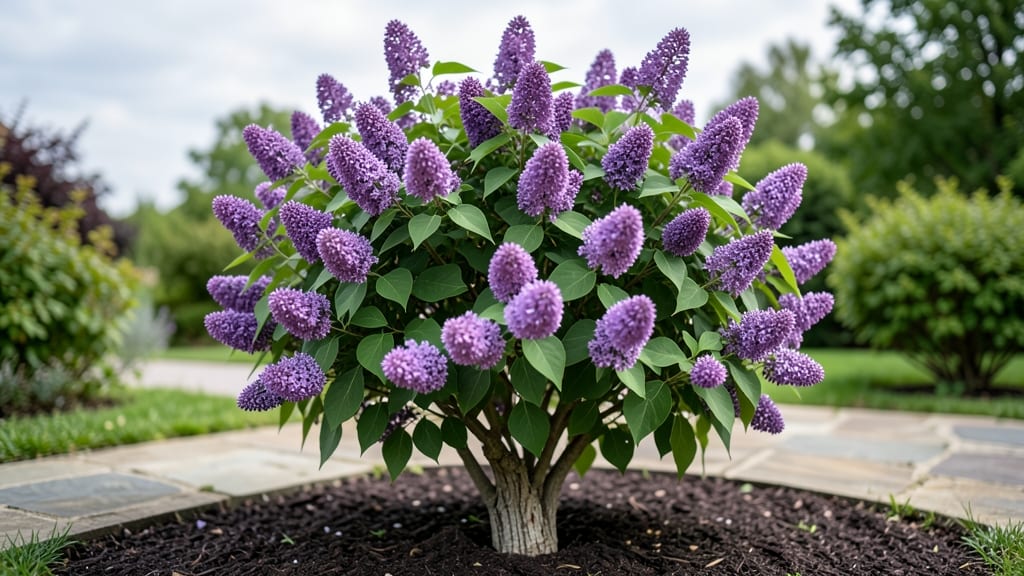
A lilac tree can grow anywhere from 4 feet to over 15 feet tall, depending on the variety and how you care for it.
If you're dreaming of fragrant purple blooms but wondering whether a lilac tree will dwarf your backyard—or add elegant height—you’re not alone. Lilacs vary wildly in size, from compact shrubs perfect for small gardens to towering giants that make a bold statement in large landscapes.
Some varieties, like the 'Miss Kim' lilac, stay under 6 feet tall, making them ideal for urban patios or foundation plantings. Others, such as the classic 'Katherine Havemeyer', can reach heights of 12 to 15 feet when mature, rivaling small trees.
The key to controlling their height lies in pruning, soil conditions, and choosing the right type for your space.
In this guide, I’ll break down the height ranges of popular lilac varieties, share expert pruning tips to manage growth, and help you pick the perfect 🌸 for your garden—whether you want a low-maintenance shrub or a fragrant centerpiece that towers over your yard.


Lilac tree height by variety: from dwarf shrubs to giant specimens
Choosing the right lilac variety depends entirely on your garden’s vertical space. Some lilacs stay compact, perfect for small yards, while others grow into towering specimens that dominate landscapes.
The common lilac (Syringa vulgaris) typically reaches 12–15 feet at maturity, but dwarf varieties like 'Miss Kim' max out at 4–6 feet. Understanding these differences ensures you pick a plant that thrives in your space without crowding other features.
Lilac height isn’t just about the stem length—it’s also about spread. A 10-foot-tall lilac might have a 10-foot-wide canopy, doubling its footprint. For example, 'President Lincoln' grows 15–20 feet tall but spreads 12–15 feet wide, making it a statement piece for large properties.
Meanwhile, 'Dwarf Korean Lilac' stays under 6 feet in both height and width, ideal for containers or tight spaces.
Growth rates vary too. Most lilacs grow 1–2 feet per year until mature, but some, like 'Palibin', grow faster—adding 3 feet annually in ideal conditions. This means a 3-year-old 'Palibin' could already be 6–8 feet tall, while a standard lilac might still be under 5 feet.
Planning for this early saves headaches later when your lilac outgrows its spot.
Climate also plays a role. Lilacs in USDA Zones 3–7 grow taller and bushier than those in warmer climates, where growth may be slower. For instance, 'Katherine Havemeyer' thrives in cooler regions, reaching 12–15 feet, but in Zone 8+, it might max out at 8–10 feet.
Always check your local microclimate before committing to a variety.
Now, let’s break down the height ranges of popular lilac varieties in an easy-to-scan comparison table. Use this as your guide to match your garden’s layout with the perfect lilac.
If you’re working with limited space, dwarf varieties like 'Miss Kim' or 'Dwarf Korean Lilac' are game-changers. These stay under 6 feet and can even thrive in containers, making them perfect for patios or balconies.
Their compact growth habit also means less pruning—ideal for busy gardeners who still want that classic lilac fragrance.
For bold statements, varieties like 'President Lincoln' or 'Charles Joly' bring drama. These giants can reach 20 feet and create a privacy screen or focal point in no time.
Just be prepared for their wide canopies, which may require regular pruning to keep them from shading out smaller plants nearby.
One often-overlooked factor is root spread. Even dwarf lilacs can have roots that extend 3–5 feet beyond their canopy, so avoid planting them too close to foundations, sidewalks, or other plants.
Always dig a hole twice as wide as the root ball to give roots room to establish without competition.
Pro tip: If you love the look of tall lilacs but lack the space, consider multi-stem varieties. These grow as clumping shrubs with several trunks, creating a fuller look without the height.
For example, 'Sensation Lilac' has 3–5 stems and stays around 6–8 feet tall but feels much bushier than a single-trunk lilac.
Finally,
How to control lilac tree height naturally (pruning tips for beginners)
If your lilac tree is reaching for the sky faster than you’d like, don’t panic—you’re not powerless! Lilacs respond beautifully to pruning, but timing and technique are everything. The key is to prune at the right time to control height while encouraging lush, fragrant blooms.
I’ve learned the hard way that pruning too late or too aggressively can stunt your lilac’s growth or even kill it. Let’s fix that together!
Lilacs grow best when pruned after flowering but before new growth begins—typically in late winter or early spring. This timing ensures you don’t accidentally remove next year’s flower buds, which form on old wood.
For most varieties, the ideal window is February to March, right after the last frost but before buds swell. If you prune at the wrong time, you might end up with a leggy lilac that never blooms as expected.
- ✂️ Bypass pruners – For clean cuts on smaller branches
- 🪓 Loppers – For thicker stems (1–2 inches in diameter)
- 🧼 Disinfectant – Rubbing alcohol to sterilize tools and prevent disease
- 🧤 Gloves – Protect your hands from thorns and sap
- Identify dead or crossing branches – Remove these first to improve airflow
- Look for suckers (shoots growing from the base) – These drain energy from blooms
- Spot overcrowded stems – Aim to leave 3–5 strong branches per main trunk
- Cut just above a leaf bud – Angle the cut at 45 degrees to prevent water pooling
- For taller lilacs, remove up to 1/3 of the oldest stems at the base to encourage new growth
- To reduce height, trim top branches by 1/3—never cut into old wood
- Prune just outside the bud to direct growth where you want it
- Avoid heading cuts (trimming back into the center of the plant)—this creates chaos
- Fertilize lightly after pruning with 10-10-10 to support new shoots
- Remove all pruned branches and dispose of them (don’t compost diseased wood)
- Water deeply after pruning to reduce shock
- Watch for new buds in spring—these will become next year’s flowers!
One of the biggest mistakes beginners make is over-pruning. If you cut back more than 1/3 of the plant’s height in one go, you risk stressing the lilac so much it struggles to recover. Instead, prune gradually over 2–3 years if your lilac is particularly tall.
For example, if your lilac is 12 feet tall and you want it at 8 feet, spread the cuts over two seasons to avoid shocking the plant.
For dwarf varieties like Syringa meyeri 'Palibin' (6–8 ft), you’ll mostly focus on shaping rather than drastic height reduction. These lilacs bloom on new and old wood, so you have more flexibility. Just avoid cutting into last year’s growth if you want those signature fragrant blooms.
If you’re unsure whether your lilac blooms on old or new wood, observe it for a year—old wood bloomers (like Syringa vulgaris) need gentle pruning, while new wood bloomers (like Syringa patula) can handle harder cuts.
Remember, lilacs thrive on patience. If you prune correctly each year, your lilac will reward you with vibrant blooms and a manageable height—without sacrificing its natural charm. And if you ever feel overwhelmed, just start small: remove a few dead branches and shape one main stem this year.
You’ll be amazed at the difference a little care makes! 🌸