
How To
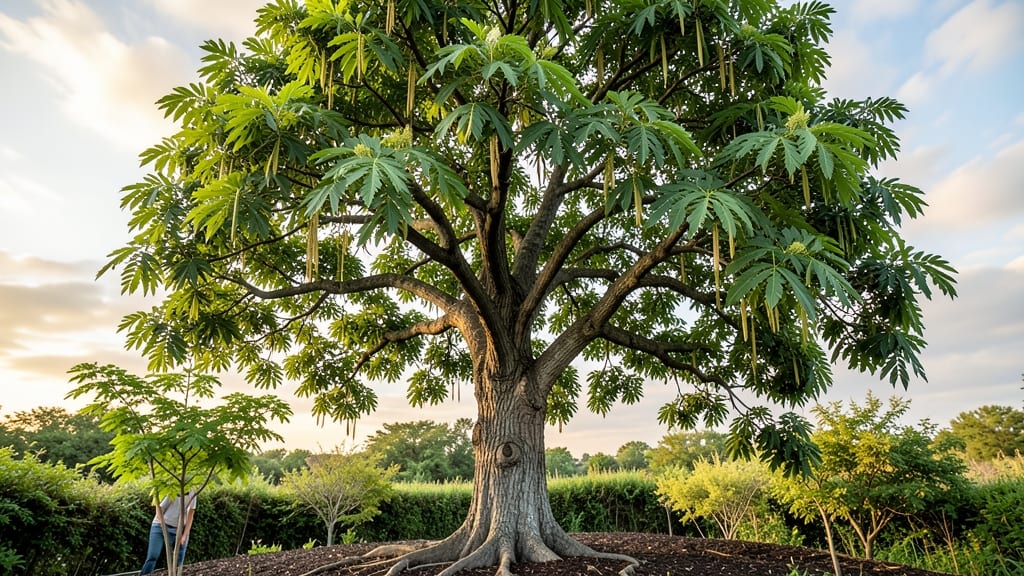
The Tree of Heaven can grow 40 to 75 feet tall—a towering presence that outshades most backyard trees and even some urban landmarks.
Picture this: a fast-growing 🌳 that shoots up 3 to 5 feet per year and spreads just as aggressively, choking out native plants in its wake.
If you’re debating whether to plant one—or already wrestling with an unwanted guest—understanding its mature height is your first line of defense against a green giant.
Regional climate plays a huge role: in warmer zones like the Southeast, these trees hit their upper height limits, while colder Northern states cap them at 20 to 40 feet.
Soil quality, sunlight, and even urban pollution can stunt or supercharge growth, making pruning and placement critical for control.
Below, I’ll break down how to predict its size in your yard, compare it to other fast growers, and share the key tricks for managing its spread—because letting one take over is a mistake no gardener wants to make twice.


Tree of Heaven height by region: mature size ranges across the U.s. and worldwide
The Tree of Heaven (Ailanthus altissima) is a fast-growing invasive species whose mature height can vary dramatically depending on climate and growing conditions.
In the U.S., it typically reaches 40–75 feet, but regional differences create stark contrasts—from 20–40 feet in colder Northern states to 50–65 feet in humid Southern climates. Understanding these variations helps gardeners and land managers plan for its aggressive spread and structural impact.
Globally, the Tree of Heaven thrives in temperate zones, including parts of Europe and Asia, where it can exceed 75 feet under ideal conditions.
Its rapid growth rate—3–5 feet per year—combined with its adaptability to poor soil and urban environments, makes height predictions tricky. Latitude and temperature play critical roles in determining whether it becomes a towering shade tree or a more manageable landscape feature.
| Region | Climate Type | Avg. Mature Height (ft) | Growth Rate (ft/year) | Key Influencing Factors |
|---|---|---|---|---|
| Southeast U.S. (FL, GA, AL) | Humid Subtropical | 50–65 ft | 4–6 ft | High humidity, warm winters |
| Midwest U.S. (OH, IN, IL) | Humid Continental | 40–55 ft | 3–5 ft | Moderate rainfall, cold winters |
| Northeast U.S. (NY, PA, MA) | Humid Continental | 30–45 ft | 2–4 ft | Shorter growing season |
| Pacific Northwest (WA, OR) | Marine West Coast | 35–50 ft | 3–5 ft | Mild winters, high rainfall |
| Europe (UK, Germany, France) | Temperate Oceanic | 60–75+ ft | 5–7 ft | Rich soil, minimal frost |
| China (Native Range) | Subtropical | 70–90 ft | 6–8 ft | Optimal climate, no pests |
In the Southeast U.S., where temperatures rarely drop below freezing, the Tree of Heaven can reach 50–65 feet due to its extended growing season. The humid subtropical climate provides ideal conditions for rapid vertical growth, often outpacing native species.
Meanwhile, in colder Northern states like Maine or Michigan, its height is typically 20–40 feet because shorter growing seasons limit its potential.
Urban environments also affect height—compacted soil and pollution in cities like New York or Chicago can stunt growth to 30–45 feet, while rural areas with well-draining soil and full sun allow it to reach its maximum height. Latitude matters too: Trees in southern latitudes (Zone 8–10) grow taller than those in northern zones (Zone 5–7), where cold snaps slow early-season growth.
Globally, the Tree of Heaven’s height is most extreme in its native range of China, where it can exceed 90 feet under ideal conditions. In Europe, where it’s invasive, it often surpasses 75 feet due to lack of natural predators and abundant nutrients
Factors that influence Tree of Heaven height: soil, sunlight, and pruning secrets
The Tree of Heaven (Ailanthus altissima) is often called "uncontrollable" because of its explosive growth—but its final height depends heavily on three key factors: soil quality, sunlight exposure, and pruning practices.
While it can reach 60–75 feet under ideal conditions, urban pollution, compacted soil, or strategic pruning can dramatically alter its growth trajectory. Let’s break down how each factor plays a role in managing its height.
First, well-draining soil is non-negotiable. This tree thrives in loamy, slightly acidic soil (pH 6.0–7.5), but compacted or clay-heavy soil restricts root expansion, stunting growth to 30–40 feet. Urban environments often have polluted or nutrient-poor soil, which can limit its height by 20–30%.
If you’re dealing with an existing Tree of Heaven in a city lot, amending the soil with compost or sand can encourage slower, more manageable growth.
Encourages 60–75 ft height
Limits height to 30–40 ft
Maximizes 3–5 ft/year growth
Reduces growth by 40%
Controls spread and height
Unchecked growth up to 75 ft
Can stunt growth if severe
May accelerate invasive spread
Sunlight is another game-changer. The Tree of Heaven demands full sun (6+ hours daily) to hit its maximum height potential. In partial shade, growth slows dramatically—expect 20–30 feet less in height. If you’re planting near buildings or under mature trees, its height may cap at 40 feet or less. However, in open, sunny fields, it can shoot up 3–5 feet per year, reaching towering heights faster than most gardeners anticipate.
Pruning is where you regain control. Many gardeners assume this tree is impossible to manage, but strategic pruning can keep it at bay. Prune in late winter or early spring to remove suckers and aggressive branches, which discourages vertical growth.
Avoid heavy pruning in summer or fall, as it can stimulate new, unwanted shoots. For urban settings, crown reduction every 2–3 years can maintain a 40–50 foot height while reducing its invasive spread.
One common misconception is that the Tree of Heaven’s height is entirely unpredictable. While it’s true that it grows aggressively, its final size is highly manageable with the right conditions.
If you’re dealing with an existing tree, focus on soil improvement, pruning discipline, and light management to keep it from dominating your landscape. With these tactics, you can turn its "uncontrollable" reputation into a controlled feature of your outdoor space.
Remember: The Tree of Heaven’s height isn’t set in stone—it’s a reflection of the environment you provide. Whether you’re planting one intentionally or dealing with an unwanted guest, understanding these factors will help you shape its growth to fit your needs.
Start with well-draining soil, ensure full sun exposure, and prune consistently to keep it in check. Your garden will thank you!